Best Triplet Apochromatic Refractor Telescope for Deep Sky Observations
For stargazers and astro-imagers, a triplet apochromatic refractor offers sharp, high-contrast views with minimized chromatic aberration. This article highlights top triplet apochromatic refractor telescopes and practical buying tips to help you choose the right model for deep-sky targets, astrophotography, and visual observing.
Summary of selected products:
- SVBONY SV550 Telescope, 80ED F6 Triplet Apochromatic Refractor OTA
- Explore Scientific ED80 Essential Series 80mm Triplet Refractor
- SVBONY SV550 APO Telescope with SV209 Field Flattener, 122mm F7 Triplet
- SVBONY SV503 Refractor Telescope with Built-in Field Flattener, 70mm F6.78
- Explore Scientific FCD100 Series 80mm Apochromatic Triplet Refractor
SVBONY SV550 80ED Triplet Apochromatic Refractor OTA
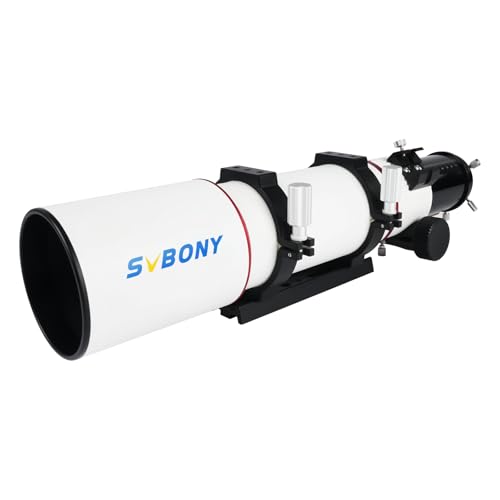
The SV550 80ED is designed to minimize blue-edge chromatic aberration with a triplet apochromatic optics configuration. Built with one piece of S-FPL51 low-dispersion ED glass and two correction elements, this air-spaced design delivers bright, high-contrast images ideal for deep-sky viewing and astrophotography. Its 80mm aperture and F/6 focal ratio balance light gathering with portability, making it suitable for both visual observing and field imaging. This OTA emphasizes image clarity and consistent star performance across a range of targets, from M42 to Messier galaxies.
Key considerations: optical performance, portability, and compatibility with field accessories. The SV550’s back-focus distance and mechanical design support accessories like focal reducers and flattener options, which improve image scale and reduce field curvature for astro-imaging workflows. For observers seeking crisp star fields and rich color fidelity, this model provides a solid baseline with room to expand into imaging gear.
Explore Scientific ED80 Essential Series Refractor
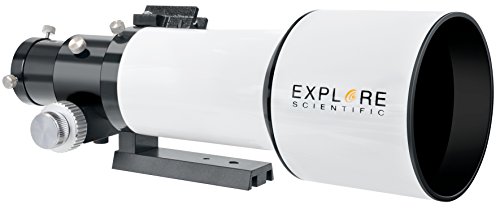
This 80mm ED triplet refractor emphasizes genuine HOYA FCD1 ED glass and enhanced multi-layer coatings to deliver bright, high-contrast views with minimal chromatic aberration. The f/6 configuration yields a versatile focal length, well-suited to astrophotography of the Moon, planets, and brighter deep-sky objects. A retractable dew shield enhances portability, enabling spontaneous stargazing sessions. The instrument’s compact form supports easy transport and quick setup for field photography and visual sessions alike.
Buying considerations center on transportability, optical quality, and the ability to pair with a larger guiding system or image train. The ED80 is a popular choice for those who want a capable imaging platform that remains manageable for travel or quick-look sessions under the stars, with enough optical fidelity to deliver sharp star fields in post-processing.
SVBONY SV550 APO 122mm Triplet Refractor with Field Flattener
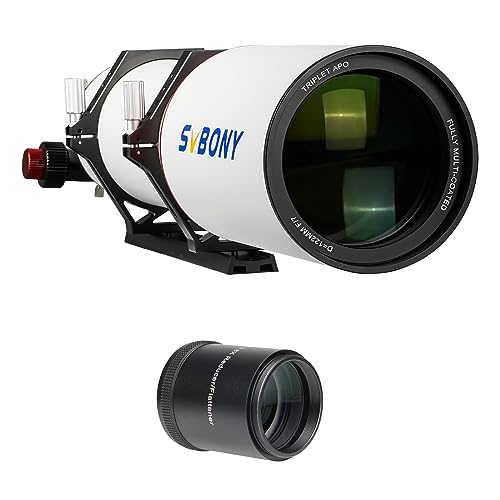
This SV550 setup pairs a 122mm aperture with a F7 triplet APO design, including a field flattener for corrected edge performance. The result is a wider, flatter field suitable for wide-field astrophotography and deep-sky imaging. The OTA weight and portability balance with the travel-ready character of a larger aperture refractor, offering improved light gathering for fainter objects while maintaining practical handling in a portable system. The included field flattener reduces curvature across the image plane, reducing post-processing work for sharp, edge-to-edge stars.
Important considerations include field flatness, overall optical quality, and how the scope performs with reducers and cameras. The 122mm aperture expands light collection significantly, enabling measurable gains for faint nebulae and distant star clusters. Users should plan for appropriate mounting and balance when pairing with trackers or mounts designed for longer focal lengths.
SVBONY SV503 Refractor With Built-in Field Flattener
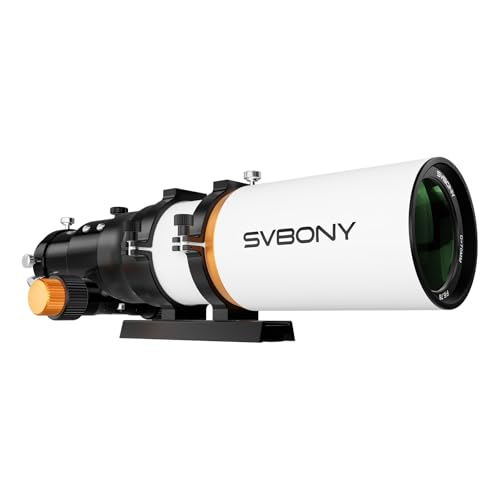
Designed to minimize field curvature, the SV503 integrates a built-in field flattener within a 70mm F6.78 refractor. This setup provides flat, wide views across the field, reducing edge distortions and simplifying image capture for astrophotography. The combination of an achromatic design with a flatter field is particularly attractive for users who prefer a ready-to-image package without adding external flattener hardware. The result is bright, color-true images with crisp star points across the frame.
Considerations focus on the balance between aperture, image plane flatness, and ease of use. While not a pure triplet, the built-in field flattener enhances usability for beginners moving into astrophotography, while still offering reliable visual performance for planetary and deep-sky targets. It’s a practical option for those prioritizing simplicity and reliable edge performance in a compact package.
Explore Scientific FCD100 80mm Apochromatic Triplet Refractor

The FCD100 80mm triplet uses high-performance Hoya FCD100 ED glass with enhanced multi-layer coatings for excellent chromatic correction and image fidelity. The air-spaced triplet design minimizes color fringing and delivers impressive sharpness across the field. A focal length of 480mm in a compact package makes it suitable for portable setups and educational applications, while maintaining imaging potential for the Moon, planets, and bright deep-sky objects. The combination of optical precision and portability is a common draw for this line.
Key decision points include optical quality versus portability, the availability of compatible reducers, and the imaging train you plan to assemble. The FCD100 line is well-regarded for color correction and edge-to-edge performance, which translates to cleaner data in post-processing for enthusiasts aiming to capture galaxies and nebulae with tight star fields.
Explore Scientific FCD100 102mm Triplet Refractor (OTA Only)

This larger Explore Scientific 102mm ED triplet emphasizes HOYA FCD100 glass with robust chromatic aberration correction. The OTA-only design supports a wide imaging pathway and can be paired with dedicated mounts and imaging trains for deep-sky astrophotography. A 714mm focal length provides a balance between field of view and magnification, while the 10.9 lb weight remains manageable for transport and field setups. The design aims at high-contrast star fields with precise color representation, ideal for capturing faint galaxies and nebulae in a refined manner.
When evaluating, consider how this model fits with your mount system, the potential need for counterweights, and the compatibility with camera adapters. For deep-sky imaging enthusiasts, the 102mm aperture paired with a quality ED triplet can deliver a compelling combination of resolution and light-gathering power without excessive bulk.
Buying Guide: Key Purchase Considerations for Triplet Apochromatic Refractors
- Optical design and glass type: Triplet apochromats typically use ED glass to minimize chromatic aberration. Look for models that specify ED glass type (e.g., FCD100 or S-FPL51) and explain how the design handles chromatic correction.
- Aperture versus portability: Larger apertures gather more light and resolve fainter details but come with added weight. Consider your typical observing site, transport options, and whether portability or ultimate image scale matters most.
- Focal length and focal ratio: Shorter focal lengths (e.g., F/6) offer wider fields and easier imaging with larger sensors. Longer focal lengths provide higher magnification for planets but require stable mounts and precise guiding.
- Field flatteners and reducers: Some models include field flatteners or offer compatible options to correct edge aberrations across wide fields. This is crucial for astrophotography and full-frame sensors to avoid star elongation.
- Build quality and accessories: Focusers, dew shields, finder compatibility, and mounting plates influence ease of use. Air-spaced designs are common in triplets for reduced weight and thermal stability, but confirm the overall rigidity of the OTA.
- Mounting and balance: Ensure your mount can support the telescope’s weight and length. A sturdy, well-balanced setup improves tracking accuracy and image stability during long-exposure sessions.
- Future expandability: If you plan to do imaging, verify compatibility with focal reducers, off-axis guiders, and camera adapters. A scalable system reduces upgrade friction later on.
- Budget considerations: Triplet APOS systems vary in price. Evaluate the value based on optical performance, field curvature control, and how much imaging you intend to perform over time.
The right triplet apochromatic refractor aligns optical precision with practical usage. By weighing aperture, focal length, field-flatness, and accessory compatibility, you can select a model that supports both visually engaging night sky views and capable astro-imaging workflows. The options above illustrate a spectrum of configurations—from compact 80mm instruments to larger 122mm and 102mm designs—each aiming to deliver bright, sharp, and accurate celestial images for American observers.