Best 18 Gray Card Photography Essentials for Accurate White Balance
Professional and hobbyist photographers rely on gray cards to achieve precise white balance and exposure. This guide highlights five top 18% gray cards that deliver consistent color accuracy, helping you capture true-to-life images in varied lighting. Each option is chosen for reliability, portability, and clear performance in both digital and film workflows.
style=”display:none;”>Summary of chosen products: Lightdow 12 x 12 Inch Gray Card; Anwenk Grey White Balance Card 18%; Anwenk 12×12 Inch Grey Card; Anwenk Large 5.3×7.28 Inch Grey Card; DGK Color Tools 8×10 Gray Card.
| Product | Brand | Format | Notes |
|---|---|---|---|
| Lightdow 12×12 Gray Card | Lightdow | 12″ x 12″ | Folded version; 18% reflectance |
| Anwenk Grey White Balance Card | Anwenk | 3.3″ x 2.1″ | 18% neutral gray; compact |
| Anwenk 12×12 Grey Card | Anwenk | 12″ x 12″ | Double-sided with white balance on one side |
| Anwenk Large Grey Card | Anwenk | 5.3″ x 7.28″ | Large size for easy setup |
| DGK Color Tools 8×10 Gray Card | DGK Color Tools | 8″ x 10″ | Premium quality, suitable for RAW/JPEG |
Lightdow 12×12 Gray Card

The Lightdow gray card offers a compact, foldable reference for on-location or studio use. Its gray side has a reflectance of 17.8% and a density of 0.74, enabling consistent exposure measurements with a maximum error of 1/8 of an F-stop. The card’s design supports straightforward white balance calibration in varied lighting conditions, making it a practical inclusion for photographers seeking reliable, portable tools.
Anwenk Grey White Balance Card 18%
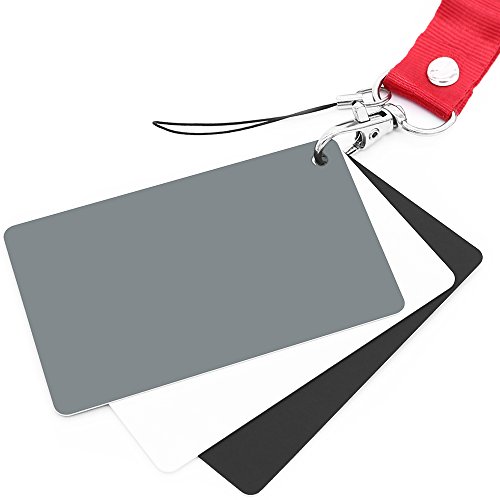
This Anwenk 18% gray card is designed for quick, reliable calibration. It features a matte finish to minimize reflections, is scratch-resistant, and water-resistant for diverse shooting environments. Compatible with any digital camera, it supports precise color balance for DSLR, video, film, and general photography. A compact card size aids portability without sacrificing calibration accuracy.
Anwenk 12×12 Inch Grey Card

Featuring a quick-balance collapsible panel, this Anwenk card supports both gray and white balance targets with a central printed 18% gray reference. Its density of 0.74 aligns with standard exposure calculations, and the compact foldable design offers portability for field work. A dedicated white balance side on the reverse helps streamline calibration workflows during shoots.
Anwenk Grey Card White Balance Card (Large)
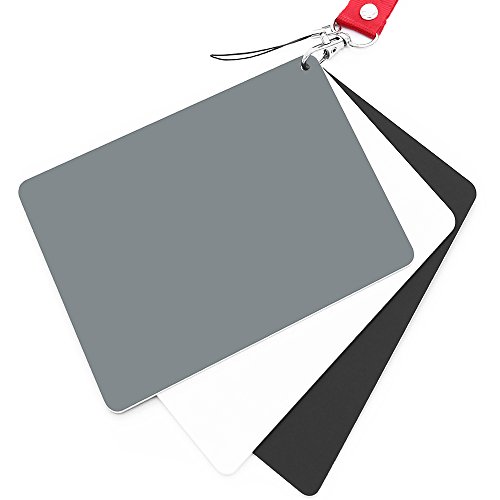
This larger Anwenk gray card is ideal when you need a bigger reference target for quick calibrations in studio or on location. The neutral 18% gray provides a reliable baseline for exposure and color balance across a range of cameras. Its matte, non-reflective surface minimizes glare while maintaining durability for repeated use in demanding environments.
DGK Color Tools 8×10 Gray Card

DGK Color Tools presents a sizable 8×10 gray card, offering a robust surface for precise white balance in film and digital workflows. Spectrophotometer-tested and designed to fill most frames, this card supports reliable RAW and JPEG calibration. The thicker card stock provides durability for studio and field use, delivering consistent results across cameras and lighting setups.
Buying Guide: Key Purchase Considerations
- Card size and portability: Choose a size that matches your typical shooting setup. Smaller cards fit in pockets or camera bags, while larger cards offer easier framing in studio contexts.
- Reflectance and density: Most 18% gray cards provide around 17.8% reflectance with a density near 0.74. These values align with standard exposure meters for accurate EV readings.
- Finish and reflections: Matte, non-reflective surfaces reduce glare and prevent stray highlights from skewing metering or WB calculations.
- Durability and weather resistance: Water-resistant and scratch-resistant surfaces extend life in outdoors and travel photography contexts.
- Double-sided options: Cards with both gray and white balance surfaces can speed calibration by offering multiple reference points in a single tool.
- Compatibility: Ensure the card works with your camera system, whether DSLR, mirrorless, cinema, or mobile photography workflows.
- Portability accessories: Pouches, foldable designs, and carrying cases help keep the card clean and accessible during shoots.
- Price vs. value: Higher-quality, larger, or double-sided cards may justify a higher price for frequent professionals, while hobbyists may prioritize compact options.
- Workflow integration: Consider whether the card supports quick in-camera WB adjustments or is designed primarily for post-production calibration.
Across these options, the common goal is consistent exposure control and color accuracy under diverse lighting. When selecting, balance size, durability, and the degree of calibration precision you require for your typical shooting scenarios, whether in-studio, on-location, or in active production environments.