Best Wired to Wireless Camera Converters for IP Cameras and More
If you need to convert a wired camera setup to wireless or extend a wireless signal to a wired device, these devices offer reliable 2.4 GHz and 5 GHz options with Ethernet passthrough. Ideal buyers include surveillance operators, small business tech managers, and home security enthusiasts who want flexible network layouts without rewiring. The top picks below cover bridges, repeaters, and adapters that support IP cameras, printers, DVRs, and industrial devices. The quick comparison table helps you scan capabilities at a glance.
| Product | Best For | Key Benefit |
|---|---|---|
| Vonets VAP11G-300 (B014SK2H6W) | IP cameras and PLCs | Compact WiFi bridge with solid range and multiple modes |
| j5create JVW120 | Wireless USB camera setups | Wire-free USB camera extension for streaming |
| BrosTrend AC1200 Adapter (B0118SPFCK) | Smart TVs, printers, game consoles | Dual-band, easy setup, strong wireless bridge |
| Vonets VAP11G-300 (B07Z1SGWL5) | Industrial and IP devices | Industrial-grade mini bridge with RJ45 |
| Vonets VAP11G-300 (B0B1Q1HDNL) | MFW DVRs and network devices | Bridge, repeater, AP mode with multiple methods |
Vonets VAP11G-300 WiFi Bridge and Repeater

This 2.4 GHz device acts as a WiFi bridge and repeater, enabling WiFi to Ethernet or Ethernet to WiFi conversion. It supports 300 Mbps and WiFi 802.11b/g/n, making it suitable for IP cameras, medical devices, and network printers. Inputs include a RJ45 port and optional USB/DC power. Best for users who need a compact, all-purpose bridge to connect wired surveillance gear to an existing wireless network. A potential limitation is its single 10/100 Ethernet port, which may constrain high-bandwidth deployments.
Best for: IP cameras, DVRs, and small office devices that require a simple bridge to a wireless network. Choose this if you need a compact, budget-friendly bridge with multiple modes (repeater, bridge, AP hotspot).
j5create Wireless Extender For USB Cameras

Designed to transform wired USB cameras into wireless ones, this extender supports streaming and conferencing with low-latency audio and video. It’s ideal for home offices and smaller studios where cable clutter is a concern. Its main limitation is that it is focused on USB devices, not general IP camera networks, so use it when your primary goal is wireless USB camera transmission rather than broader network bridging.
Best for: Wireless USB webcam setups for streaming and conferencing. Better for users prioritizing cable-free USB camera operation over full network bridging.
BrosTrend AC1200 Ethernet To Wireless Adapter
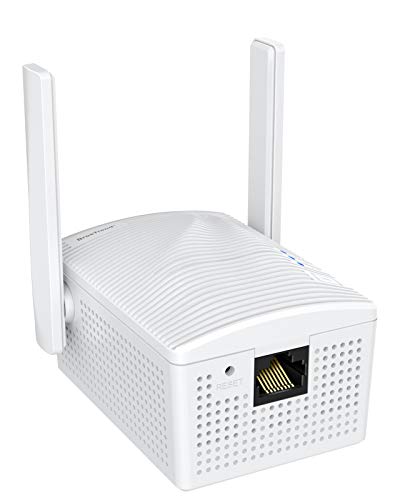
This dual-band adapter enables wired devices to access Wi‑Fi, turning Ethernet-enabled gear (TVs, printers, gaming consoles) into wireless clients. It supports up to 867 Mbps on 5 GHz and 300 Mbps on 2.4 GHz, which helps with streaming and online gaming. A caution is that powered setup requires an electrical outlet, and some older devices may require reconfiguration to optimize bridge performance.
Best for: Smart TVs, printers, and consoles that need reliable wireless Internet access. Choose this if you want strong 5 GHz performance and easy WPS setup.
Vonets VAP11G-300 Versatile Network Bridge

This 2.4 GHz mini bridge supports IP cameras, printers, industrial PLCs, and IoT devices with RJ45 networking and RJ45 to WiFi capabilities. It offers three modes: WiFi Bridge, Repeater, and AP hotspot, making it adaptable for varied network layouts. It excels when you need IP layer or MAC layer transparent transmission. A limitation is its smaller footprint, which can affect antenna range in dense environments.
Best for: Industrial and surveillance deployments that require three modes in one device. Better for activities needing flexible bridge, repeater, and AP options in one unit.
Vonets VAP11S-232 300Mbps Wireless Bridge

This model adds RS-232 serial support in addition to standard RJ45 networking, broadening compatibility with point-of-sale systems, DVRs, and industrial controllers. It supports three main modes: router, bridge, and repeater, and can operate with 2.4 GHz WiFi at up to 300 Mbps. The inclusion of RS-232 makes it a good fit for legacy devices requiring serial connectivity. A limitation is that it may require more detailed configuration for non-networked serial devices.
Best for: DVRs, printers, and industrial devices needing both RJ45 and RS-232 support. Choose this if you must integrate serial communication with wireless bridging.
Buying Guide
Key purchase considerations help you choose the right wired-to-wireless converter for your environment.
- What devices need network bridging? If you only need USB camera extension, a USB-focused extender may be best. For IP cameras and printers, a true Ethernet bridge is preferred.
- What is the required range and environment? Industrial settings may need devices with robust power options and longer point-to-point ranges; residential use may suffice with compact bridges.
- Which modes are essential? If you anticipate needing bridge, repeater, and AP modes, prioritize devices that explicitly support all three (or three-in-one solutions).
- Power options and cabling: Some units use USB power, others require a DC adapter. Consider whether a device’s powered mode fits your power setup.
- Ease of setup: Look for devices with clear configuration guides and minimal driver requirements to ensure quick deployment.
- Future-proofing: If you might upgrade to higher wireless speeds, choose dual-band (2.4 GHz and 5 GHz) options when possible for flexibility and better interference handling.
Practical quick compare
- Best for IP cameras and monitoring: Vonets VAP11G-300 variants offer versatile bridging and point-to-point options with RJ45 ports.
- Best for USB camera extensions: j5create JVW120 focuses on wireless USB camera extension for streaming quality.
- Best overall dual-band bridge: BrosTrend AC1200 adapter balances 2.4 GHz and 5 GHz for varied devices.
- Best for mixed network devices with AP support: Vonets VAP11G-300 and VAP11S-232 models provide flexible mode options and serial support where needed.
FAQ
- What does a wired to wireless converter do? It converts signal between Ethernet/USB devices and a wireless network, enabling devices without WiFi to connect and vice versa.
- Do these devices require drivers? Most operate with plug-and-play Ethernet or USB configurations and minimal driver requirements, but some setups may need basic network configuration.
- Can I use these with IP cameras? Yes. Many are designed to connect IP cameras to wireless networks or extend an existing WiFi network to wired cameras.
- Is a dual-band adapter better than single-band? In busy environments, a dual-band adapter can reduce interference and improve throughput, especially for video or streaming tasks.
- What’s the difference between bridge, repeater, and AP mode? Bridge creates a link between networks, repeater extends existing WiFi, and AP creates a new wireless access point; devices may support multiple modes.
- Are these suitable for industrial PLCs? Some models advertise suitability for PLCs and other industrial devices; verify power, range, and mode features for your specific PLC requirements.