Best Tripod With Gimbal Head for Stable Long-Lens Shooting
Photographers who chase wildlife, sports, or aviation often need a reliable gimbal head to balance heavy cameras and long lenses. This guide highlights five top tripod-head combos that maximize stability, smooth panning, and versatile load support. Each option comes from reputable brands and includes practical features like 360° rotation, quick-release compatibility, and robust materials. Compare construction, weight, and load capacity to find the best fit for your setup.
| Product | Brand | Max Load | |
|---|---|---|---|
| Wimberley WH-200 | WIMBERLEY | Large telephotos | Premium stability and balance with Arca Swiss clamp |
| SIRUI PH-Series PH-20 | Sirui | 20 kg / 44 lb | High-strength carbon fiber, smooth 360° rotation |
| NEEWER GM101 | NEEWER | 13.6 kg / 30 lb | Heavy-duty gimbal head with 360° panning base |
| WEYLLAN PH8 | WEYLLAN | 15 kg / 33 lb | Carbon fiber construction with dual 1/4″ & 3/8″ plates |
| Movo GH800 MKII | Movo | 13.6 kg / 30 lb | Long and short Arca-Swiss plates for outdoor versatility |
Introduction (continued). The following sections review each option’s strengths, supported by real-world use cases such as wildlife tracking, sports coverage, and telephoto work. The aim is to help you pick a gimbal head that pairs well with a sturdy tripod, provides precise balance control, and handles your heaviest gear with confidence.
Wimberley WH-200 Gimbal Head II

The Wimberley WH-200 is renowned for its rugged build and smooth pan-and-tilt movement. Designed to rotate a camera around its center of gravity, it offers exceptional balance for very large lenses. The Arca Swiss style clamp supports a range of medium and telephoto lenses, enabling stable tracking of fast subjects. The head emphasizes stiffness, durability, and refined motion, making it a top pick for professional wildlife and aviation photography where precise camera control is crucial.
SIRUI PH-Series PH-20 Gimbal Head

The SIRUI PH-20 combines carbon fiber strength with a wide 360° rotation to deliver smooth, panoramic tracking. It uses a robust L-platform and an 8-layer carbon fiber construction to maximize stiffness while remaining light. With a stated load capacity around 20 kg, this model supports heavy telephotos and full-frame bodies. The design focuses on outdoor reliability—an ideal choice for birding and stadium sports where consistent, fluid motion matters.
NEEWER GM101 Gimbal Tripod Head
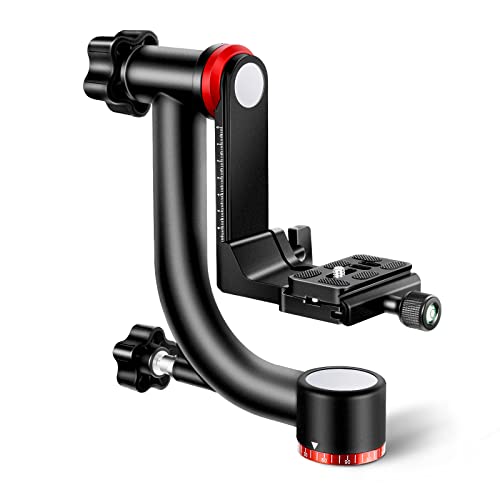
The NEEWER GM101 is built for heavy-duty use, supporting DSLR cameras and long lenses up to 30 lb. It features a balanced bearing structure for smooth movement on vertical and horizontal axes, plus a 360° pan base with locking capability. The setup includes 1/4″ and 3/8″ mounting options, facilitating easy integration with most tripods. For wildlife and wildlife photographers who require quick, precise motion with substantial load capacity, the GM101 offers dependable performance at a friendly price point.
WEYLLAN PH8 Gimbal Head

The WEYLLAN PH8 emphasizes carbon fiber strength with a relatively compact footprint. It provides precise 360° panning and a strong load rating suitable for long telephotos. The dual quick-release plate system (1/4″ and 3/8″) adds mounting flexibility for different cameras and lenses. This option is well-suited for fieldwork where portability and ruggedness are key, such as wildlife monitoring and scenic wildlife shoots.
Movo GH800 MKII Gimbal Head

The Movo GH800 MKII focuses on fluid panning and tilting via precision bearings. It balances a wide range of cameras and telephoto lenses by offering adjustable Arca-Swiss plates that facilitate horizontal and vertical balance. With a robust carbon-fiber build and a high load rating, the GH800 MKII is a versatile option for outdoor shooters who need dependable performance in rapidly evolving angles, such as bird photography and fast-action sports.
Buying Guide: Key Considerations For Selecting A Gimbal Head
- Load Capacity: Match the head to the combined weight of your camera body and telephoto lens. Overshooting capacity improves stability, while undershooting can limit performance and safety.
- Material And Build: Carbon fiber offers strength with light weight, while aluminum provides durability at a lower cost. Consider environmental conditions and field use.
- Pan and Tilt Range: Look for 360° panning and substantial tilt ranges (e.g., +150° to -60°) to maximize composition latitude for wildlife and action shots.
- Release System: Arca-Swiss compatibility and quick-release plates speed setup and breakdown. Ensure compatibility with your tripod’s legs and head.
- Balance And Precision: Bearings and anti-backlash design reduce drift. A well-balanced head minimizes camera shake during tracking shots.
- Portability vs. Rigidity: Heavier heads offer stability but are less portable. Field photographers should balance weight with mission needs and transport options.
- Mounting Versatility: Ensure the base supports common tripod loads and allows secure attachment on various terrains. Consider base size and locking mechanisms for stability on uneven ground.
- Pricing and Support: Premium brands may offer longer warranties and better service. Compare warranty terms and replacement parts availability when budgeting.
End of guide. The selections above provide options across budgets and use cases, from premium pro gear to high-value mid-range choices, all designed to deliver smooth, controlled motion with large cameras and telephoto lenses.