Best Trail Cams With Night Vision: Top Picks for Wildlife Observation
For hunters, wildlife researchers, and outdoor enthusiasts, a reliable trail cam with night vision is essential. This guide reviews five leading models that balance image quality, trigger speed, power options, and durability. Each entry includes key specs to help you compare performance in low light and remote locations.
| Product | Brand | Key Night Vision Feature | Power & Connectivity | Approx. Image Quality |
|---|---|---|---|---|
| VIDVIS WiFi Solar Trail Camera | VIDVIS | 850nm Low Glow Infrared LEDs, <= 65 ft night range | Solar + USB-C; 2600mAh battery | 64MP photos, 4K video |
| Hrivcam Trail Camera 4K 64MP | Hrivcam | Starlight/low-light with night vision | Solar, built-in WiFi, 64GB card | 64MP stills, 4K video |
| GardePro A3S Trail Camera | GardePro | No-glow night vision up to 100 ft | Battery power with memory card, H.264 video | 64MP images, 1080p/1296p video |
| Loatos Cellular Trail Camera | Loatos | 4G live streaming, 940nm infrared | Built-in SIM, data plans | 2K live video, 64MP-like stills (marketing) |
| Cadrali 2.5K Solar Trail Cam | Cadrali | 0.2s trigger, low-light 2.5K footage | Solar power, 4G optional | 2.5K video, 30fps |
Note: Prices and availability vary by retailer. This article focuses on product features, battery options, night vision capabilities, and field reliability to help you choose the best trail cam for night-time surveillance and wildlife observation.
VIDVIS WiFi Solar Trail Camera Overview

VIDVIS delivers a high-resolution capture package with 64MP still photos and 4K video. Night vision relies on 850nm low-glow LEDs for clearer illumination at distances up to 65 feet, reducing disturbance to wildlife. The camera includes wireless connectivity for remote access via WiFi and solar power support to extend field use. A 0.2-second trigger helps capture fast wildlife actions, while a 70-foot PIR detection range supports broad monitoring. The solar solution plus backup power options provides flexible field deployment even in remote areas. The model supports a rechargeable battery and Type-C input for efficient charging, which reduces on-site maintenance and battery replacement costs.
MAXDONE Solar Trail Camera With Night Vision
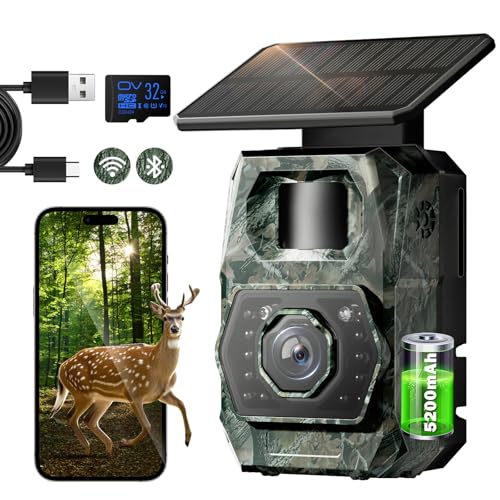
MAXDONE combines solar charging with WiFi6 and Bluetooth, enabling quick setup and secure app-based control. It offers up to 65 feet of night vision range with clear 48MP photos and 1296P video. The built-in solar panel and 5200mAh battery optimize power in outdoor environments, reducing the need for frequent battery changes. The camera is designed to protect privacy with local app sharing and does not rely on home WiFi, which aligns with typical field deployments. The combination of long-range infrared and high-resolution imagery makes it a solid choice for nocturnal wildlife monitoring and perimeter security in remote locales.
WOSPORTS Trail Camera Night Vision

WOSPORTS features a 48MP sensor with 4K video and a 0.2-second trigger, designed for reliable moment-capture in challenging environments. The camera includes a 2.0-inch LCD screen for quick onsite checks, and 32 infrared LEDs provide up to 80 feet of night illumination. The night vision output is tuned to minimize disturbance while preserving detail, making it suitable for wildlife monitoring, scouting, and security use in wooded or rural settings. Its compact profile and IP66 waterproof rating help ensure durability in harsh weather conditions.
Hrivcam 4K Trail Camera With Solar Power

Hrivcam emphasizes solar-assisted operation with a 5000mAh battery, allowing for extended field use. It captures 64MP stills and UHD 4K video with audio, delivering crisp wildlife imagery in varied lighting. The built-in WiFi and companion app enable remote settings adjustment and media transfer without visiting the camera site. The model supports a 64GB memory card and a robust IP rating, making it suitable for remote wildlife monitoring, property surveillance, and research projects where power reliability is critical. The combination of high resolution and long-range night vision supports nocturnal activity documentation.
Cadrali 2.5K Solar Trail Cam
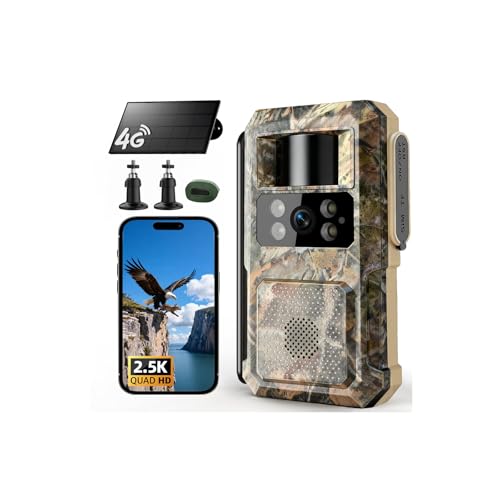
The Cadrali model delivers 2.5K video with a 0.2-second trigger and is powered by a built-in solar system. It emphasizes low-light performance for night footage and offers flexible 4G data options for remote monitoring. The device is designed for outdoor use with IP66 waterproofing, making it a practical choice for long-term wildlife surveillance and property monitoring in varied environments. The inclusion of a solar panel helps ensure continuous operation with minimal manual intervention, which is valuable for remote locations without easy access to power.
Buying Guide: Key Considerations For Night Vision Trail Cams
- Night vision range and image quality: Look for higher megapixels for stills (e.g., 64MP) and capable video (2K-4K) to capture details at night. Consider no-glow or low-glow IR LEDs to minimize animal disturbance.
- Trigger speed and recovery: A fast trigger (0.2–0.3 seconds) reduces missed moments. Higher burst modes help capture rapid sequences, but check the camera’s memory and battery capacity.
- Power strategy: Solar power is increasingly common and reduces maintenance. BACKUP options include native batteries, USB-C or AA batteries. Consider whether the camera supports remote power management or external power sources.
- Connectivity and remote access: WiFi, Bluetooth, or cellular (4G/5G) options enable remote viewing and alerting. Cellular models need SIM plans; assess coverage and data costs for your site.
- Durability and weather sealing: IP66 or higher ratings protect against rain, dust, and cold. Field use requires robust housings and secure mounting options.
- Storage and headers: Memory cards (64GB+ recommended) and data management options (local storage vs. cloud or app-based transfers) influence long-term usability.
- App and data privacy: If using connected features, verify that data transfers are securely handled and that app access is controllable among multiple users.
- Local vs. remote monitoring needs: Off-grid sites benefit from solar power, robust batteries, and cellular connectivity. Closed forests or private properties may require camouflaged housings and concealment strategies.
- Budget vs. performance: Higher-priced models generally offer better night vision range, photo quality, and processing speed. Prioritize features that align with your monitoring goals.