Best Small HDMI Monitors for Cameras: Clear, Portable Viewers for on-the-Go Shooting
When filming or monitoring footage, a compact HDMI monitor can dramatically improve your workflow. This guide highlights five small HDMI monitors that are well-suited for cameras, DSLRs, and mirrorless rigs. Each option is evaluated for portable use, image quality, and compatibility with common devices like Raspberry Pi, laptops, and CCTV setups. This helps photographers, videographers, and hobbyists choose a reliable, travel-friendly screen without sacrificing essential features.
| Product | Best For | Key Benefit |
|---|---|---|
| JINSWY 10.1″ Security Monitor | Backup cameras, surveillance setups | Multiple inputs (HDMI, VGA, BNC, AV, USB) for versatile connections |
| FEELWORLD FW759 7″ DSLR Monitor | On-the-go filming | Slim, light, supports 4K HDMI input; strong color and brightness |
| FEELWORLD S55 V3 6″ Field Monitor | Indoor studios and vlogging | 4K HDMI input, LUTs, waveform, and focus tools |
| CUQI 7″ Small Monitor | Raspberry Pi and general multi-device use | IPS panel with 178° viewing angles |
| Eyoyo 10.1″ Security Monitor | Security setups and multi-device viewing | HDMI, VGA, BNC, AV, USB inputs with built-in speakers |
JINSWY 10.1-Inch Security Monitor

This 10.1-inch monitor centers on practical display performance with a 1024×600 resolution, 16:9 aspect, brightness of 300 cd/m², and a 500:1 contrast ratio. Best for security camera monitoring and compact computer setups, it provides reliable clarity for surveillance, CCTV, and Raspberry Pi projects. It’s portable and durable, making it suitable for fieldwork or space-limited environments.
Who this is best for: security professionals, DIY surveillance setups, and mobile technicians who need a compact, multi-input screen. Why selected: the broad input set (HDMI, VGA, BNC, AV, USB) supports a wide range of devices without extra adapters. Caution: real-world brightness may be less effective in bright outdoor lighting unless shaded.
FEELWORLD FW759 7-Inch DSLR Monitor
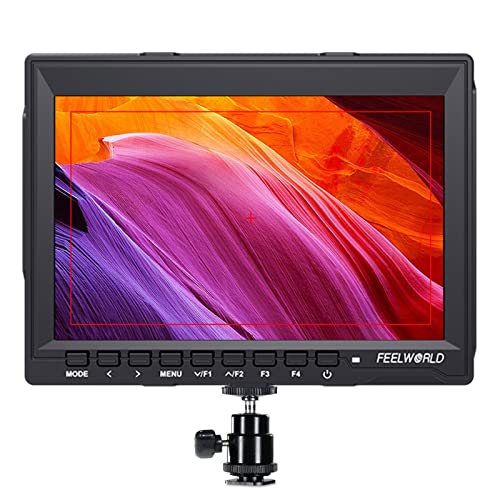
The FW759 is a compact 7-inch monitor designed for DSLR-style shooting. It delivers a 1280×800 display with 400 cd/m² brightness and supports 4K HDMI input. Its ultra-slim body (about 17 mm) makes it ideal for stabilizers and gimbals. This monitor is best for run-and-gun shoots where you need a larger viewing area without adding significant weight.
Who this is best for: on-camera operators seeking a portable, color-accurate viewfinder with reliable 4K HDMI compatibility. Why selected: strong balance of size, resolution, and on-device monitoring features. Limitation: not the largest screen, so it’s less suitable for critical post-production color grading on set.
FEELWORLD S55 V3 6-Inch Field Monitor

The S55 V3 is a compact 6-inch on-camera monitor with a 1920×1080 IPS panel and 450 nit brightness. It supports 4K HDMI input and offers critical tools like waveform, vectorscope, RGB histogram, focus assist, false color, and 3D LUTs. A sun hood is included, aiding visibility in outdoor shoots. Best for precise exposure and focus in controlled environments.
Who this is best for: videographers and vloggers who rely on external monitoring for accurate exposure. Why selected: comprehensive monitoring tools in a small package. Limitation: may feel cramped for larger camera rigs or complex multi-camera setups on small rigs.
CUQI 7-Inch IPS Mini Monitor

The CUQI 7-inch monitor features a 1024×600 IPS screen with 178° viewing angles and built-in speakers. It offers HDMI, VGA, and AV input, making it adaptable for Raspberry Pi projects, CCTV, PCs, DVDs, and laptops. This is a solid value choice for multi-device use with a compact footprint.
Who this is best for: hobbyists and educators needing a versatile screen for multiple devices. Why selected: wide input compatibility and easy plug-and-play setup. Caution: built-in speakers may be underpowered for loud environments; external audio may be preferred in such cases.
Jexiop 12.5-Inch Security Monitor

The Jexiop 12.5-inch monitor offers Full HD 1920×1080 with a broad 178° viewing angle and multiple inputs (HDMI, VGA, BNC, RCA). It includes built-in stereo speakers for synchronized audio. This model is best for larger mobile surveillance setups or home/office monitoring where more screen real estate is beneficial.
Who this is best for: users who need a larger portable screen for surveillance or command-center-style viewing. Why selected: robust input options and integrated speakers. Limitation: larger size reduces its portability compared to smaller options in this guide.
BOLEVIC 7-Inch HD Display
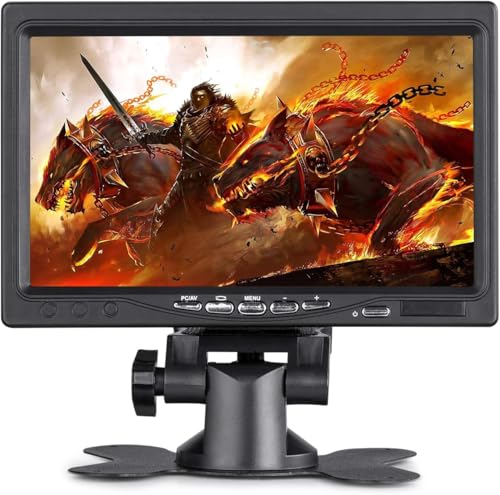
The BOLEVIC monitor is a 7-inch portable display with 1024×600 resolution and dual HDMI/VGA/AV inputs, plus a car-friendly setup. It’s designed for backup cameras and Raspberry Pi projects. Best for travelers who want simple integration with dash cameras or in-car systems.
Who this is best for: drivers and field technicians integrating a secondary screen in vehicles or small workstations. Why selected: compact size with multiple input options. Caution: listed as in-car and portable use; ensure mounting compatibility with your vehicle or rig.
FEELWORLD F5 Prox 5.5-Inch Monitor

The F5 Prox delivers a bright 5.5-inch external monitor with 1600 nit brightness, 4K HDMI input, and 3D LUT support. It’s aimed at professionals who require excellent outdoor visibility and accurate exposure for field shoots. It pairs with a F750 battery and bag for extended use in the field.
Who this is best for: professionals needing a high-brightness on-camera monitor for outdoor shoots. Why selected: extreme brightness makes outdoor visibility reliable. Limitation: smaller screen size may limit composition compared to larger models.
Buying Guide: How To Choose The Right Small HDMI Monitor For Cameras
- Screen size and resolution: For on-camera work, 6–10 inches with 1080p or higher offers a balance between visibility and portability. Larger screens help framing, while smaller displays save weight.
- Brightness and contrast: Outdoor shoots benefit from higher brightness (400–1600+ nits) and good contrast; consider a sun hood or outdoor mode.
- Input/output options: Look for HDMI as a baseline; USB, VGA, BNC, and AV expand compatibility with cameras, PCs, Raspberry Pi, and CCTV gear.
- Monitoring tools: Waveform, vectorscope, histogram, focus peaking, and 3D LUT support help achieve correct exposure and sharp focus.
- Power and portability: Consider weight, battery options, and whether a monitor includes a built-in battery or requires external power.
- Durability and mounting: Slim profiles suit mobile rigs; check VESA compatibility and included stands or brackets for stable mounting.
- Speaker quality: In-built speakers are convenient but often modest; plan for external audio when critical sound is needed.
FAQ
- What is the main advantage of an external HDMI monitor for cameras?
– It provides a larger, more accurate view for focusing, exposure, and composition beyond the camera’s built-in screen. - Should I choose a larger or smaller monitor for travel filming?
– A 6–8 inch monitor typically offers a good balance of portability and viewing comfort for field work. - Do external monitors require software drivers?
– Most offer plug-and-play via HDMI or VGA; no drivers are usually required. - Is built-in speakers important on a monitor?
– It’s convenient for quick checks, but professional use often benefits from external audio monitoring. - Can these monitors work with Raspberry Pi?
– Yes, many models list Raspberry Pi compatibility via HDMI or other inputs; check specific port availability. - What should I consider for outdoor shoots?
– Look for high brightness (nit rating), a shaded hood, and a robust mounting option to withstand wind and weather.