Best Small HD SDI Monitor Guide for on-Set Clarity and Portability
Looking for compact, reliable HD SDI monitors that fit tight shooting spaces and give clean visual feedback? This guide highlights five top 7-inch class monitors best for field work, studio setups, and DSLR-style productions. Each pick targets different workflows: light-duty field monitoring, broadcast-ready on-set viewing, or rack-ready studio use. The list emphasizes HDMI and SDI availability, brightness, color accuracy, and useful monitoring tools like waveform, vectorscope, and LUT support. A quick buyer’s table follows to compare core specs at a glance.
| Product | Screen Size | Key Features | Best For |
|---|---|---|---|
| VILTROX DC-L2 (7″) | 7 inch | 4K HDMI & SDI in/out, LUT import, waveform, peaking, 600nits, 170° IPS | Independent shooters and small crews needing both HDMI/SDI |
| FEELWORLD FVM215 (21.5″) | 21.5 inch | 1000nit brightness, 3G-SDI & HDMI, CALMAN color calibration | Studio or production environments requiring high brightness |
| FEELWORLD FW703 (7″) | 7 inch | 1920×1200 IPS, 3G-SDI/HDMI, LUT, waveform, focus peaking | On-camera use with strong exposure/focus tools |
| LILLIPUT FS7 (7″) | 7 inch | 4K HDMI, 3G-SDI, 1920×1200 native, robust metal housing | Field and studio with flexible I/O |
| FEELWORLD LUT7S (7″) | 7 inch | 2200nit brightness, SDI/HDMI, 3D LUT, touch interface | Outdoors and fast LUT-based viewing |
Note: Each product above provides a balance of HDMI and SDI, with differing brightness and color tools. The table helps you weigh portability against on-set visibility and professional monitoring features.
VILTROX DC-L2 7″ SDI Monitor with 4K HDMI

Best for: Independent creators and small teams needing both HDMI and SDI I/O in a compact, touch-enabled monitor. The VILTROX DC-L2 offers a 7″ IPS panel with 1280×800 resolution, 600 nits brightness, 16:10 aspect, and 210 PPI, delivering sharp imagery for critical focus and exposure decisions. It supports 3D LUT import via USB, along with essential tools like waveform, vectorscope, peaking, and safe frames. The dual HDMI/SDI loop in/out ensures flexible on-set connections. Caution: While bright, the 700–800 nit range is sufficient for many indoor shoots but may require extra shading outdoors.
FEELWORLD FVM215 21.5″ Production Monitor

Best for: Studio environments and location shoots requiring high brightness and precise color with calibrated output. The FVM215 provides a 21.5″ 1000nit screen and CALMAN color calibration, ensuring reliable color reproduction. It includes HDMI and 3G‑SDI interfaces for easy integration into professional setups. This larger panel supports clear waveform and LUT viewing, making it well-suited for directors and DPs checking lighting and composition from a distance. Caution: It is significantly larger and heavier than 7″ models, requiring more space and power on busy sets.
FEELWORLD FW703 7″ On-Camera Monitor
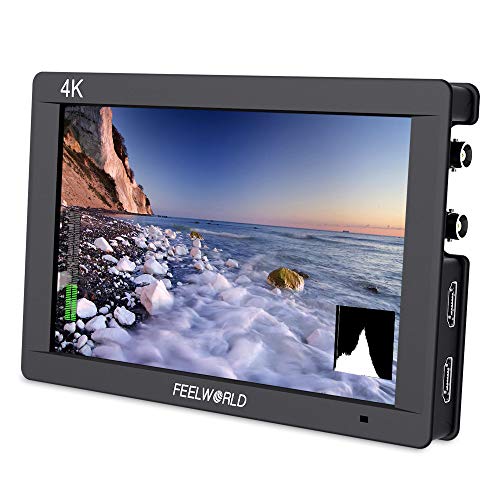
Best for: On-camera workflows needing precise focus and exposure tools in a compact form. FW703 delivers Full HD 1920×1200 IPS resolution with Rec.709 color, along with Waveform, RGB Histogram, Focus Peaking, and False Color. It supports custom 3D LUTs and provides HDMI 4K and 3G‑SDI connectivity. Best for solo shooters or small crews who require dependable on-camera monitoring and quick-look LUT adjustments. Limitation: The 7″ size offers less screen real estate for detailed waveform analysis compared with larger models.
LILLIPUT FS7 7″ 4K/SDI Field Monitor

Best for: Field and studio users needing robust I/O flexibility. The FS7 combines 4K HDMI with 3G‑SDI input/loop-through and a 7″ 1920×1200 panel housed in a solid metal frame. The higher native resolution provides clear visuals for framing and critical focus tasks. It supports 4K inputs up to 3840x2160p and scales down for HD workflows, making it a versatile option for multi-camera setups. Caution: The data sheet notes both HDMI and SDI inputs; ensure your source device supports the expected resolution and frame rate to avoid compatibility issues.
Buying Guide
What to consider when choosing a small HD SDI monitor:
- Input and output availability: If you work with both HDMI and SDI cameras or recorders, prioritize models with dual interfaces (HDMI and 3G-SDI).
- Screen size and brightness: Outdoors and bright studios benefit from 1000+ nits brightness; smaller screens (7″) are more portable but may fatigue eyes in long shoots.
- Color accuracy and LUT support: Look for REC-709 calibration, optional 3D LUT support, and color tools like waveform, vectorscope, and histogram for reliable exposure decisions.
- Monitoring tools: Focus peaking, false color, zebra, frame guides, and safe-area markers help maintain framing and exposure accuracy on set.
- Build and mounting: A robust metal housing and rack-compatible options are advantageous for field use and studio integration.
- Power and workflow: Check battery compatibility, power draw, and whether the monitor supports sunshade, altitude, or hood usage in bright environments.
FAQ
- What is the advantage of SDI over HDMI on small monitors?
SDI generally offers longer video transmission distances with robust cabling and less susceptibility to interference, which is helpful on larger productions or in crowded sets. - Do these monitors support 4K input?
Some models support 4K HDMI inputs or 4K capable HDMI signals, while SDI may be limited to HD (1080p) in certain configurations; verify specific model specs before buying. - Is a larger screen always better for monitoring?
A larger screen provides more critical detail for focus and exposure, but reduces portability. Choose based on your shooting style and space constraints. - Can LUTs be imported to all these monitors?
LUT import is common on many field monitors, but the method (USB, internal memory) varies by model; check the user interface during selection. - What monitoring tools beyond LUTs are essential?
Waveform, vectorscope, histogram, and focus peaking are widely useful for accurate exposure and focus decisions. - Are these monitors compatible with both cameras and field recorders?
Yes, most models provide HDMI/SDI loops and headphone outputs to integrate with cameras and recorders on set.