Best Public View Monitors With IP Cameras for Clear, Accessible Surveillance
Answering the need for reliable, easy-to-read video feeds from IP cameras, this guide highlights five monitors that excel in public-view surveillance setups. These options suit security teams, small businesses, or home offices looking to monitor multiple IP cameras with straightforward interfaces. Each pick balances screen size, connectivity, and user-friendly controls to help you choose the best match for your space and workflow.
| Product | Best For | Key Benefit |
|---|---|---|
| Eyoyo 17-inch Security Monitor | Mid-sized surveillance corners | Wide viewing angle and versatile inputs |
| Real HD Security Monitor 22-inch | Desktop security stations | Full HD clarity with strong contrast |
| CAMWORLD 10.1-inch Monitor | Portable nooks or dashboards | Compact, varied inputs, easy setup |
| Onvier IP Camera Monitor | Unified camera management | Supports thousands of IP cameras and advanced device properties |
| On-site camera testing | Comprehensive test features for debugging cameras |
Note: All selections are designed to help users view IP camera feeds clearly, with practical considerations for space, input options, and ease of use in public or shared environments.
Eyoyo 17-Inch Security Monitor

This 17-inch monitor delivers 1280×1024 resolution with a 5:4 aspect ratio, designed for security camera surveillance. It offers a wide viewing angle, 75 Hz refresh rate, and multiple inputs (HDMI, VGA, AV, BNC, USB). Best for: mid-sized security desks or control rooms needing clear, detailed feeds in a compact footprint. Choose this if you want solid, all-around compatibility without extra hardware. Limitation: not a touchscreen; you operate settings via remote and buttons.
Real HD Security Monitor Screen

This 22-inch monitor is tailored for 24/7 CCTV surveillance with Full HD 1920×1080 resolution, 75 Hz refresh rate, and a wide 178° viewing angle. It supports most DVR/NVR brands and features a slim, edgeless design ideal for multi-monitor arrays. Best for: busy security dashboards where longevity and readability across multiple feeds matter. Better for: larger setups needing generous screen real estate. Caution: ensure compatible inputs with your DVR/NVR system.
CAMWORLD 10.1 Inch Small HDMI Monitor

The 10.1-inch CAMWORLD monitor offers 1024×600 resolution with 300:1 contrast, and multiple inputs (HDMI, VGA, AV). It’s compact enough for mobile setups or as a secondary monitor in a control alcove. Best for: compact surveillance corners or portable testing stations. Choose this if you need a lightweight display that travels or fits into tight spaces. Limitation: smaller screen size may hinder quick multi-camera glances at a glance.
EVERSECU CCTV IP Camera Tester Monitor

The 5.4-inch IPS touchscreen tester monitor is designed for IP camera testing, supporting CVI, TVI, AHD, IP, and POE, with PTZ control, HDMI and VGA input, and built-in recording features. Best for: field technicians who must verify camera performance on site before deployment. Better for: on-the-spot troubleshooting. Limitation: small display, not ideal as a primary surveillance viewer in a busy control room.
ASUS BE24EQK 24-Inch Business Monitor
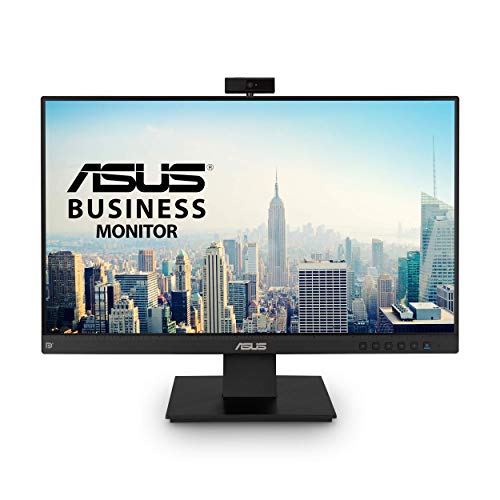
This 24-inch Full HD IPS monitor offers integrated webcam, mic array, and stereo speakers, with a frameless design and multiple video conferencing features. Best for: offices needing a single display for both surveillance and virtual meetings. Choose this if you want built-in collaboration features. Caution: built-in camera is not a dedicated surveillance camera; verify privacy needs and usage policies.
Onvier IP Camera Monitor

The Onvier IP Camera Monitor is designed to connect with over 10,000 IP camera models and servers, supporting ONVIF compatibility and RTSP over HTTP to traverse firewalls. Best for: enterprises needing broad compatibility with many camera brands. The device properties Explorer helps administrators tailor settings quickly. Caution: integration may require network configuration knowledge for optimal performance.
Buying Guide: Key Considerations For Public View IP Camera Monitors
- Screen size and layout: Choose a size that fits the surveillance desk without causing fatigue. Wider screens help in viewing multiple feeds at a glance, while compact options suit tight spaces or mobile setups.
- Input options: Ensure HDMI, VGA, AV, BNC, or IP-based inputs match your cameras and DVR/NVR systems. Multi-input displays simplify integration across devices.
- IP camera compatibility: ONVIF support and RTSP capabilities promote broader compatibility. If you operate mixed-brand cameras, prioritize devices like Onvier or testers that handle numerous models.
- Image quality and contrast: Resolution, brightness, and contrast affect how well details are discerned under varied lighting. Full HD and higher are preferable for license plate or face recognition tasks at a distance.
- Durability and uptime: For 24/7 surveillance, look for robust builds, consistent power delivery, and low input lag to maintain clear feeds across shifts.
- On-site testing capability: If you deploy cameras frequently, a tester monitor like EVERSECU can streamline pre-deployment checks before committing to a permanent display.
- Privacy and security: For office or public displays, ensure cameras and monitors are used in compliance with privacy policies and local regulations.
Frequently Asked Questions
- What features should I prioritize in a public view IP monitor?
– Prioritize compatibility with your IP cameras, a comfortable viewing size, clear image quality, and multiple input options to simplify integration. - Is ONVIF compatibility important?
– Yes, it enables plug-and-play connection with many camera brands and models, reducing setup time and ongoing maintenance. - Can a small monitor be enough for surveillance?
– It can be, for secondary viewpoints or on-the-go checks. For primary monitoring, larger screens reduce eye strain and improve multitasking. - Should I use a dedicated tester monitor for field work?
– A tester monitor helps verify camera feeds and performance on site before permanent installation, improving reliability and reducing troubleshooting time. - What is RTSP over HTTP, and why does it matter?
– RTSP over HTTP allows feeds to traverse firewalls more easily, simplifying remote viewing and reducing network configuration complexity. - Are built-in webcams on business monitors a security risk?
– They can be, depending on privacy policies. If surveillance feeds are sensitive, rely on dedicated cameras and disable unnecessary camera features.