Best Professional Sports Photography Lenses for Elite Coverage
Choosing the right lens can dramatically improve action capture, tracking speed, and image quality in fast-paced sports. This guide highlights five top options, ranging from ultra-telephoto zooms to fast telephotos and versatile all-in-one ranges. Each lens is evaluated on reach, speed, stabilization, and compatibility to help you select the best fit for your camera system and shooting style.
Summary of Selected Products
| Product | Brand | Focal Range | Key Features |
|---|---|---|---|
| Canon RF 200-800mm F6.3-9 IS USM (World’s first AF super-telephoto zoom) | Canon | 200-800mm | Extender compatibility, built-in Image Stabilization, lightweight for handheld wildlife/sports |
| Canon RF70-200mm F2.8 L IS USM | Canon | 70-200mm | Bright f/2.8, image stabilization up to 5 stops, sharp for action |
| Canon RF 75-300mm F4-5.6 | Canon | 75-300mm | Lightweight telephoto range, versatile for sports and wildlife |
| Canon RF 70-200mm F4 L IS USM | Canon | 70-200mm | Constant f/4, portable L-series quality, reliable IS |
| Sigma 70-200mm f/2.8 DG DN OS for Sony E | Sigma | 70-200mm | Bright f/2.8, OS stabilization, fast AF for sports and wildlife |
Note: The included products span several brands and mounts to suit a range of professional setups. If you shoot with Canon RF, Sony E, or other mirrorless ecosystems, each lens offers distinct advantages for tracking and reach in sports environments.
Canon RF200-800mm F6.3-9 IS USM — Ultra-telephoto Versatility

The Canon RF200-800mm F6.3-9 IS USM provides an expansive zoom range from 200mm to 800mm, ideal for distant action in outdoor sports and wildlife. This lens incorporates built-in image stabilization to improve handheld performance during fast-paced events and birding after dusk. It integrates with Canon RF extenders (RF1.4x and RF2x) to extend reach without sacrificing much image quality at any focal length. The ultra-telephoto zoom helps capture close-ups of distant athletes or subjects without physically moving through crowds or risk zones.
Canon RF70-200mm F2.8 L IS USM — Fast Telephoto Zoom

This professional-grade telephoto zoom delivers a bright constant f/2.8 aperture across the zoom range, enabling faster shutter speeds in indoor arenas or shaded fields. Its compact, relatively lightweight design makes it suitable for hand-held shooting during games or parades. Optical image stabilization provides up to 5 stops of shake correction, helping maintain sharpness when panning with fast action. The lens pairs well with Canon EOS R series bodies for high-resolution capture and accurate color rendering.
Canon RF 75-300mm F4-5.6 — Versatile Range On The Go
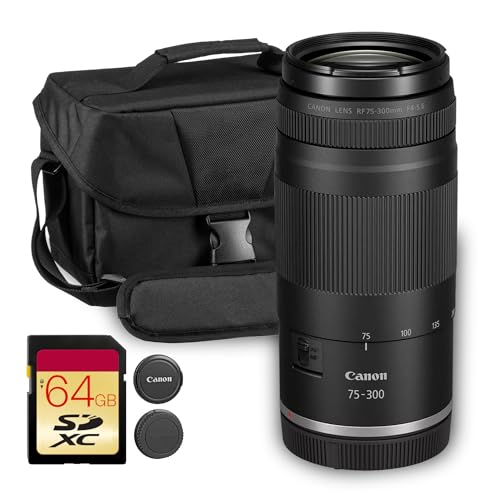
With a versatile 75-300mm range, this lightweight telephoto option covers a broad spectrum of sports scenarios, from lower-angle close-ups to distant wide shots. The compact build makes it practical for travel or field access, and the lens is designed for Canon RF-mount mirrorless cameras, offering a balance between reach and portability for speed-focused sports photography in daylight or overcast conditions. The variable aperture is a trade-off for portability but remains sufficient for many outdoor sports environments.
Canon RF 70-200mm F4 L IS USM — Lightweight L Performance

The RF 70-200mm F4 L IS USM emphasizes portability without sacrificing Canon L-series optical quality. Its constant f/4 aperture supports reliable exposure across the zoom range, while four UD elements minimize chromatic aberration for sharp edge-to-edge performance. Air Sphere Coating reduces flare, which helps maintain contrast in bright stadiums or backlit action. This lens is a solid choice for sports photographers who need a capably sharp telephoto with a lighter footprint.
Sigma 70-200mm f/2.8 DG DN OS for Sony E — Pro-Level Sharpness

This Sigma lens for Sony E-mount combines a fast constant f/2.8 aperture with OS stabilization, supporting sharp action shots in variable lighting. The dual HLA motors deliver swift, accurate autofocus, which is critical for tracking fast-moving players. The OS stabilization enables steady handheld shots and smooth video, with multiple OS modes to adapt to panning and erratic motion. The design emphasizes reduced focus breathing and robust build for sports production environments.
Sigma 150-600mm F5-6.3 Sports DG OS HSM — Long-Reach Power

The Sigma 150-600mm F5-6.3 Sports DG OS HSM offers exceptional reach for distant action, from large stadiums to birds in flight. While it has a slower maximum aperture than shorter telephotos, the extended reach makes it valuable for wildlife and long-range sports scenarios. Its OS stabilization and HSM drive deliver steady framing and precise focusing, supporting sharp captures during fast sequences and long-distance tracking.
Buying Guide: Key Purchase Considerations for Sports Lenses
When selecting a professional sports lens, consider reach, speed, autofocus performance, stabilization, weight, and compatibility with your camera system. Longer focal lengths grant distant subject retrieval but require faster performance to prevent motion blur. Fast constant apertures (f/2.8 or f/4) maintain shutter speed in indoor or low-light venues and enable better subject isolation through background compression.
Stabilization is critical for handheld action; evaluate lens IS performance or OS modes and how they align with your shooting distance and movement. Weight and balance influence endurance during long games. For birding or wildlife, subjects may move unpredictably, making AF accuracy and tracking essential. Compatibility with extenders, weather sealing, and build quality should match demanding field conditions.
Comparing prime telephotos versus zooms, zoom lenses provide flexibility at the event to adjust framing without changing position. In fast sports, a bright telephoto zoom like f/2.8 or f/4 can reduce shutter drag and help maintain consistent exposure. For field sports with bright daylight, a lighter 70-200mm range may be optimal for quick reaction and mobility, while 200-800mm or 150-600mm options excel for distant action and wildlife coverage.
Budget and portability are also practical considerations. High-end L-series and professional-grade lenses deliver excellent optical performance but can be heavy and expensive. All-in-one or longer-range options may reduce the need to switch lenses mid-game, yet trade-offs in weight and speed should be weighed against your shooting style and event type.