Best Portable Live Streaming Cameras for on-the-Go Creators
Looking for a compact, reliable camera to broadcast live or post quick clips on YouTube, TikTok, or social streams? This guide highlights 5 portable live streaming cameras that balance pocket-friendly size with solid streaming features. Ideal buyers: solo creators needing face tracking and easy app integration, travelers documenting adventures, and vloggers who want quick setup without a heavy rig. Below, compare each option, who it’s best for, and practical trade-offs to help you choose.
Chosen Products At A Glance
| Product | Best For | Key Strength | Limitations |
|---|---|---|---|
| Lmzour 4K Vlogging Camera | Solo creators, travel vloggers | 4K video, 330° face tracking | Smaller ecosystem of accessories |
| CGXUED Vlogging Camera (White) | First-time recorders | One-button recording, 7-hour battery | Basic feature set |
| 4K Pocket Camera (NIKICAM) | Self-shot creators, social clips | 330° rotating lens, face tracking | Small screen size |
| REEDTOCK 4K Pocket Camera | Travel, fitness vlogging | 75MP photos, 330° tracking | AI tracking may struggle with fast crowds |
| EMEET PIXY Dual-Camera PTZ | Professional streams, complex scenes | Dual-camera AI tracking, 4K | More setup than pocket cams |
Lmzour 4K Vlogging Camera With 330° Rotating Lens

The Lmzour camera targets beginners and first-time content creators who want simple, high-quality results. It shoots 4K video and 75MP photos, with fast autofocus and a wide-angle lens to keep scenes sharp. Its portability makes it a strong choice for YouTube and TikTok creators who vlog while traveling or daily life. Best for solo creators who want reliable auto-framing during live streams or on-the-go recording. One limitation is a smaller ecosystem of accessories compared to larger brands, which can affect expandability.
- Best for: Solo creators and travel vloggers
- Why chosen: 4K video, 75MP photos, face tracking for hands-free streaming
- Limitations: Accessory ecosystem is limited
CGXUED Vlogging Camera With 180° Rotating Lens

The CGXUED pocket camera is designed for quick setup and easy capture. Its one-button recording and included 32GB card help beginners start filming right away, with a battery that lasts up to 7 hours for day-long outings. It’s best for travelers or daily-life vloggers who want a compact, grab-and-go solution. A potential limitation is a relatively straightforward feature set that may lack advanced controls found on pricier models.
- Best for: First-time recorders and travelers
- Why chosen: One-button start, long battery life
- Limitation: Basic feature set
4K Pocket Camera For Vlogging By NIKICAM
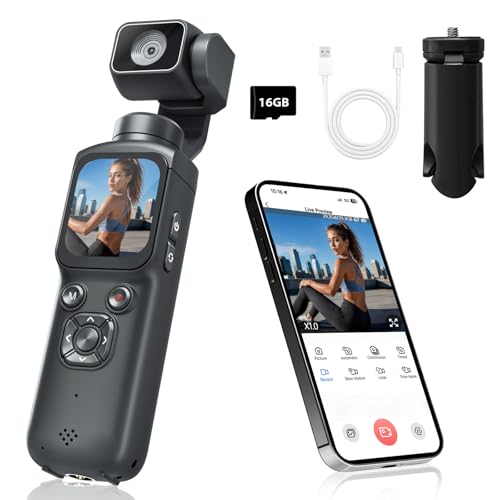
The NIKICAM pocket camera emphasizes versatility with a 330° rotating lens and face tracking, making it a strong pick for self-shot vlogs and daily clips. The 4K/30fps video and 75MP photos deliver crisp results, and the 1.72″ touchscreen supports quick adjustments. Best for creators who want flexible angles and easy sharing via social media. Choose this if you want strong creative control in a pocket form factor; avoid if you need a larger display for framing complex scenes.
- Best for: Self-shot creators and daily vloggers
- Why chosen: Rotating lens, face tracking, high-res photos
- Limitation: Small screen size
REEDTOCK 4K Handheld Pocket Camera
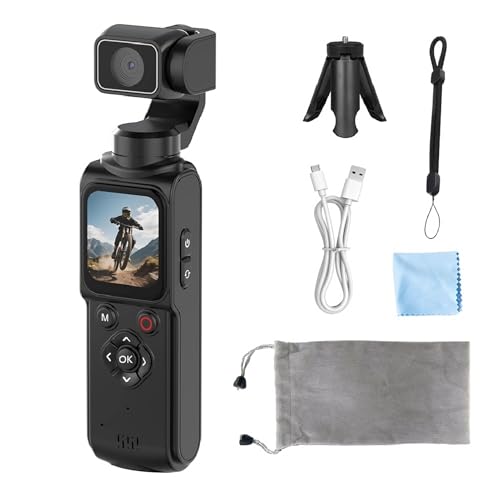
The REEDTOCK camera blends 4K video with 75MP photos and 330° auto-tracking for smooth self-recording. Its 1.72″ touchscreen and built-in WiFi simplify quick transfers to a phone, making it well-suited for social media creators who need fast posting. Best for travelers and fitness vloggers who shoot solo; note that tracking performance can be challenged in crowded or very dynamic scenes, requiring manual calibration or framing adjustments.
- Best for: Travel and solo vlogging
- Why chosen: 4K/75MP, smart auto tracking
- Limitation: Tracking may struggle with fast-moving crowds
EMEET PIXY Dual-Camera AI-Powered PTZ

EMEET PIXY combines two cameras for advanced AI tracking and professional live streaming. It uses a main 4K camera with PDAF and a second AI-assisted camera to optimize focus and exposure, making it suitable for higher-end streams, product demos, or classroom setups. Best for creators seeking precise framing, gesture control, and studio-like control via software. A potential limitation is the need for desktop software and a slightly more involved setup compared to pocket cameras.
- Best for: Professional streams and dynamic scenes
- Why chosen: Dual-camera AI tracking, wide PTZ range
- Limitation: More setup than pocket cams
Buying Guide: Portable Live Streaming Camera Considerations
What matters most for live streaming on the go is balancing image quality, tracking accuracy, and ease of use in a compact form. Consider these factors when choosing:
- Video resolution and frame rate: For social streams, 4K at 30fps or 1080p at 60fps provides smooth footage.
- Tracking and framing: Face tracking and rotating lenses help keep you centered during solo shoots.
- Portability and battery life: Pocket-sized designs pair with long-day batteries for travel days.
- WiFi or app integration: Quick transfers and live stream setup are easier with built-in WiFi or companion apps.
- Audio support: Built-in mics or external mic support improve overall stream quality.
- Storage: Cards (e.g., 16GB–32GB) or internal storage determine how much you can record before offloading.
- Accessories: Tripods, gimbals, and carrying cases extend use in varied environments.
FAQ
- What’s the best portable camera for live streaming solo? A model with face tracking and a reliable app for quick streaming tends to perform best for solo streams.
- Do pocket cameras support direct live streaming? Some models offer direct streaming via built-in WiFi or companion apps; others require a computer or phone as a source.
- Is 4K necessary for mobile streaming? It depends on your audience and bandwidth; 4K provides future-proof footage, while 1080p is widely compatible and lighter on storage.
- How important is battery life for travel vlogging? Very important; longer battery life reduces frequent recharges during day-long shoots.
- Should I choose a dual-camera system for streams? Dual-camera setups offer more control over framing and perspectives, but require more space and setup time.
- Can these cameras work with popular streaming platforms? Most support standard streaming workflows via apps, USB webcams, or capture cards; check compatibility with your platform.