Best Picture and Negative Scanners for Preserving Old Photos
Preserving memories from film negatives and old prints is easier than ever with dedicated scanners. This guide highlights five reliable options that convert slides, negatives, and photos into high-quality digital files. Each model offers a built-in display, easy loading, and standalone performance to suit different workflows. Whether you’re cataloging a family archive or sharing memories with relatives, these scanners help you digitize efficiently without a computer.
| Product | Key Benefit | Display | Storage |
|---|---|---|---|
| KODAK Slide N SCAN | 5″ LCD, supports 135/110/126 film and slides | Yes | SD Card |
| DigitPro Film & Photo Scanner | 4-in-1: slides, negatives, photos, business cards | 5″ LCD | 8GB SD + built-in memory |
| Plustek Photo Scanner ePhoto Z300 | Fast 2 seconds per 4×6 photo; CCD sensor | Optional (no LCD listed) | Uses USB connection |
| ClearClick QuickConvert 2.0 | No computer required; 22 MP interpolation | 5″ LCD | SD card |
| Kedok 5″ LCD Slide & Negative Scanner | 4-in-1 scanner incl. name cards | 5″ LCD | 8GB SD included |
Below are five focused product profiles to help you compare features, usability, and output quality. Each section includes a direct link to purchase, a product image, and a concise feature summary.
KODAK Slide N SCAN Film & Slide Scanner

The KODAK Slide N SCAN is a dedicated film and slide digitizer designed for simple, quick conversion of traditional color and black-and-white slides and negatives. It supports 135, 126, and 110 film formats and saves output as JPEG files to an SD card (sold separately). A 5-inch LCD display provides a gallery-like preview, enabling on-device viewing, minor edits, and easy sharing. Quick-load trays and adapters for multiple film formats streamline the scanning workflow, making it suitable for family archives and hobbyists seeking a self-contained solution.
Key features include a 1422 MP-like processing specification for digital conversion, a large LCD screen with a wide viewing angle, and convenient input via quick-feeding trays. Consumers should consider SD card compatibility and whether HDMI output is needed for their setup. The device is best for those who want a single-device solution for a range of film sizes without needing a computer.
DigitPro Film & Photo Scanner

The DigitPro Film & Photo Scanner combines several digitization modes in one device. It can handle 35mm slides, 135 and 110 negatives, as well as printed photos (3R, 4R, 5R) and business cards. A built-in 128 MB memory plus an 8 GB SD card provide immediate storage, and a 5-inch LCD preview screen allows on-device viewing and basic editing without a computer. This model appeals to users who want a standalone scan-to-file workflow with flexible media compatibility and straightforward operation.
Considerations include storage capacity, the need for additional SD cards, and whether users require higher optical resolution than standard consumer offerings. While it supports a variety of media, some users may prefer a higher raw resolution for large-format prints or detailed archival work. The device suits casual digitization and organization tasks well.
Plustek Photo Scanner Ephoto Z300

The Plustek ePhoto Z300 is positioned as a fast, high-efficiency photo scanner designed to replace older flatbeds for photo-first digitization. It supports 4×6, 5×7, and 8×10 photos, along with 3×5 and other sizes. The device emphasizes speed with two-second scans for typical 4×6 images and an efficient, streamlined workflow that’s a clear improvement over traditional flatbed scanning. It targets users who regularly digitize printed photos and want a quick, desk-friendly solution that scales with volume.
Important considerations include supported photo sizes, optical resolution, and whether the macro features or batch capabilities meet your needs. For households with large archives, the speed and ease of use make this model attractive, though some professionals may require higher bit depths or color management features found in higher-end scanners.
ClearClick QuickConvert 2.0 Photo, Slide, and Negative Scanner
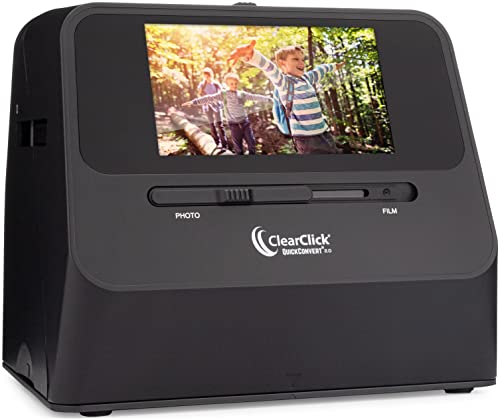
The ClearClick QuickConvert 2.0 is designed for rapid, computer-free digitization of photos, slides, and negatives. Scanning performance is notable for its speed, taking roughly 2–3 seconds per item, and it interpolates to 22 MP for higher-quality JPEGs. It stores images on an SD card and features a built-in rechargeable battery for cordless operation, alongside a 5-inch LCD for immediate preview. This model is well-suited for one-off scans or occasional batch tasks in spaces without a computer.
Considerations include the quality of interpolation (22 MP interpolated versus native scans), battery life, and the need for a consistent light source. While convenient for quick digitization, some users may prefer devices offering native high-resolution capture or more robust editing capabilities on-device.
Kedok 5″ LCD Slide & Negative Scanner

The Kedok 5-inch LCD Slide & Negative Scanner combines 4-in-1 capabilities with a large display for real-time viewing of negatives, slides, and photos, including name cards. It supports 135 and 110 color and black-and-white negatives, slides, and prints up to 5R sizes, saving directly to an internal memory plus an included 8 GB SD card. The packaging notes wide-viewing, shareability, and a gift-worthy design for families and friends. It also supports SD card storage up to 32 GB.
Practical considerations include the overall scan resolution, the reliability of the built-in memory, and whether the device’s expanded format support aligns with your archives. This model offers a compelling balance of versatility, ease of use, and a decorative footprint suitable for home or office use.
Buying Guide: Key Purchase Considerations
- Media compatibility: Confirm which film formats (35mm/135, 110, 126) and print sizes the scanner supports, plus whether it handles slides, negatives, name cards, and various photo print sizes.
- Display and editing: A large LCD helps with on-device previewing and basic adjustments. Consider color accuracy, brightness, and whether you need built-in editing features or USB/HDMI connectivity for a computer workflow.
- Storage and connectivity: Look for internal memory plus external storage options (SD cards up to a certain size, USB, or HDMI output). Ensure compatibility with your computer, operating system, and preferred file formats (JPEG, TIFF, etc.).
- One-touch versus manual workflow: Some models offer simple one-touch scanning; others require more manual input. Decide between standalone operation and computer-assisted workflows based on your routine.
- Speed and efficiency: If you have large archives, prioritize faster scan times (per image) and batch-loading capabilities. Consider whether the device supports continuous loading and how it handles batch processing.
- Output quality: Native resolution versus interpolated resolution varies by model. For high-detail needs, consider scanners with higher optical resolution and good color depth, especially for archival projects.
- Storage capacity and expansion: Check included memory and whether the device supports larger SD cards. If you expect long-term archiving, plan for additional storage needs and backup workflows.
- Power and portability: Some scanners operate on AC power, others include rechargeable batteries. If you need on-the-go digitization, battery-powered options can be advantageous.
- Ease of use and support: User-friendly interfaces, clear manuals, and reliable customer support impact long-term satisfaction, especially for first-time users.