Best Negative Scanners for Old Negatives: Top Picks for Digitizing Your Film Collection
Digitizing old negatives and slides lets you securely preserve memories and share them with family. The following five scanners are among the best options for converting 35mm, 126, 110, and other film formats into high-quality digital files. Each model offers a built-in display, easy loading, and direct-to-SD card or USB output, so you can scan without a computer. Below you’ll find a quick comparison and detailed product profiles to help you choose the right device for your archive.
| Product | Brand | Key Benefit | Amazon Link |
|---|---|---|---|
| KODAK Slide N SCAN | KODAK | 5” LCD, fast lightweight loading for 135/110/126 | View |
| HP FilmScan | HP | Touch screen, direct SD card saving | View |
| Magnasonic All-in-One | Magnasonic | 24MP output with HDMI display options | View |
| Kodak Slide N Scan Max | KODAK | Large 7” LCD, easy load for multiple formats | View |
| ClearClick QuickConvert 2.0 | ClearClick | No computer, quick 14-22MP scans | View |
KODAK Slide N SCAN Film & Slide Scanner
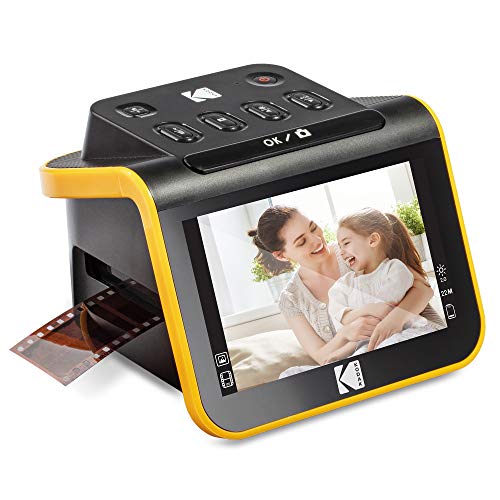
The KODAK Slide N SCAN is a versatile film and slide scanner designed to quickly convert old negatives and slides into digital JPEGs. It supports 135, 110, and 126 film formats and includes a 5” LCD display for on-device viewing. A quick-load tray enables continuous scanning, while adapters for multiple film formats simplify setup. Files can be saved to an SD card (not included) and can be viewed or edited directly on the device or via HDMI/USB connections. This model is a solid option for archiving both color and black-and-white negatives in one compact unit.
HP FilmScan Touch Screen Scanner
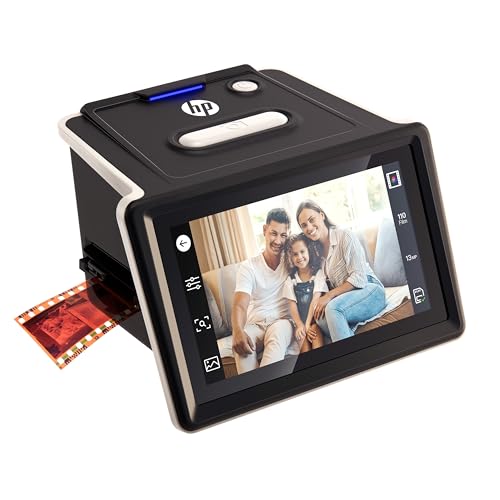
The HP FilmScan blends a responsive 5” touch screen with straightforward controls and direct SD card saving. It can handle both color and black-and-white negatives as well as mounted or unmounted slides from formats like 135, 110, and 126. Its gallery view helps preview and edit scans, and the device supports quick import for fast digitization. The model prioritizes user-friendly operation, making it suitable for casual historians and families preserving a mixed-format collection.
Magnasonic All-in-One 24MP Film Scanner
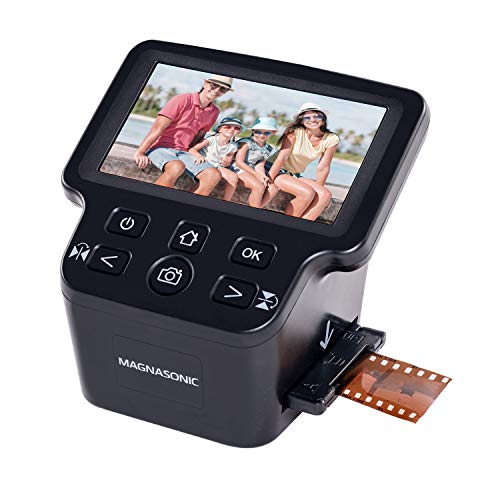
The Magnasonic FS71 offers a built-in 24MP scanning capability with a 5″ display and HDMI output for viewing scans on a larger screen. It supports 35mm, 126, 110, and Super 8 film as well as 135/126/110 slides. Built-in memory and an SD card slot provide convenient storage expansion, and the device emphasizes a straightforward workflow—from load to save. This model is well-suited for users who want a single device to handle a wide range of formats with clear on-device previews.
Kodak Slide N Scan Max Digital Film Scanner

The Kodak Slide N Scan Max expands on the standard model with a larger 7” display and robust easy-load features. It supports 135, 110, 126 formats and provides a solid set of adapters for fast conversion of color and black-and-white negatives into digital files saved to an SD card (not included). The expansive display aids in immediate review and editing, making it convenient to archive a large batch of slides and negatives with minimal fuss.
ClearClick QuickConvert 2.0
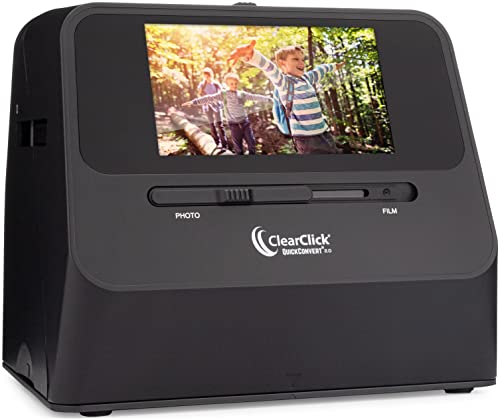
The ClearClick QuickConvert 2.0 is designed for quick, standalone scans without a computer. It delivers 14MP native scans with interpolation up to 22MP and stores JPEGs on an SD card. A built-in rechargeable battery supports cordless scanning, and a 5” LCD screen provides immediate previews. This model is ideal for those who value portability and the ability to scan on the go or in spaces without a computer setup.
DigitPro Film And Slide Scanner

The DigitPro all-in-one scanner targets 35mm, 126, 110 film, negatives and slides with a 5” LCD for instant previews. It supports 50mm slide frames and includes easy-load inserts for smooth workflow. Files can be saved to the built-in memory or to an SD card (up to 64GB, FAT32/EXFAT). The device emphasizes a straightforward, one-step scanning experience, useful for preserving a broad range of old formats in a single unit.
Buying Guide: Key Purchase Considerations
- Format compatibility: Ensure the scanner supports your film types (35mm, 126, 110, Super 8) and slide dimensions. Some models include multiple adapters; others may require separate kits.
- Display and preview: A large LCD display helps you review edits on-device before saving. Consider tilt and brightness for comfortable viewing in different lighting.
- Storage options: Look for built-in memory plus SD card support to store scans. Check maximum card capacity and file formats (JPEG is typical).
- One-touch vs. manual: One-touch scanning speeds up workflows, but some users prefer scanners with manual adjustments for color, brightness, and cropping.
- Power and portability: Battery-powered units offer cordless scanning, ideal for travel or spaces without reliable power. Consider whether you need HDMI output for larger viewing.
- Software and usability: Some scanners require computer software for processing or editing, while others provide direct-to-card workflows. Check compatibility with your operating system if you plan to transfer files to a PC or Mac.
- Maintenance and reliability: Look for models with simple loading trays, clear instruction manuals, and accessible replacement parts or accessories (adapters, cleaning brushes).
- Price-to-value: Balance feature set (display size, scanning speed, format support) with your budget, especially if you plan to digitize a large archive.
- Future-proofing: If you anticipate expanding your collection, prioritize scanners with broad format support and easy access to replacement adapters and media.