Best Multi Format Film Scanners for Digitizing 35mm to 120 Format
Answering the need for versatile film digitizing, these multi format film scanners let you convert 35mm, 120, and other formats into high-quality digital files. They’re ideal for photo archivists, scrapbookers, and hobbyists who want a simple, standalone workflow or a quick transfer to a computer or SD card. The top picks below are chosen for usability, format support, and image clarity. The quick summary table after the intro highlights who each product is best for.
| Product | Best For | Format Support | Key Benefit |
|---|---|---|---|
| JJC Negative Film Digitizer (Phone-Based) | Mobile digitizing on the go | 35mm, 120 | Portable with adjustable backlight |
| KODAK Slide N SCAN | Home gallery view and quick sharing | 135, 110, 126 films; slides | 5” LCD for instant previews |
| DigitPro Photo Scanner | Standalone, no computer needed | 35mm, 110, slides, photos | Built-in 5″ screen |
| HP Film & Slide Scanner (5″) | Touchscreen ease and color accuracy | Slides, 35mm, negatives | 13MP sensor, 22MP interpolation |
| JJC Negative Film Digitizer (Camera-Based) | Precise control with DSLR/mirrorless | 35mm, 120 | Rail and backlight for macro focus |
JJC Mobile Film Digitizer for 35mm & 120 Film

This mobile film digitizer uses your smartphone camera to convert 35mm and 120 format film into digital files. It includes a detachable wireless remote to capture without touching the screen, and a magnetic backlight with adjustable brightness from level 1 to 11. It’s ideal for photographers who want a compact, phone-based workflow and rapid sharing. Note: no software is provided; users should download a free app such as Snapspeed to process the scans. Best for: mobile users who need quick, on-site digitization and easy sharing. Limitation: relies on a smartphone app for processing, which may affect workflow if you prefer desktop software.
How it helps buyers:
- Best for on-the-go digitizing and fast sharing via your smartphone.
- Better for users who already shoot with a mobile device and want a simple setup.
- Choose this if you value portability and wireless control over full PC workflow.
KODAK Slide N SCAN Film & Slide Digitizer

This 5” LCD-based scanner focuses on 135, 126, 110 film formats and slides, allowing direct viewing and editing on the built-in screen. It supports SD card storage (not included) and includes a 50mm slide holder plus adapters. Best for: households archiving mixed negatives and slides with a built-in viewing gallery. Limitation: SD card and included accessories may vary by bundle; check compatibility with your storage needs.
Why it stands out:
- Better for people who want an all-in-one viewing and scanning experience without a computer.
- Good for families who want to preview and share memories directly from the device.
DigitPro Photo Scanner and Film Digitizer
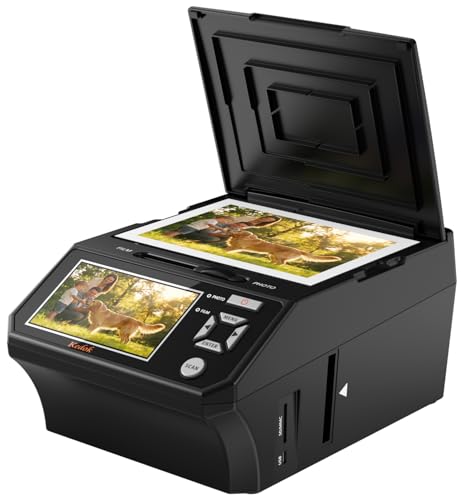
DigitPro’s standalone device converts 35mm, 110 negatives, slides, and even printed photos up to 5R with an easy 5-inch display. It operates without a computer and includes an 8GB SD card for direct storage. Best for: users who want a simple, all-in-one scanner that doesn’t require a computer. Limitation: built-in storage is modest; larger collections may require additional SD cards. Why selected: strong all-in-one capability and user-friendly interface for non-technical users.
Practical note:
- Best for: seniors and beginners who want a straightforward digitizing experience.
- Better for: households with a mix of film types who prefer a single device for copying memories.
HP Touch Screen Film & Slide Scanner (5″)
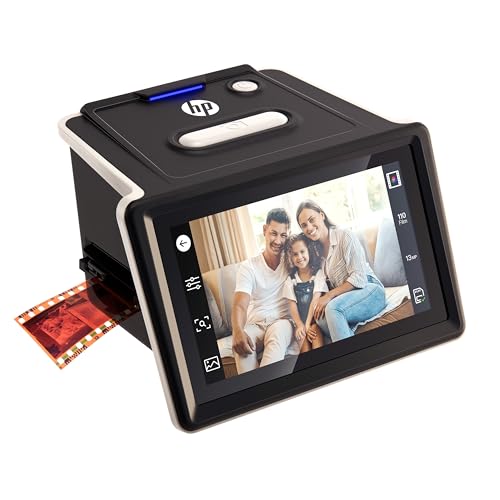
The HP FilmScan 5” Touch Screen Scanner provides a touchscreen gallery mode and a 13MP CMOS sensor with 22MP interpolation for enhanced image quality. It handles slides and negatives, offering a direct, computer-free workflow with quick preview and editing. Best for: users who want a compact, color-accurate device with an intuitive touch interface. Limitation: smaller physical size may limit very large or dense image batches. Why it’s chosen: strong balance of ease-of-use, image quality, and direct-gallery functionality.
Key considerations:
- Ideal for: home galleries and quick, on-device previews.
- Choose this if you value a modern touchscreen interface and reliable color processing.
JJC Negative Film Digitizer for 35mm & 120 (Camera-Based)

This camera-based digitizer uses your existing DSLR or mirrorless body with a slide rail and adjustable backlight to capture 35mm and 120 film. It includes a 10-level brightness backlight and a sliding rail for precise focusing. Best for: photographers who own a quality camera and want precise control over exposure and focus. Limitation: not suitable for 35mm slides and requires compatible camera gear. Why selected: precise macro-style calibration and flexible distance control for high-resolution scans.
Usage tips:
- Better for: controlled studio setups and photographers who need depth-of-field control.
- Avoid this if you want a completely standalone device without external cameras.
Professional 22MP Film Scanner with 4.3″ LCD
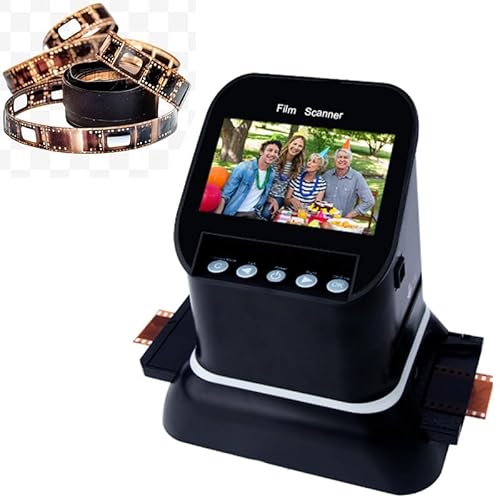
This generic 22MP film scanner handles 35mm, 120, 127, and 126 negatives, along with slides. It offers internal storage and SD card expansion for saving images directly, plus adjustable brightness and color. Best for: budget-minded users who want multi-format support in a single device. Limitation: generic brand features may vary in precision; verify outputs match your desired color fidelity. Why chosen: versatile format handling at a lower price point with direct-to-storage options.
HP Touch Screen Film & Slide Scanner – 7” LCD

The 7” HP FilmScan model expands on the smaller variant with a larger display, a 13MP sensor, and both USB and HDMI outputs for broader compatibility. It supports quick-feed scanning and 50mm adapters for slides. Best for: classrooms, family archives, or small offices needing a larger view and quick workflow integration. Limitation: larger size means less portability than pocket devices. Why picked: strong balance of display size, connectivity, and practical scanning speed.
Buying Guide: Key Considerations for Multi Format Film Scanners
- Format range: Confirm the device supports your film types (35mm, 120, slides, negatives). Some models handle multiple formats but may exclude slides.
- Standalone vs. computer-based: Decide if you want a built-in screen and storage or a device that feeds into a PC or mobile app.
- Display size and visibility: Larger screens improve on-device previews and editing, reducing guesswork during scanning.
- Backlight brightness and consistency: A uniform light source minimizes grain and improves contrast across frames.
- Connectivity and storage: Look for SD card compatibility, USB/HDMI outputs, and ease of data transfer.
- Ease of use: One-button scanning and intuitive menus help, especially for beginners and seniors.
- Price vs. features: Balance needed features (e.g., interpolation, color accuracy) against budget.
FAQ
- What is the best option for a beginner with family photos? A device with a built-in screen, simple controls, and easy SD storage, like the DigitPro or KODAK Slide N SCAN, is ideal for quick, user-friendly digitizing.
- Do I need a computer to use these scanners? Some models are standalone with screens; others require a computer or a mobile app to process scans.
- Can I scan both slides and negatives with one device? Many models support a range of formats, but check each product’s exact compatibility for slides vs. negatives.
- Is a larger screen necessary for good results? A larger screen improves on-device viewing and reduces errors in cropping or focus, but not all buyers need it.
- Are camera-based digitizers worth it? They offer high control and macro-focused detail but require compatible cameras and setups, which can be more complex.
- What storage options should I expect? SD cards are common; some devices support internal memory or USB/HDMI outputs for external viewing.