Best Mirrorless Cameras With in-Body Image Stabilization (IBIS)
This article highlights top mirrorless cameras with in-body image stabilization (IBIS) to help you shoot sharper photos and steadier video. The selections cover full-frame and APS-C models from Panasonic, Canon, and Fuji, emphasizing reliable stabilization, fast autofocus, and versatile video features. Each listed product is evaluated based on stabilization performance, image quality, and usability in real-world scenarios for enthusiasts and creators alike.
| Product | Brand | IBIS Type | Sensor |
|---|---|---|---|
| Panasonic LUMIX S5II | Panasonic | Active I.S. with Phase Hybrid AF | Full-Frame |
| Panasonic LUMIX G85 | Panasonic | Dual Image Stabilization (IBIS + O.I.S.) | Micro Four Thirds |
| Panasonic LUMIX S5IIX | Panasonic | Active I.S. with Phase Hybrid AF | Full-Frame |
| Canon EOS R6 Mark II | Canon | In-body stabilization with Dual Pixel AF (IBIS integration) | Full-Frame |
| Fujifilm X100VI | Fujifilm | In-body stabilization (IBIS) | APS-C |
Note: The listed products feature IBIS in various configurations and are paired with a range of lenses to maximize stabilization across photography and video use cases. This guide focuses on those models most relevant to in-body stabilization performance and real-world shooting comfort.
Panasonic LUMIX S5II Mirrorless Camera
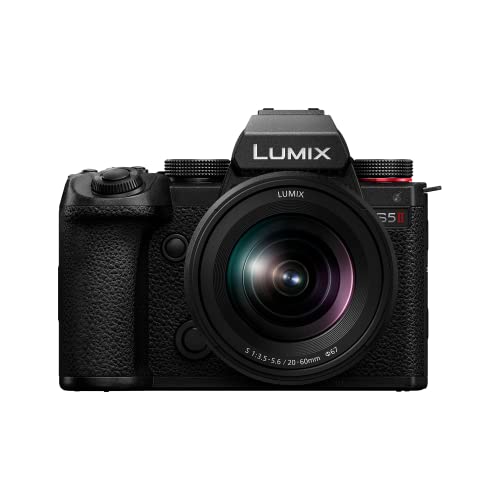
The Panasonic LUMIX S5II represents a compact, full-frame hybrid system with Phase Hybrid Autofocus and enhanced stabilization. It features an upgraded image sensor, faster signal processing, and an Active I.S. system designed to improve handheld video stability during walking shots. The combination of 24.2 MP resolution and robust autofocus makes it suitable for both stills and video work, particularly for travelers and content creators who need reliable stabilization in diverse conditions.
Panasonic LUMIX G85 4K Camera

The G85 pairs a 16 MP Micro Four Thirds sensor with Dual Image Stabilization (IBIS plus lens-based O.I.S.) to deliver steadier hand-held shots in both photo and 4K video. Its compact body and lighter form factor make it an appealing option for travelers and hobbyists who want reliable stabilization without sacrificing portability. A built-in diopter adjustment enhances eye-level comfort for extended shooting sessions.
Panasonic LUMIX S5IIX Mirrorless Camera

The S5IIX extends the S5 II platform with 5.8K Pro-Res, RAW over HDMI, and advanced video options including IP streaming. Its Phase Hybrid AF and Active I.S. stabilization support effective handheld video, offering greater flexibility for creators who require high-quality color, dynamic range, and robust stabilization during motion-heavy shoots. The camera is designed for demanding video workflows while maintaining solid still-image performance.
Canon EOS R6 Mark II

The Canon EOS R6 Mark II is a full-frame mirrorless camera that emphasizes speed and versatility. It features a 24.2 MP CMOS sensor and Canon’s DIGIC X processor, delivering solid noise control and responsive autofocus. While IBIS is part of Canon’s stabilization approach, the R6 II’s performance shines in high-speed continuous shooting and low-light scenarios, making it a strong option for action and event photography where stabilization assists in keeping subjects sharp.
Panasonic LUMIX S9 Full-Frame

The S9 is designed for social media and travel with a compact, lightweight body while offering high-end imaging and fast wireless transfers. It emphasizes stability and ease of use in everyday shooting, with strong low-light performance and reliable stabilization to ensure sharp results when shooting handheld in various environments. The feature set supports seamless sharing through wireless transfers and quick posting workflows.
Canon EOS R100

The Canon EOS R100 is an entry-level, lightweight option featuring a 24.1 MP APS-C sensor and Dual Pixel CMOS AF. While it focuses on accessibility and mobility, it provides a practical starting point for creators who want reliable stabilization features within a smaller package. The camera pairs well with Canon’s evolving ecosystem of stabilized lenses and accessories for more stabilized shooting across scenarios.
Canon EOS R7

The EOS R7 offers a high-resolution APS-C sensor and fast autofocus designed for sports and action photography. Its stabilization approach complements high-speed shooting with robust AF performance. The combination of 32.5 MP resolution and flexible shooting modes makes it a strong option for creators who value sharp details and reliable tracking in dynamic scenes.
Fujifilm X100VI

The Fujifilm X100VI integrates an in-body stabilization system within a compact fixed-lens design. Its 40.2 MP APS-C X-Trans CMOS 5 sensor, optical viewfinder enhancements, and 45-degree tilting LCD provide versatile framing options. The stabilization supports sharper handheld stills and steadier video, aligning with street photography and travel use where portability and stabilization matter most.
Buying Guide: Key Considerations For IBIS Cameras
- Stabilization strength and modes: Look for the rated stops of IBIS and the availability of Active I.S. or movie-specific stabilization modes for video.
- Sensor and lens compatibility: Full-frame vs. APS-C decisions impact weight, field of view, and stabilization gains depending on the lenses you use.
- Autofocus performance: Phase detection, subject tracking, and AF speed influence how stabilization complements focus in moving scenes.
- Video capabilities: Consider 4K/6K/8K options, RAW over HDMI, V-Log/V-Gamut, and internal recording formats that affect post-production workflow.
- Ergonomics and handling: Handheld stability improves with grip design, weight distribution, and menu navigation—especially for extended shoots.
- Battery life and heat management: Video work benefits from efficient power and thermal control to maintain stability during longer sessions.
- Future-proofing: Look for ongoing firmware support, compatibility with stabilized lenses, and ecosystem growth for camera bodies you buy today.
Across the selections, reviewers typically note that stabilized bodies paired with stabilized lenses yield the most reliable results for handheld video and low-light photography. For travelers and creators who move a lot, these IBIS-enabled mirrorless cameras offer tangible benefits in both stills and motion capture while maintaining a compact form.