Best Memory Card for Camera: Top SanDisk Picks for 4K, 8K, and Everyday Shooting
Choosing the right memory card can affect buffer clears, transfer times, and overall workflow for photography and videography. This guide highlights five SanDisk cards that balance speed, capacity, and reliability for various camera types and shooting needs. Each section includes a quick reference and practical considerations to help you pick the best fit for your gear and projects.
| Product | Capacity | Type | Best For |
|---|---|---|---|
| SanDisk 128GB Extreme PRO SDXC UHS-I | 128GB | SDXC UHS-I | 4K and fast offloads |
| SanDisk 256GB Extreme PRO SDXC UHS-I | 256GB | SDXC UHS-I | Pro workflows, large bursts |
| SanDisk 256GB Extreme PRO SDXC UHS-II | 256GB | SDXC UHS-II | High-end 8K / 4K pipelines |
| SanDisk 256GB Ultra SDXC UHS-I | 256GB | SDXC UHS-I | Everyday photography and video |
| SanDisk 128GB Ultra SDXC UHS-I | 128GB | SDXC UHS-I | Compact setups and quick transfers |
Note: All cards listed include SanDisk’s reliability and speed optimizations. Real-world performance depends on host device compatibility, file types, and shooting conditions. Capacity figures are listed in decimal gigabytes (GB).
In the following sections, each product is explored with its key features, ideal use cases, and practical considerations to help you decide which card best suits your camera system and workflow.
SanDisk 128GB Extreme PRO SDXC UHS-I: Fast Onloads for 4K
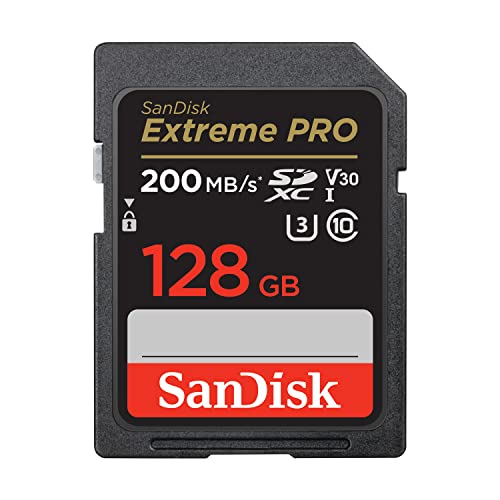
The 128GB Extreme PRO SDXC UHS-I card delivers up to 200MB/s read speeds and up to 90MB/s write speeds, enabling swift offloads and steady 4K recording. SanDisk QuickFlow Technology is highlighted for faster transfers, with performance claims based on internal testing. Note that actual speeds depend on host device compatibility and conditions. This card is well-suited for high-burst shooting and professional video workflows when paired with compatible readers and cameras.
Key considerations: ensure your camera supports UHS-I speeds at or near the claimed performance to maximize benefits; consider storing at least two cards if you have long shoots or need backups mid-session.
SanDisk 256GB Ultra SDXC UHS-I: Big Capacity For Everyday

The 256GB Ultra SDXC UHS-I card is marketed for mid-range point-and-shoot cameras and everyday photography. It offers up to 150MB/s read speeds and broad capacity to store a large photo library or Full HD video. This card emphasizes reliable performance for general use rather than extreme-speed bursts. For consumers upgrading from slower cards, the Ultra line provides a solid balance of cost, capacity, and dependable transfer times.
Key considerations: verify that your camera supports sustained UHS-I speeds to avoid bottlenecks; ideal for travelers who want ample space without frequent card swapping.
SanDisk 256GB Extreme PRO SDXC UHS-I: Pro-Grade Speeds

The 256GB Extreme PRO SDXC UHS-I card emphasizes high offload speeds up to 200MB/s and write speeds up to 140MB/s in certain configurations. SanDisk recommends pairing with their PRO-READER for maximum throughput, particularly when handling large RAW files or high-burst sequences. The card’s design targets professional photographers and videographers who need rapid workflow iterations and minimal downtime between shoots.
Key considerations: confirm device compatibility with high-speed UHS-I or beyond; this card excels when paired with capable readers and hardware to unlock its full potential.
SanDisk 256GB Extreme PRO SDXC UHS-II: Ultra-High Speed For 8K

This SDXC UHS-II card is designed for advanced cameras and workflows that push bandwidth limits. With up to 300MB/s read/write capabilities and large capacities, it supports high-bitrate 8K and 4K workflows without frequent card swapping. The card is intended for professionals who rely on fast editing pipelines and quick delivery of footage, especially in high-resolution productions.
Key considerations: ensure your camera and card reader support UHS-II to realize maximum speeds; if your gear is only UHS-I, you may not see full benefits.
SanDisk 256GB Extreme SDXC UHS-I: High-Quality For 4K

This 256GB Extreme SDXC UHS-I card emphasizes fast offloads up to 180MB/s and write speeds up to 130MB/s, aiming to balance speed and storage for 4K recording and rapid transfers. The card’s QuickFlow technology is highlighted for improved performance, with caveats regarding device compatibility and capacity-specific features. It’s a solid choice for event photography and multi-camera shoots where quick backup is essential.
Key considerations: check your camera’s supported speed class and whether the storage capacity aligns with your typical shoot size and duration.
Amazon Basics Micro SDXC With Full-Size Adapter: Flexible For Mixed Setups

The Amazon Basics Micro SDXC card includes a full-size adapter, offering compatibility with a wide range of devices beyond microSD slots. It supports UHS speed classes and is suitable for smartphones, tablets, action cameras, and some cameras that accept microSDXC with adapter. While it provides solid value, extreme professional use may favor higher-grade cards designed specifically for photography or videography.
Key considerations: ensure the adapter-friendly form factor matches your camera or device, and verify sustained write performance for your intended tasks.
Buying Guide: Key Purchase Considerations
Speed class and video mode: For 4K and 8K recording, seek cards that meet UHS Speed Class 3 (U3) and Video Speed Class (V30 or higher). Pro-level shooting benefits from higher sustained write speeds to prevent buffer overflow.
Capacity needs: If you shoot long events or 4K/8K footage, larger capacities (128GB, 256GB, 512GB) reduce the need to swap cards mid-session. Balance budget against your typical shoot length and file sizes.
Device compatibility: Some cameras and readers unlock higher speeds only with specific interfaces. Always confirm host device support for the card’s maximum read/write speeds.
Read vs. write balance: Fast write speeds minimize buffering during bursts; fast read speeds speed up offload to a computer. Consider your workflow to choose the right balance.
Durability and reliability: For field work, look for cards with reliable error correction, shock resistance, and proven track records in consumer and professional gear. Regular backups and card formatting practices help preserve data integrity.
End-to-end ecosystem: In some setups, pairing the memory card with compatible readers or docks (like SanDisk PRO-READER) can unlock higher throughput and smoother editing pipelines. Consider ecosystem compatibility when upgrading.