Best Low Lux Board Cameras for Dark Environments and Tiny Setups
Discover top low-light board cameras designed for surveillance, Raspberry Pi projects, laptops, and DIY cameras that perform in near darkness. These picks emphasize ultra-low illumination, wide fields of view, and compact form factors so you can capture clear video even when lighting is scarce. Below is a quick summary of the five highlighted options, followed by detailed sections for each.
| Product | Brand | Key Feature |
|---|---|---|
| ELP Sony IMX323 Sensor Mini Wide Angle USB Camera | ELP | 180° fisheye lens, 0.01Lux |
| ELP 0.0001Lux Starvis USB Camera Wide Angle | ELP | 0.0001Lux, 100° FOV |
| Arducam ToF Camera with Case | Arducam | Depth sensing, 2m-4m range |
| H.264 USB Camera Module 0.0001Lux | IEights | 0.0001Lux, 2K option |
| SVPRO 1080P Low Light USB Camera | SVPRO | Starlight 0.0001Lux, 110° WFOV |
ELP Sony IMX323 Mini Wide Angle USB Camera
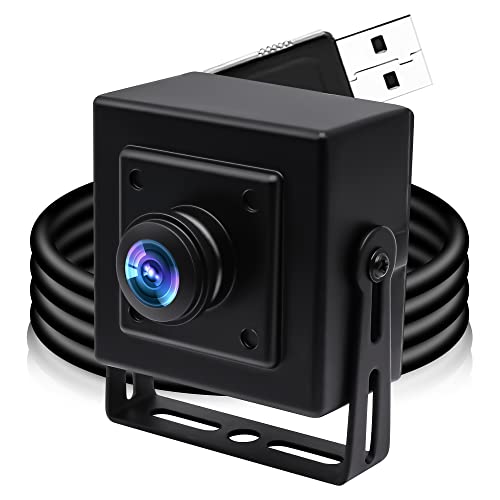
The ELP camera integrates a Sony IMX323 low-illumination sensor and a wide 180-degree fisheye lens, delivering high-definition 1080p video in low light. It uses H.264 compression to maintain smooth streams while keeping bandwidth consumption low. This module is well-suited for computer setups, Raspberry Pi projects, and surveillance tasks in dim environments where clarity matters most.
Key benefits include strong performance in dark spaces, compact USB连接, and an embedded webcam design that fits neatly into small PC or board-based builds. Its notable low-light capability is reinforced by a 0.01-lux sensitivity, making it a strong pick for near-zero lighting scenarios. The product’s flexibility makes it suitable for DIY security, robotics, or live streaming from dark rooms.
ELP 0.0001Lux Starvis USB Camera Wide Angle

This camera uses a high-sensitivity SmartSens SC2210 sensor and a 100-degree wide-angle M12 lens to capture in extreme low-light conditions. With 0.0001 Lux minimum illumination and 1080p resolution at 30fps, it supports high dynamic range (HDR) and provides robust performance for dark rooms or basement surveillance. The wide field of view extends coverage without sacrificing image quality, making it versatile for indoor monitoring and hobby projects requiring sharp detail in low light.
Arducam ToF Camera With Case

The Arducam ToF camera module provides depth sensing with pixel-level accuracy, enabling precise distance measurements and depth maps. It offers a practical working range setup with options up to 4 meters and longer coverage when used with a cable extension kit. While outdoor reliability may be limited by ambient light, the depth-sensing capability makes it a solid choice for robotics, obstacle avoidance, and scenes where depth information is essential inside controlled environments such as labs or workshops.
IEights H.264 USB Camera 0.0001Lux

This 2K-capable USB camera features a 0.0001 lux low-light sensor and a 100dB HDR range, designed for day-night versatility. With a 2K resolution option and a 100dB HDR, it provides sharp transitions between bright and dark areas, making it suitable for surveillance, stream capture, or embedded projects requiring high dynamic range while operating at night or in dimly lit rooms.
IEights 0.0001Lux Low Illumination USB Camera

This model features a 0.0001 lux low-light capability with a 4mm M12 lens in a 110° wide-angle field. It supports 2K resolutions and offers a 30fps frame rate, providing crisp, low-light streaming for computer setups, Raspberry Pi projects, and other embedded systems. The compact form factor suits tight spaces without sacrificing performance in dim conditions.
ELP 4K 60fps HDMI USB3.0 Camera

The ELP 4K camera supports both USB and HDMI outputs with a high dynamic 4K resolution at 60fps. It uses a 1/2.8″ IMX415 sensor, delivering ultra-clear images suitable for laser engraving setups, desktop recording, or Pi-based systems requiring high-resolution video capture. The unit includes a USB-C power supply and dual display options for flexible integration in professional workflows.
Buying Guide
Key considerations when choosing a low-light board or camera module include sensor sensitivity and low-light performance, resolution and frame rate, lens type and field of view, interface compatibility (USB, HDMI, USB-C), power requirements, and environmental suitability. For embedded projects, prioritize compact size, driver support for Raspberry Pi, and OpenCV-friendly formats. If depth sensing or ToF is needed, consider Arducam’s ToF options for accurate distance measurements or 3D mapping. For surveillance in near-dark spaces, models with 0.0001 lux or Starvis sensors deliver the clearest images. Finally, verify HDR capabilities if scenes vary greatly between bright and dark zones to reduce overexposure and noise.
When comparing options, balance resolution against lighting conditions. A 1080p camera at 30fps may outperform a 4K sensor in extremely low light if the sensor’s signal-to-noise ratio is poor. Look for cameras with wide dynamic range (HDR) and a wide field of view to maximize coverage in small rooms. Check compatibility with your existing hardware, such as Raspberry Pi boards, laptops, or microcontrollers, and confirm available software libraries and sample code. For DIY integrators, ease of installation and documentation often save significant setup time.