Best Lenses for Micro Four Thirds: Top Picks for Sharp Photos and Video
Micro Four Thirds cameras offer a compact system with wide lens options. This guide highlights five versatile lenses that cover prime and zoom needs, from bright primes for portraits to flexible zooms for travel and video. Each pick balances image quality, size, and ease of use, making them solid choices for enthusiasts and professionals alike.
Summary Of Selected Products
| Product | Brand | Key Strength | Focal Range | Approx. Weight |
|---|---|---|---|---|
| 25mm F1.7 ASPH | Panasonic | Bright, natural perspective, compact | 25mm | 125 g |
| Leica DG Summilux 9mm F1.7 | Panasonic | Ultra-wide, smooth bokeh, sturdy | 9mm | Lightweight |
| 14-140mm II ASPH | Panasonic | All-in-one travel zoom, durable | 14-140mm | Compact |
| 45-200mm F4-5.6 | Panasonic | Long reach with stabilization | 45-200mm | Moderate |
| Meike 35mm F1.4 | Meike | Budget-friendly fast prime, creamy bokeh | 35mm | Compact |
Panasonic LUMIX G Lens, 25mm F1.7 ASPH

The Panasonic 25mm F1.7 ASPH is a compact micro four thirds prime offering a natural angle of view comparable to a 50mm on full-frame. Its bright F1.7 aperture provides shallow depth of field and good low-light performance. The lens weighs around 125 g and uses an 8-element-in-7-group construction, including two aspherical elements and one UHR lens for sharpness across the frame. Ideal for street, portrait, and everyday photography, this lens pairs well with travel bodies for a lightweight kit.
Leica DG SUMMILUX 9mm F1.7 ASPH

This ultra-wide 9mm prime delivers exceptionally wide field coverage with a bright F1.7 aperture. Designed for Micro Four Thirds systems, it provides smooth bokeh values and a close focusing distance, enabling creative perspective and cinematic depth for video and stills. Its compact build makes it a strong travel companion for landscapes, architecture, and environmental portraits where space is at a premium.
Panasonic Lumix G Vario 14-140mm II ASPH

The upgraded 14-140mm lens covers a broad zoom range with optical stabilization to help counteract camera shake. Its Micro Four Thirds mount keeps the lens compatible with a wide range of Lumix cameras. The rugged, compact design is suited for travel and daily shooting, offering versatile performance from sweeping landscapes to telephoto detail shots. The inner focus system supports quiet operation for video work as well.
Panasonic LUMIX G VARIO 45-200mm

The 45-200mm F4-5.6 offers a longer reach with built-in optical image stabilization to reduce blur from hand shake, especially at longer focal lengths. This lens helps capture distant subjects with clarity while maintaining a relatively compact footprint for a telephoto zoom. It is a practical choice for wildlife, sports, and travel photography where flexibility is key.
Meike 35mm F1.4 Large Aperture
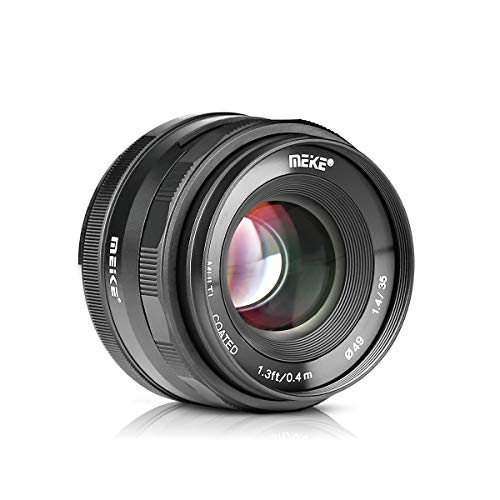
The Meike 35mm F1.4 is a budget-friendly prime with a wide maximum aperture, designed for Micro Four Thirds and compatible bodies from Olympus and Panasonic. The lens delivers smooth bokeh and strong performance in low light, with a lightweight, compact form factor. It is a good option for portraits and environmental photography where affordable fast glass is desirable.
Buying Guide: Key Purchase Considerations For Micro Four Thirds Lenses
- Focal length and usage: Choose primes (e.g., 25mm, 9mm, 35mm) for low-light performance and shallow depth of field, or zooms (14-140mm, 45-200mm) for versatility on travel and events.
- Maximum aperture: Lenses with F1.7 or faster provide brighter viewfinder images and better subject isolation in dim environments. However, faster lenses are typically larger and pricier.
- Optical stabilization: Lenses with built-in stabilization (such as Panasonic O.I.S. or Dual I.S. support) help reduce blur in handheld shooting and improve video stabilization.
- Weight and size: Micro Four Thirds lenses are valued for portability. Consider total kit weight, especially for travel or long days of shooting.
- Image quality and coatings: Look for aspherical elements and UHR (ultra-high refractive) glass to minimize aberrations. Coatings reduce ghosting and flare, especially in backlit scenes.
- Build quality and weather resistance: If you shoot outdoors, a rugged, weather-sealed design can extend lens life in challenging conditions.
- Compatibility and ecosystem: Ensure the chosen lens is designed for Micro Four Thirds and compatible with your camera body’s autofocus and video features.
- Budget versus performance: While premium lenses deliver exceptional optical performance, budget options like certain primes (e.g., 35mm F1.4) offer a favorable balance of quality and price for many users.
When selecting lenses for Micro Four Thirds, balance focal range with practical needs, such as travel convenience, storytelling style, and the type of subjects you shoot most often. The lenses listed here cover a spectrum from bright primes for portraiture to flexible zooms suitable for landscapes and everyday shooting, helping you build a well-rounded kit.