Best L Mount Pancake Lens Options for Slim, Portable Full-Frame Shots
Looking for compact, lightweight prime lenses for L-Mount cameras? This guide highlights top pancake and ultra-thin options that maximize portability without sacrificing image quality. These lenses are best for street photography, travel, and casual landscape work where a small, unobtrusive setup matters. The following selections emphasize ultra-thin design, minimal weight, and reliable autofocus or manual focus performance for the L-Mount ecosystem.
Selected products at a glance:
- VILTROX 28mm F4.5 L – Ultra-compact autofocus pancake for full-frame L-Mount
- TTArtisan 40mm F2 L – Small, fast lens with autofocus for L-Mount
- 7artisans 18mm F5.6 – Lightweight ultra-wide for L-Mount
- Panasonic S-R26 26mm F8 – First fixed focal length pancake in L-Mount S Series
- 7artisans 35mm F5.6 – Ultra-thin, compact full-frame option
VILTROX 28mm F4.5 L Pancake Lens
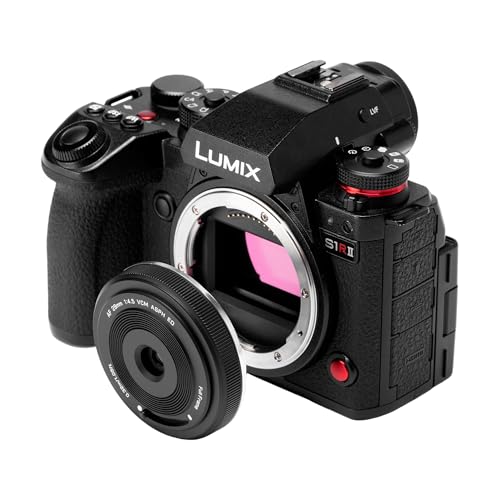
Best for street and travel shooters who want a nearly invisible profile without sacrificing full-frame coverage. This 28mm prime is ultrathin and very light, weighing around 60g with a diameter of 60.6mm and thickness of 13.2mm. Autofocus helps capture candid moments quickly, while the two Aspherical and two ED elements deliver sharp, high-contrast results in varied lighting. Choose this if you prioritize portability and balance between field of view and compactness.
Who it’s best for: street photographers and travelers needing a pocketable focal length with reliable AF. Limitation: at 28mm, you’ll trade some subject compression for a broader view compared with longer primes.
TTArtisan 40mm F2 L Pancake

Best for low-light portrait work and everyday street scenes where a faster aperture matters in a compact form. The 40mm focal length provides a natural perspective with a bright f/2 aperture, and the lens uses ED and aspherical elements to control chromatic aberration while preserving clarity. The autofocus system aims for quiet, smooth operation in quick shooting moments. Choose this if you want a small, fast prime for L-Mount without carrying a bulky lens.
Caution: The autofocus sound and speed may be more modest than newer AF-focused designs in busy scenes; plan for steady framing when tracking moving subjects.
7artisans 18mm F5.6 for L Mount
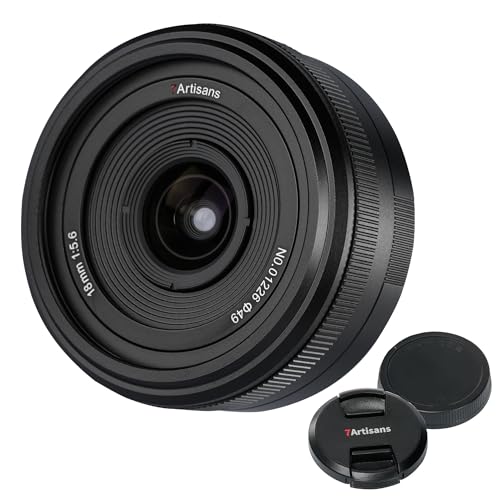
Best for ultrawide landscape or architectural scenes where maximum field of view is desired in a slim package. The 18mm focal length yields a 98.7° field of view on full-frame, and at F5.6, it maintains acceptable depth of field while remaining compact. It’s especially attractive for minimalist travel kits. Choose this if you want true ultra-wide capability in a pancake-like form. Limitation: at F5.6, low-light performance is not as strong as brighter fixed apertures.
Panasonic S-R26 26mm F8 Pancake

Best for ultra-portable travel snapshots where a fixed, tiny profile matters. The S-R26 is a near-pocketable 26mm lens with a fixed F8, offering a discreet, always-ready option for full-frame S-Series bodies. It’s notably slim and light, making it ideal for street photography and minimal kits. Choose this if you want a guaranteed compact solution with predictable depth and exposure. Caution: fixed aperture at F8 reduces versatility in low-light or creative bokeh scenarios.
7artisans 35mm F5.6 Pancake

Best for all-around street and travel photography when an ultra-thin 35mm perspective is preferred. The 35mm focal length provides a familiar human-scaled view, while the slim profile keeps the setup unobtrusive. The lens focuses manually, with a lightweight build that suits compact systems. Choose this if you want a traditional 35mm feel in a minimal, portable package. Limitation: manual focus requires steadier technique in dynamic scenes.
Buying Guide: L Mount Pancake Lens Considerations
- Portability vs. versatility: Ultra-thin lenses excel in travel and street work, but some fixed-aperture designs (like F8) may limit low-light performance.
- Autofocus vs. manual focus: Some pancake options prioritize autofocus speed and quietness, while others are compact manual focus primes. Assess your typical shooting style and need for speed.
- Focal length selection: 18mm and 28mm offer wide perspectives; 26mm and 40mm provide more versatile everyday framing. Consider your preferred subjects and working distance.
- Optical correction: Lenses with aspherical and ED elements help reduce distortion and chromatic aberration for crisper images across the frame.
- Compatibility: Confirm your camera model supports L-Mount lenses with the chosen autofocus systems and sensor size to maximize performance.
For buyers prioritizing maximum compactness, prioritize lenses with official L-Mount compatibility and lightweight designs. If you need faster apertures for low-light scenes, consider options like the TTArtisan 40mm F2 L, noting the trade-off in size and potential autofocus behavior in busy environments.
Frequently Asked Questions
- What is a pancake lens?
A pancake lens is an ultra-thin, compact prime lens designed to minimize protrusion from the camera body while delivering full-frame or APS-C coverage in the L-Mount ecosystem.
- Are L-Mount pancake lenses autofocusing?
Many modern options include autofocus, but some smaller designs may be manual focus only. Check each product’s features for autofocus capability.
- Which focal length is best for travel?
28mm and 40mm lenses provide versatile framing for street and travel photography, while 18mm offers a broader landscape perspective in tight spaces.
- Do pancake lenses compromise image quality?
Ultra-thin designs trade some size for reduced internal elements. High-quality samples use aspherical and ED elements to maintain sharpness and contrast, but you may notice some softness at wide open apertures in extreme lighting.
- Should I choose fixed aperture like F8 or a faster option?
Fixed apertures (like F8) simplify design and extend depth of field in bright conditions, while faster apertures (like F2) excel in low light but can be larger and heavier and may require careful exposure management.