Best Infrared Lighting for Security Cameras
Improve nighttime surveillance with IR illuminators designed for long-range clarity, even lighting, and reliable performance in varied weather. This guide highlights top options and practical buying tips to help you choose infrared lighting that delivers crisp, evenly lit footage for security cameras.
| Product | Brand | Key Benefit | Distance / Coverage |
|---|---|---|---|
| Tendelux DI20 IR Illuminator | Tendelux | Compact but powerful long-range illumination | Long range (high intensity, even spread) |
| Tendelux 80ft IR Illuminator | Tendelux | Wide-angle, hot-spot free illumination | Up to 80 ft |
| Univivi IR Illuminator 20 LEDs | Univivi | Auto on/off with broad 90° spread | Up to 20 W equivalent LEDs, wide angle |
| [Upgraded] Univivi IR Illuminator 12 LEDs | Univivi | Durable IP65/IP67 style build, reliable night vision | Up to 100 ft plus |
| Tendelux DI10 IR Illuminator | Tendelux | Medium-range, even illumination with easy adjustability | Medium range coverage |
Note: All products listed are compatible with standard CCTV cameras and offer features such as auto on/off and weather-resistant housings. The following sections provide a deeper look at each option and how they perform in realistic security scenarios.
Tendelux DI20 IR Illuminator
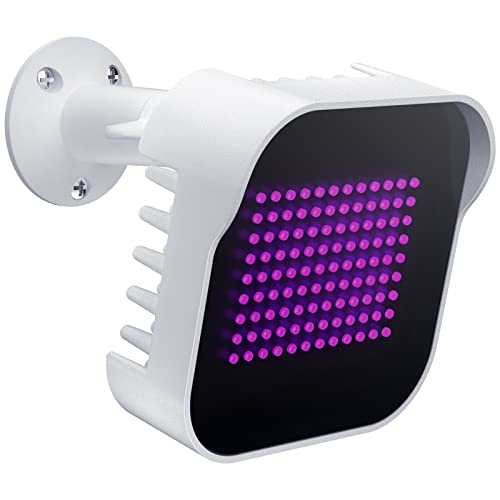
Compact yet powerful, the DI20 targets long-range surveillance with higher illumination than typical mini models. The lens is designed to spread infrared light more evenly, reducing hot spots and producing clearer images across the camera’s field of view. A 360-degree swivel and 90-degree tilt bracket simplify angle adjustments, making it suitable for mounting on various security setups. The aluminum housing resists sun exposure and outdoor elements, ensuring durability alongside performance.
Tendelux 80ft IR Illuminator
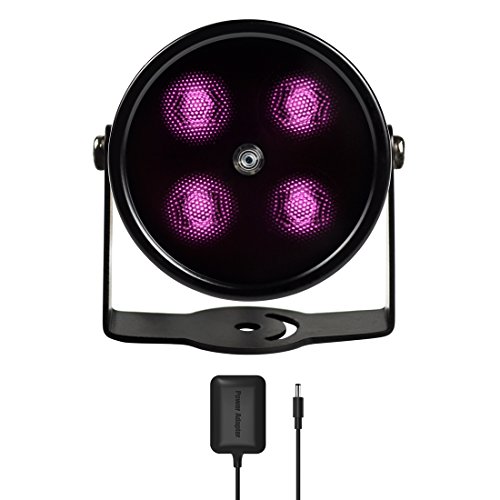
This model emphasizes wide-angle performance with an even 90-degree flood spread. It uses four 1-watt high-power 850nm LEDs to provide substantial illumination at a practical distance for most commercial and residential security cameras. The IR band-pass filter helps minimize hot spots and prevents overexposure of foreground objects, resulting in more uniform night imagery across the scene.
Univivi IR Illuminator 20 LEDs

This auto on/off IR illuminator uses a photocell sensor to switch on at dusk and off at dawn, conserving energy while maintaining security. A robust aluminum housing and heat sink keep the unit cooler during continuous operation, extending its lifespan. With a 90-degree beam spread and 20 high-power LEDs, it delivers broad coverage and helps cameras achieve clearer night vision without visible glow to the naked eye.
Univivi IR Illuminator 12 LEDs

This Univivi model combines automatic operation with a rugged build and 12 high-power LEDs. The unit features a 90-degree wide-angle spread and an IP65/IP67-friendly design for outdoor use. The automatic sensor reduces energy consumption while providing strong nighttime illumination for IP cameras and traditional CCTV setups, ensuring that distant details remain visible without harsh hotspots.
Tendelux DI10 IR Illuminator

The DI10 targets mid-range surveillance needs with a compact form factor and enhanced light distribution. The same 360-degree swivel and 90-degree tilt mechanism provides flexible mounting options for different camera placements. The aluminum housing resists weathering, and the design aims to minimize halo effects while delivering consistent night illumination for medium-distance monitoring scenarios.
Buying Guide: Key Purchase Considerations
When selecting IR illuminators for security cameras, consider how the device aligns with your monitoring goals and environment. Below are essential factors to compare across models:
- Distance and beam pattern: Determine the required range and angle. Longer-range units may use higher-power LEDs and focused lenses; wider angles help with surveillance of broader scenes, reducing blind spots.
- Wavelength and invisibility: Most consumer security IR lights use 850 nm LEDs. This wavelength balances performance and invisibility to casual observers, though some specialized cameras may benefit from different wavelengths.
- Hot spots versus even illumination: Look for features like lens design and IR filters that minimize hotspots and ensure uniform illumination across the camera’s field of view.
- Power and durability: Check power adapter compatibility and whether the housing is aluminum or another corrosion-resistant material. Outdoor-rated IP housing protects against water and dust exposure, extending the unit’s life.
- Auto on/off functionality: Photocell sensors save energy and maintain consistent night performance without manual intervention.
- Compatibility with camera lenses: Some illuminators pair better with certain focal lengths. A 2.8–4 mm lens may align with a wide-angle one, while longer focal lengths may demand longer range lighting.
- Installation flexibility: Look for units with 360-degree swivels and tilt adjustments to simplify mounting in various environments, including eaves, poles, or walls.
- Maintenance and heat management: Effective heat sinks and metal housings support sustained operation, particularly in warm climates or 24/7 monitoring setups.
- Weather resilience: For outdoor use, ensure waterproof ratings (IP65/IP67 or higher) and a robust build against corrosion and sun exposure.
- Price-to-performance balance: While higher-end models offer stronger range and better light distribution, ensure the chosen option meets the specific security needs without unnecessary extras.