Best Infrared Camera for Electrical Inspections: Top Picks and Buyer’s Guide
Electrical inspections benefit from reliable infrared cameras that clearly reveal hotspots, insulation gaps, and concealed faults. The following selections are tailored for American professionals and DIYers who need accurate temperature data, fast results, and durable design for on-site use. Below, five top options are matched to common electrical inspection needs, from compact handsets to feature-rich units with dual cameras and integrated alarms.
| Product | Brand | Key Feature |
|---|---|---|
| TOPDON TC004 Mini Handheld Thermal Imaging | TOPDON | High 128×128 thermal (upscaled to 240×240) with smart alerts |
| FLIR TG165-X Thermal Imaging Camera | FLIR | MSX detail with Bullseye Laser |
| Flagfront 240×240 Thermal Camera | Flagfront | Temperature alarm and wide range |
| HP96 Thermal Imaging Camera | HSFTOOLS | IntellFault scene detection and 3-in-1 tool |
| HF96V Thermal Camera | HSFTOOLS | Dual cameras with fusion/thermal/visual modes |
TOPDON TC004 Mini Handheld Thermal Imaging Camera

The TOPDON TC004 is designed for flexible electrical inspections and general mechanical diagnostics. It features an initial 128×128 thermal resolution, which can be enhanced to 240×240 through TISR technology for sharper details. A wide 40° by 30° field of view and a 25Hz refresh rate deliver steady, detailed thermal images—helpful for identifying hot spots in electrical panels or wiring. An on-screen alert system notifies users when temperatures exceed preset thresholds, with the camera automatically capturing a photo to document findings. The device also supports manual photo capture and includes 512MB eMMC storage, capable of storing thousands of images, making it easy to document and compare conditions across visits.
Operationally, the TC004 covers a broad temperature range from -4°F to 842°F (-20°C to 450°C), enabling quick checks of electrical components, switchgear, and motors. Users can select from five color palettes—White Hot, Black Hot, Iron, Rainbow, and Red Hot—to emphasize specific thermal patterns. The combination of portability and alert-driven workflow makes the TC004 well-suited for on-site electrical inspections, home electrical troubleshooting, and equipment maintenance checks.
FLIR TG165-X Thermal Imaging Camera

The FLIR TG165-X targets building, HVAC, and electrical inspections with a 4,800-pixel IR sensor capable of -25°C to 300°C (-13°F to 572°F). FLIR’s patented MSX technology adds visual details to the thermal image, producing sharper, easier-to-interpret pictures that support quick decision-making on electrical faults, insulation problems, or insulation gaps. A built-in bullseye laser helps indicate the measurement area for precise targeting during inspections, which is especially valuable in crowded electrical panels or limited-access spaces. This model emphasizes clarity and ease of use in professional settings where rapid assessments are essential.
Flagfront 240×240 Thermal Camera

The Flagfront YXI96 offers 240×240 super-resolution imaging with a 25Hz frame rate for smooth inspections. Its temperature alarm function detects abnormal high and low temperatures and displays the highest, lowest, and center temperatures on the screen in real time. With a measurement range from -4°F to 1022°F and adjustable distance and emissivity, it accommodates a wide range of electrical and mechanical inspection scenarios—from circuit boards to under-sink pipes and beyond. The device is geared toward efficiency, enabling quick identification of overheating components and heat loss paths in homes and facilities alike.
HP96 Thermal Imaging Camera
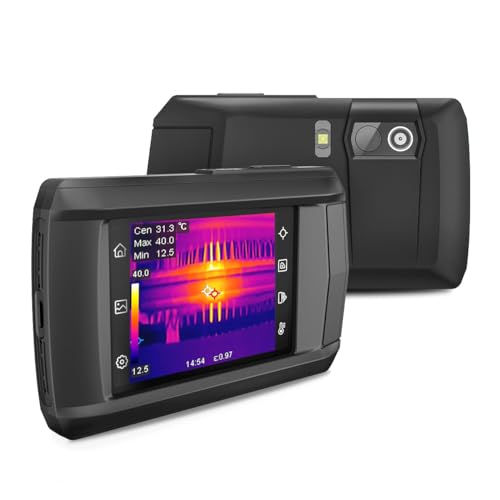
The HP96 from HSFTOOLS blends a 3.5″ touchscreen, 240×240 super-resolution IR imaging, and an intelligent scene detection system called IntellFault. This model provides a user-friendly interface for quick navigation and real-time temperature data: it tracks maximum, minimum, and center temperatures and supports custom threshold alerts. The 50° field of view accelerates scanning of larger electrical panels or housings, while live super-resolution upscaling improves clarity during on-site inspections. In addition to image capture, built-in audio and video recording capabilities support comprehensive documentation of issues for future reference.
HF96V Thermal Camera With Visual Camera
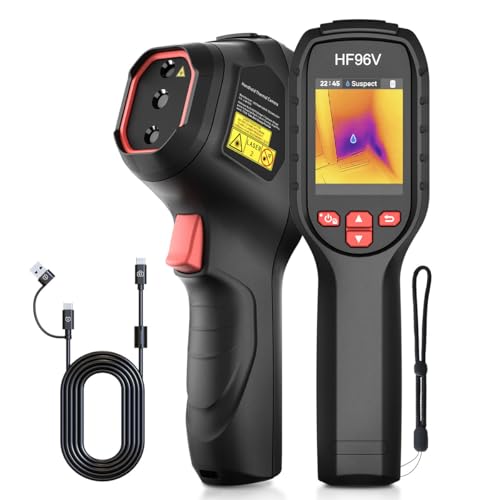
The HF96V combines a 96×96 infrared sensor with a 640×480 visible camera for fusion imaging, offering multiple modes—Fusion, Thermal, and Visual—for enhanced detail and contrast. It includes Intelligent Scene Detection via IntellFault, enabling automated identification of common issues such as water leaks and insulation gaps. A 7-color palette selection supports different inspection scenarios, and the 25Hz refresh rate keeps visuals smooth during movement. The device is designed for electrical inspections as well as home diagnostics, helping professionals quickly correlate thermal patterns with visible cues.
FLIR C5 Compact Thermal Imaging Camera

The FLIR C5 is a compact thermal imager designed for versatile inspection work that includes electrical and HVAC tasks. It delivers -20 to 400°C (-4 to 752°F) measurements with 160×120 true thermal resolution and MSX-enhanced images for sharper detail. The C5 emphasizes portability and real-world usability with built-in Wi-Fi for quick sharing of findings and a streamlined workflow for diagnosing electrical faults, mechanical issues, and building performance concerns. The combination of MSX detail and compact form makes it a practical option for field technicians and home inspectors alike.
Buying Guide: Key Purchase Considerations
Choosing the right infrared camera for electrical inspections involves balancing image clarity, measurement range, and usability in tight spaces. Consider these factors to align a camera with your typical inspection scenarios:
- Resolution and image clarity: Look for devices offering at least 160×120 true IR resolution, with options to upscale or fuse with visible imagery for better interpretation in electrical work.
- Temperature range and accuracy: Ensure the camera covers your expected operating temperatures and offers reliable accuracy (often within a few degrees). A broader range helps when inspecting motors, transformers, or high-load circuits.
- Refresh rate and field of view: A higher refresh rate (25Hz or more) reduces smear when moving around electrical panels. A wider field of view helps capture more area quickly, while selective zoom features aid in focusing on hotspots.
- Alerts and measurement features: On-screen alarms, central/maximum/minimum temperature indicators, and adjustable emissivity improve rapid decision-making and documentation during inspections.
- Onboard storage and connectivity: Models with internal memory and the ability to export images facilitate record-keeping. Wireless options or USB-C connectivity help share findings with colleagues or clients.
- Durability and ergonomics: Handheld, lightweight designs with robust housings and comfortable grips reduce fatigue during long inspection sessions and improve reliability in field environments.
- Software and workflow: Some cameras offer intelligent scene detection or post-processing tools that automatically highlight leaks, insulation gaps, or electrical anomalies, saving time during diagnostics.
How To Choose For Electrical Inspections
For electrical-focused inspections, prioritize devices that deliver crisp MSX or fusion imagery for clear detection of hotspots, loose connections, or insulation defects. A built-in laser pointer or bullseye indicator supports precise measurement region targeting, essential when evaluating wiring, breakers, or outlets. If your work involves frequent on-site documentation, select a model with reliable internal storage and straightforward image capture. Finally, consider a camera with a familiar interface or option for firmware updates to access new features as technology evolves.
In summary, the TOPDON TC004 and the FLIR and HSFTOOLS options provide a spectrum of capabilities—from compact, alert-driven tools to dual-camera systems with advanced scene detection. Matching your typical inspection environment (home electrical, commercial panels, or HVAC-related electrical work) to these strengths will help ensure you select a device that delivers accurate insight quickly, with clear, actionable visuals for maintenance and safety compliance.