Best HDMI Monitors for Camera Use: Clear Guides for Sharper Shots
Looking for the best HDMI monitor for camera use? This guide highlights five reliable options that help you frame, expose, and focus more accurately on set. Each pick supports HDMI inputs, clear previews, and essential monitoring tools for professional or enthusiast videography. Best for: independent filmmakers, vloggers, event shooters, and photographers needing portable, reliable external displays.
Summary of selected products
| Product | Screen Size | Key Benefit | Best For | Notes |
|---|---|---|---|---|
| FEELWORLD S55 V3 | 6 inch | High brightness with 4K input support | Field shooters needing accurate exposure | Includes LUT and waveform tools |
| NEEWER F700 | 7 inch | 2000nit brightness, 4K HDMI loop in/out | Outdoor or bright lighting environments | Advanced monitoring tools and LUTs |
| FEELWORLD FW759 | 7 inch | HDMI 4K support and sun shade | Travel or on-the-go filming | Slim, portable, good color |
| FEELWORLD F5 Prox | 5.5 inch | 1600nit brightness with LUT preview | Compact rigs, quick focus work | Excellent for outdoor use |
| Atomos Shinobi GO | 5 inch | HDR 1500 nit, lightweight | Filmmakers needing HDR monitoring | Compact and rugged |
JINSWY 10.1-Inch Security Monitor

The JINSWY 10.1-inch monitor uses a 1024×600 display with 16:9 aspect ratio, offering clear visuals for camera feeds and playback. It includes HDMI, VGA, BNC, AV, and USB ports, enabling compatibility with cameras, PCs, and CCTV gear. This model is best for budget-conscious buyers who need a compact, multi-input screen for setup verification and basic monitoring.
Best for: on-site security setups, compact camera rigs, and hobbyists who require a wide range of input options in a small package. Caution: its resolution is lower than larger field monitors, so fine detail may be limited for critical focus work.
FEELWORLD S55 V3 6 Inch Field Monitor

This 6-inch external monitor is designed for on-camera use with a Full HD display and 4K HDMI input. It provides waveform, vectorscope, RGB histogram, focus assist, and 3D LUT support for precise exposure and focus. An included sun hood helps outdoor visibility, making it strong for studio work and field shoots.
Best for: production teams needing accurate exposure tools and reliable on-camera monitoring. Caution: smaller screen might feel limiting for detailed color checks in very busy scenes.
NEEWER F700 7-Inch Camera Field Monitor

The NEEWER F700 delivers a bright 2000 nits screen with a 1920×1080 IPS panel and a 7-inch footprint. It supports 4K HDMI loop in/out and includes waveform, histogram, 3D LUTs, and focus tools. It ships with dual NP-F750 batteries for longer shoots, ideal for outdoor and studio setups where brightness matters.
Best for: bright outdoor shoots, documentary crews, and independent filmmakers who need long runtimes. Caution: higher brightness can drain batteries faster if not used with appropriate power.
FEELWORLD FW759 7-Inch DSLR Field Monitor
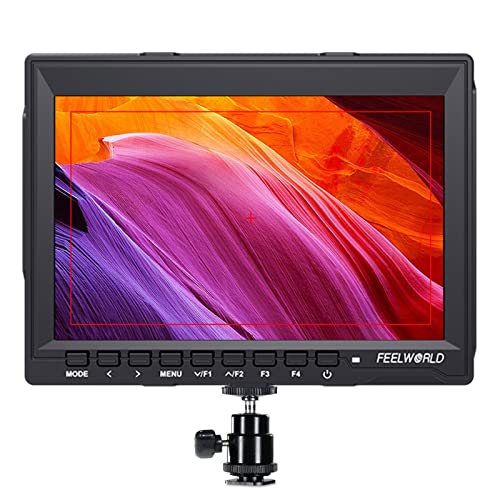
The FW759 provides a 7-inch IPS display with 1280×800 resolution and 4K HDMI input. It emphasizes portability with a slim profile and includes a sunshade to enhance outdoor visibility. This monitor is well-suited for travelers, gimbal work, and small rigs where a balance of size and performance is crucial.
Best for: travelers, gimbal operators, and small crews needing decent color and brightness in a compact package. Caution: brightness is solid but not at the extreme level of some high-brightness models, so direct sun can still challenge visibility without shade.
FEELWORLD F5 Prox 5.5-Inch Camera Monitor

The F5 Prox is a compact 5.5-inch monitor with 1600 nits brightness and 3D LUT support for shot planning in daylight. It includes focus peaking, waveform, and safe frame guides, making it a strong option for handheld or tripod setups where space is tight and quick feedback is critical.
Best for: handheld or gimbal work, outdoor shoots, and quick-check scenarios. Caution: the smaller screen may limit detailed evaluation of color nuances for critical post work.
NEEWER F100 7-Inch Field Monitor
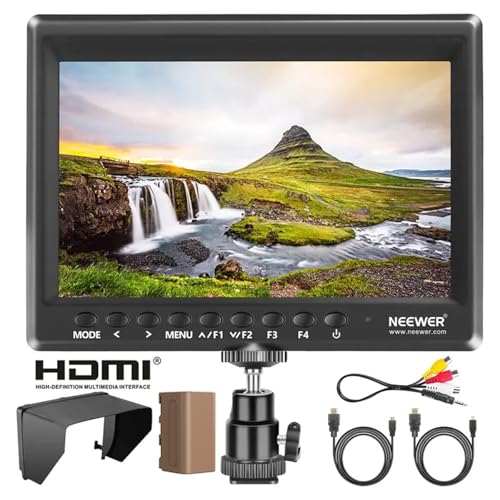
The F100 offers a 1280×800 IPS panel in a 7-inch form factor with 450 nits brightness and 1080p support. It includes professional tools like peaking, histogram, safe frames, and A/B color temperature adjustments. It pairs with NP-F750 batteries for mobile shoots and supports multiple input formats for flexible use.
Best for: budget-conscious crews needing reliable color tools and external monitoring. Caution: brightness might be lower than premium models in direct sun; consider outdoor shade when bright conditions prevail.
Atomos Shinobi GO HDMI 4K Monitor

The Shinobi GO is a compact 5-inch, 1500-nit HDR/SDR monitor with a slim, lightweight design. It includes HDR tools, waveforms, histograms, false color, and RGB parade. This monitor emphasizes high-contrast images and precise exposure, suited for on-the-go filmmakers and photographers who require professional monitoring without bulk.
Best for: professionals needing HDR visibility in bright environments and a portable rig. Caution: it may lack some advanced entry-level LUT options compared to larger field monitors; evaluate workflow needs before choosing.
Buying Guide: Key Considerations For Choosing An HDMI Camera Monitor
- Brightness and outdoor visibility: If you shoot outside, prioritize higher nit ratings and built-in sun shades or anti-glare coatings.
- Resolution and screen size: Larger, higher-resolution screens improve focus and exposure checks but add bulk. Match to your rig and carrying needs.
- Input/Output options: Look for HDMI in/out, USB, and legacy inputs (VGA/BNC) if you work with varied gear or older cameras.
- Monitoring tools: Waveform, vectorscope, histogram, focus peaking, LUT support, and false color help ensure correct exposure and framing.
- Power and runtime: Battery type, life, and compatibility with your camera rig influence on-set practicality. Consider external power options if long shoots are common.
- Durability and form factor: For field work, choose a rugged shell and a size that fits your cage, cage accessories, and tripod setups.
- Color science and LUTs: LUT support and color management capabilities help preview final looks and reduce post-production guesswork.
Frequently Asked Questions
- What is the main purpose of an HDMI monitor for cameras? It provides a larger, more accurate preview for framing, exposure, and focus during shoots.
- Do all field monitors support 4K HDMI? Many do, but check 4K HDMI input support and upscaling capabilities to match your camera output.
- Is a sun hood essential for outdoor filming? It helps reduce glare and improve visibility in bright sunlight, especially on smaller screens.
- Should I choose a brighter monitor even for indoor shoots? If you control lighting, you can opt for balanced brightness, but a brighter screen can help in mixed lighting.
- What is LUT support used for on monitors? LUTs preview intended color grades or camera-log looks, aiding exposure decisions before editing.
- Are small monitors enough for critical focus checks? They are useful, but some crews prefer larger or color-calibrated monitors for precise focus in demanding scenes.