Best Film Scanners for 120 Film and More: Preserve Your Negatives in Digital Quality
Photographers and memory keepers constantly seek reliable, easy-to-use film scanners that handle 120 film, 35mm, and slides with crisp detail. This guide highlights top options that balance image quality, loading ease, and compatibility for American collectors and hobbyists. Each model offers distinct strengths—from bright LCD previews to smartphone-friendly digitizing setups—so you can choose based on format, workflow, and output needs.
| Product | Format Support | Display / Workflow | Key Strength |
|---|---|---|---|
| KODAK Slide N Scan | 135, 110, 126 | 5” LCD, SD card save | All-in-one with direct SD save and HDMI |
| JJC Mobile Film Scanner | 35mm, 120 | Smartphone-based capture with remote | Mobile-friendly, quick capture |
| HP FilmScan | 135, 110, 126 | 5” LCD, SD card or PC transfer | Touchscreen with gallery view |
| JJC Negative Film Digitizer Set | 35mm, 120 | Phone clamp and backlight, adjustable | Flexible lighting and clamp system |
| Kodak Slide N Scan Max | 135, 110, 126, slides | 7” LCD with gallery mode | Larger display for preview and editing |
KODAK Slide N Scan Film & Slide Scanner

The Kodak Slide N Scan is designed to convert 135, 110, and 126 negatives and 50mm slides into digital JPEGs with a built-in 5-inch LCD. It supports SD card saving, and connects via USB or HDMI to display or transfer files. Its quick-load trays enable continuous scanning, appealing to users with large batches of old color and black-and-white images. The included 50mm slide holder and adapters for multiple film formats simplify setup, making it a strong all-in-one choice for family archives and small studios.
JJC Mobile Film Scanner With Smartphone Clip

The JJC Mobile Film Scanner turns your smartphone into a digitizing tool for 35mm and 120 film. It uses an LED backlight and a universal phone clamp to capture high-resolution images through your phone’s camera. A detachable wireless remote adds convenience, allowing hands-free operation. While it relies on a compatible app for processing, this setup excels for on-the-go digitization and quick sharing, especially for travelers or casual shooters who want instant digital access to film footage.
HP FilmScan Touch Screen Scanner
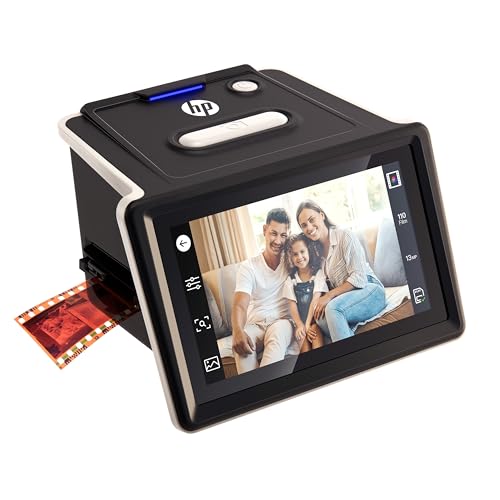
HP’s FilmScan offers a 5-inch touch display for quick previews, edits, and saving to SD cards or a computer. Its compatibility with 135, 110, and 126 film formats makes it a versatile option for consolidating old negatives and slides. The quick-feed loading tray supports continuous import, and the device is particularly user-friendly for family archives or classrooms where easy operation and clear galleries matter most.
JJC Mobile Film Digitizer Set

This JJC kit pairs a magnetic, adjustable backlight with a universal phone clamp and a film holder rail designed for 35mm and 120 formats. It’s especially suitable for users who want to leverage their smartphone camera with controllable lighting for consistent exposures. While software options vary, the hardware flexibility supports macro-focused capturing and precise framing, making it a solid choice for hobbyists and archivists digitizing smaller batches.
JJC Negative Film Digitizer for 35mm & 120

Designed to work with existing cameras and lenses, this JJC unit supports 35mm and 120 formats for digitizing negatives. It includes a slide rail for easy focusing and distance control, along with a brightness-adjustable backlight. Note that it is not intended for 35mm slides—it’s optimized for negative film. This approach lets photographers use their favorite camera bodies while achieving consistent framing and exposure across scans.
Kodak Slide N Scan Max Digital Film Scanner

The Kodak Slide N Scan Max expands on its predecessor with a larger 7-inch LCD and a gallery mode for easy editing and previewing of 13/22MP scans. This model supports 135, 110, 126 formats as well as 50mm slides, converting them directly to digital files saved on a USB-C compatible setup. The broader display makes it easier to curate photos before sharing or archiving, and the included adapters help accommodate various film sizes, enhancing versatility for home studios and educational environments.
Buying Guide: Key Purchase Considerations
When selecting a film scanner for 120 film and related formats, consider image quality, workflow, and flexibility. The following perspectives help address different user needs:
- Format compatibility: If you have a mix of 35mm, 120, and various slide sizes, prioritize scanners that explicitly support all your formats or offer adapters. Some devices excel with slides and negatives alike, while some focus on one format with adapters.
- Display and editing: A bright LCD or touch screen simplifies previews and light editing before saving. Larger displays help with color and density decisions, especially when archiving family albums or galleries.
- Storage and connectivity: SD card saving is convenient for standalone use, but USB or HDMI outputs enable direct transfers to a computer or display on a larger screen. Check compatibility with your devices and memory card capacity.
- Ease of use and speed: Quick-load feeding trays and continuous scanning save time when processing large batches. For those digitizing entire rolls, a model with efficient loading is a clear advantage.
- Lighting and accuracy: Backlit panels with adjustable brightness enhance color reproduction and shadow detail. A stable stand or rail helps maintain consistent focus across frames.
- Mobile vs. desktop workflow: Smartphone-based setups offer portability and immediate sharing, but dedicated scanners often deliver higher initial image quality and simpler post-processing without relying on apps.
- Future-proofing: Look for models that support standard file formats (JPEG, TIFF) and offer firmware updates or reliable customer support in case of compatibility questions with new devices.
In summary, the right choice depends on your archive size, preferred workflow, and whether you value a built-in display, mobile compatibility, or the flexibility of using your own camera system. The options listed above provide varied approaches to ensure your 120 film and slide collections are preserved with clarity and lasting accessibility.