Best External Monitors for DSLR Cameras to Improve Focus, Exposure, and Framing
Choosing the right external monitor can dramatically improve DSLR shooting by delivering a larger, more accurate view for focus, exposure, and composition. This guide highlights five reliable options, each best for different shooting needs—from compact runtimes for vlogging to high-brightness screens for outdoor shoots. Whether you’re a beginner filmmaker or a seasoned videographer, these monitors provide clearer previews and advanced tools to reduce reshoots and guesswork.
Buyer needs overview:
– Best for compact setups: FW759 (first model) and S55 V3 bundle for indoor or on-the-go shoots.
– Best for bright outdoor use: 7″ F100 and 6″ S55 V3 with sun shade options.
– Best for professional LUTs and waveform tools: VILTROX DC-550 and NEEWER F700.
Summary table of chosen products:
– FEELWORLD FW759 (First) — 7″ IPS, 400nit, 1280×800, 4K HDMI
– FEELWORLD S55 V3 — 6″ IPS, 500nit, 1920×1080, waveform/vectorscope
– NEEWER F100 — 7″ IPS, 450nit, 1280×800, 4K HDMI
– VILTROX DC-550 — 5.5″ touchscreen, 1200nit, 1920×1080, 4K HDMI
– NEEWER F700 — 7″ IPS, 2000nit, 1920×1080, 4K HDMI loop in/out
FEELWORLD FW759 7 Inch On-Camera Field Monitor

The FW759 delivers a larger viewing area (7 inches) with a 1280×800 IPS display and 400 nit brightness. It supports 4K HDMI input, aiding accurate framing and exposure on DSLR and mirrorless cameras. This monitor is best for creators who want an on-camera aid that remains compact and light enough for travel shoots or social-media setups.
Best for: filmmakers and vloggers who need a bigger preview than their camera screen without adding bulk.
Limitation: brightness is 400 nit, which may be challenging in very bright outdoor conditions without sunshade.
FEELWORLD FW759 7 Inch DSLR Field Monitor HD Video Assist
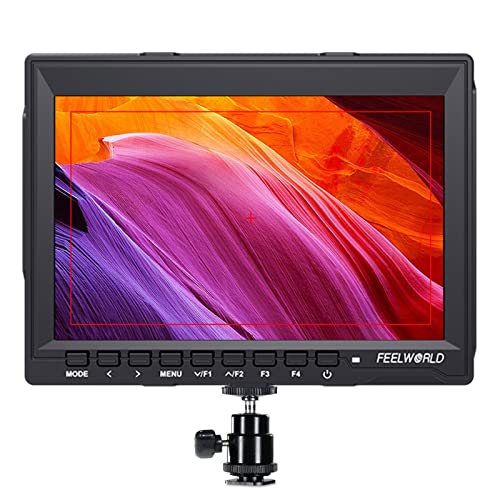
This variant emphasizes a slim profile and portability for use with stabilizers and gimbals. It features a 1280×800 display, 400 cd/m² brightness, and supports 4K HDMI input. The compact, light build makes it a strong option for on-the-go filming where space is at a premium.
Best for: shooters using stabilizers or gimbals who need a portable, larger-than-camera-screen monitor.
Limitation: similar brightness constraints as the first FW759 listing; outdoor visibility benefits from a sun hood or shade in bright sun.
FEELWORLD S55 V3 6 Inch Field Monitor

The S55 V3 offers a 6-inch Full HD display with 500 nit brightness and 1920×1080 resolution. It includes waveform, vectorscope, RGB histogram, focus assist, and 3D LUT support for accurate exposure and LUT-based preview. A sun hood helps outdoor visibility, and its compact footprint suits studio and indoor setups.
Best for: professionals who need precise exposure tools and LUT previews for real-time monitoring.
Limitation: 6-inch screen is smaller than some rivals; consider a larger unit if you frequently need more space for framing details in busy shots.
NEEWER F100 7″ Camera Field Monitor
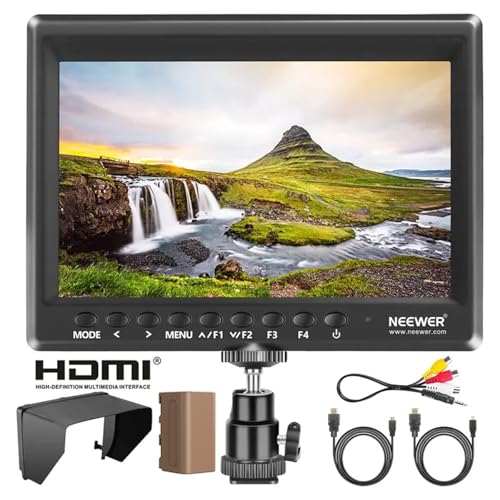
The F100 combines a 7-inch IPS panel with 1280×800 resolution and 450 nit brightness, plus a 4K HDMI input. It is designed for reliable indoor performance and travel-friendly use, offering a balance of clarity and portability. The built-in peaking focus assist and check-field features help ensure you don’t miss critical focus during shoots.
Best for: videographers who prioritize reliable indoor monitoring and useful focus tools in a compact form.
Limitation: brightness is adequate indoors and in shade; bright sun may require a sun hood for best legibility outdoors.
VILTROX DC-550 5.5 Inch Touch Screen Monitor

The DC-550 is a compact 5.5-inch touchscreen with 1200 nit brightness and 1920×1080 resolution. It supports 4K HDMI input and output, along with 3D LUTs, waveform, and histograms. Its high brightness makes it well-suited for outdoor shoots where glare can hinder monitoring, and the touch interface offers quick adjustments on set.
Best for: shooters who need a bright, portable monitor with advanced LUT and waveform features for quick on-set decisions.
Limitation: smaller screen size may limit detailed framing for complex compositions; consider pairing with a larger monitor if needed for precise set layouts.
NEEWER F700 7″ High-Brightness Field Monitor

The F700 features a 7-inch IPS display with 2000 nit brightness and 1080p resolution, designed for direct sunlight visibility. It includes 4K HDMI loop-in/out and a variety of professional tools such as false color, histograms, and peak focus. The kit includes two NP-F750 batteries for longer shooting windows and a robust monitoring setup.
Best for: outdoor professionals who require extreme brightness for daylight shooting and flexible power options.
Limitation: high brightness increases power consumption; plan for batteries accordingly to avoid mid-shoot interruptions.
FEELWORLD S55 V3 Bundle

This bundle provides the 6-inch S55 V3 with a tilt arm, power output, battery, and carry case. It combines a clear monitor with practical mounting and transport accessories, making it a ready-to-shoot kit for indoor studios or mobile shoots. The 1080p display plus 4K input supports robust monitoring for DSLRs and mirrorless cameras.
Best for: buyers who want an all-in-one monitoring solution with mounting and portability in one package.
Limitation: not the brightest option in very bright outdoor environments; add shading for sunny days.
Buying Guide: Key Considerations For Choosing An External Monitor
- Brightness: For outdoor shoots, prioritize models with 1000+ nit brightness or higher to combat glare.
- Resolution and panel type: 1080p is common in field monitors; IPS panels provide better color and viewing angles, improving accurate exposure judgments.
- Tools and scopes: Look for focus peaking, waveform, histogram, and 3D LUT support to improve on-set decision making and post-production readiness.
- Input/output options: Ensure the monitor has 4K HDMI compatibility and, if needed, HDMI loop-in/out for seamless signal sharing with other displays or recorders.
- Power and portability: Battery life and compatibility with common NP-F or DSLR batteries matter for mobile shoots.
- Accessories: Sun hood, tilt arms, and cases can dramatically improve usability in varied environments.
- Size vs. usability trade-off: Larger screens offer more detail but add weight; smaller monitors are lighter and more portable but may limit framing precision.
FAQ
- Q: Do external monitors improve autofocus on DSLRs?
A: They provide better visual feedback and focus assist tools, which helps you achieve accurate focus, though autofocus performance depends on the camera model. - Q: Is a sun hood essential for outdoor work?
A: Yes, sun hoods improve visibility by reducing glare on bright days, helping you read exposure and framing more reliably. - Q: Should I prioritize brightness over resolution?
A: For outdoor use, brightness is often more critical; however, a balance of brightness and resolution ensures clear previews. - Q: Are 4K HDMI inputs necessary for DSLRs?
A: Many DSLRs output up to 1080p, but 4K HDMI inputs ensure compatibility with newer cameras and future-proofing in your rig. - Q: What is the benefit of 3D LUT support?
A: 3D LUTs let you preview color grading and log footage more accurately on set, reducing heavy color decisions in post. - Q: Do external monitors require special calibration?
A: Basic calibration using built-in tools (peaking, histogram) is common, but professional shooters may use external calibration tools for precise color matching.