Best DSLR Rig With Monitor: External Field Monitors for a Clearer Shot
Answering the needs of videographers who require reliable external monitoring, this guide highlights five external field monitors ideal for DSLR rigs. The top picks range from compact 5.5″ models to larger 7″ panels, emphasizing brightness, toolsets, and rugged build. Best for run-and-gun shooters, documentary crews, and indie filmmakers, these monitors help you frame, focus, and expose with confidence. A quick buyer’s summary follows to compare core strengths at a glance.
| Product | Best For | Key Benefit |
|---|---|---|
| FEELWORLD S55 V3 | Compact rigs and gimbals | 4K HDMI input/output with 6″ IPS screen |
| FEELWORLD F5 Prox | Outdoor filming | 1600 nit brightness with pro tools |
| FEELWORLD FW759 | Indoors to moderate light | 7″ view with lightweight design |
| NEEWER F100 | Budget multi-camera setups | 7″ IPS panel with wide formats |
| FEELWORLD S55E | Lightweight setups | 5.5″ monitor with HDR and LUT support |
FEELWORLD S55 V3 6 Inch Monitor Bundle

The FEELWORLD S55 V3 offers a compact 6″ display with full HD resolution and a wide viewing angle. It supports 4K HDMI input/output, enabling monitoring of higher-resolution footage on a larger screen. The tilt arm provides flexible angles for handheld or gimbal use, while a 8.4V DC output lets you power selected cameras with a compatible adapter. Best for shooters needing portable monitoring without adding bulk to the rig, with a straightforward control layout.
FEELWORLD F5 Prox 5.5 Inch Monitor

The F5 Prox delivers a bright 1600 nit display in a compact 5.5″ form, ideal for outdoor shoots. It includes professional tools such as focus peaking, waveform, histogram, and 3D LUT preview to help ensure correct exposure when filming in challenging light. This model is best for photographers and videographers who need strong visibility in sunlight and a robust toolset without adding significant weight to the rig.
FEELWORLD FW759 7 Inch Field Monitor

The FW759 adds a larger 7″ IPS display with 1280×800 resolution and 400 nits brightness. It’s designed to improve framing and focus accuracy, offering tools like focus peaking, histogram, false color, and safe frame. This monitor suits indoor studios, travel vlogging, and handheld shooting where a bigger screen helps with precise monitoring. A lighter, slim profile makes it a practical choice for compact rigs, though it lacks some of the ultra-bright outdoor capabilities of higher-nit models.
NEEWER F100 7 Inch Field Monitor

The Neewer F100 provides a 7″ IPS display with 1280×800 resolution and broad format support, including 1080p and 720p. The included sunshade helps during outdoor shoots, reducing glare. It’s a practical option for multi-camera rigs and educational or event productions where budget and compatibility matter. Consider the data’s compatibility with your camera system and power options to maximize downtime on location.
FEELWORLD S55E 5.5 Inch On-Camera Monitor
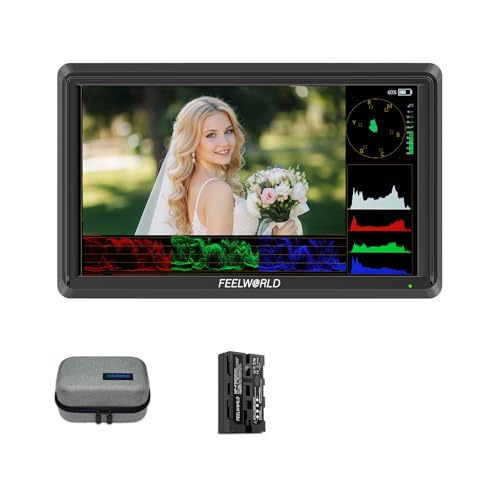
The S55E emphasizes a lightweight 5.5″ monitor with 500 nits brightness and a 1920×1152 IPS panel. It brings essential monitoring tools such as waveform, vector scope, RGB histogram, focus peaking, and HDR, plus support for 3D LUTs for real-time look preview. Best for compact rigs and gimbals where weight and portability are prioritized while maintaining strong monitoring features for focus and exposure control.
Buying Guide: Key Purchase Considerations
What size monitor do you need?
Smaller 5.5″ screens are ultra-portable and ideal for tight rigs, while 7″ displays offer more workspace for precise focus and exposure checks. Choose based on your rig size, typical working distance, and whether you shoot handheld, on a stabilizer, or behind a tripod.
How bright should it be?
Outdoor shooting benefits from high brightness (1000+ nits) to cut glare. Indoor or controlled environments can work well with 400–700 nits. Consider a model with sunshade compatibility for direct sun conditions.
What monitoring tools matter most?
Core tools include focus peaking, histogram, waveform, and false color. LUT support is valuable for previewing looks when shooting log. Ensure the monitor’s toolset aligns with your post workflow.
Power and battery options
Some monitors offer built-in batteries, while others rely on external power from camera batteries or DC inputs. Built-in power helps for long runs, but you may need spare power solutions for extended shoots.
Mounting compatibility and rig integration
Check tilt/arm compatibility, V-mount or NP-F compatibility, and mount points. A good monitor should integrate with your DSLR rig without obstructing controls or causing balance issues.
Connectivity and format support
Ensure the monitor supports your camera’s HDMI format and any SDI option if you plan multi-camera shoots. HDMI in/out can enable pass-through to a larger display or recording device.
Durability and temperature tolerance
Rugged aluminum bodies and protective housings are preferable for outdoor or location work. Consider temperature performance if you shoot in extreme weather or on-location sets.
FAQ
- What is the main purpose of an external monitor on a DSLR rig?
To provide a larger, more accurate view for framing, focus, and exposure, reducing the risk of missed shots and reshoots.
- Is it better to choose brightness over size?
It depends on environment. Brightness helps outdoors; size provides more monitoring space for critical details. A balance is ideal for most workflows.
- Do external monitors require external power?
Not always. Some models have built-in batteries, while others rely on camera power or external DC inputs. Plan power sources for long shoots.
- What monitoring tools are essential for beginners?
Focus peaking, histogram, and waveform are essential for basic exposure and focus control.
- Can LUTs be used in real-time?
Yes, many monitors support real-time LUT previews, which helps evaluate looks while filming.
- Which monitor is best for outdoor vlogs?
A model with high brightness (around 1500 nits), good anti-glare, and a lightweight build is ideal for outdoor vlogs and on-the-move shooting.