Best DSLR Camera With XLR Input: Top Audio Accessories for Pro-Shot Video
The right microphone and audio gear can elevate DSLR video to professional levels. This guide consolidates top gear that provides XLR inputs or professional-level audio routing for DSLR setups. From compact field recorders to on-camera mixers, these picks help you capture clean, studio-grade sound alongside your camera, without bulky rigs. Below you’ll find five strong options with practical features for filmmakers, vloggers, and documentarians alike.
| Product | Brand | Key Benefit |
|---|---|---|
| TASCAM DR-60DmkII | Tascam | Four-channel recording with locking XLR connectors |
| SR-PAX1 | Saramonic | On-camera mixer with multiple preamps and phantom power |
| DR-70D | Tascam | Compact multi-track recorder with built-in mics and XLR inputs |
| BOYA XLR On-Camera Mixer | BOYA | Two XLR/1/4″ inputs; passive operation |
| Disino XLR to 3.5mm 15ft | Disino | XLR to 3.5mm mono feed for camcorders and DSLRs |
TASCAM DR-60DmkII — 4-Channel Portable Recorder

This TASCAM model is designed to sit under a DSLR camera rig, avoiding bulky external recorders. It records up to four channels simultaneously to an internal SD card, with high-resolution 96kHz/24-bit WAV output. Two mic inputs use locking XLR connectors with 48V phantom power, while the other two inputs accept a 1/8” stereo connector for wireless and lavalier mics. The unit’s compact form accommodates tight rigs and quick setup for on-the-go shoots, making it a practical choice for documentary or run-and-gun projects.
Saramonic SR-PAX1 — 2-Ch XLR On-Camera Mixer
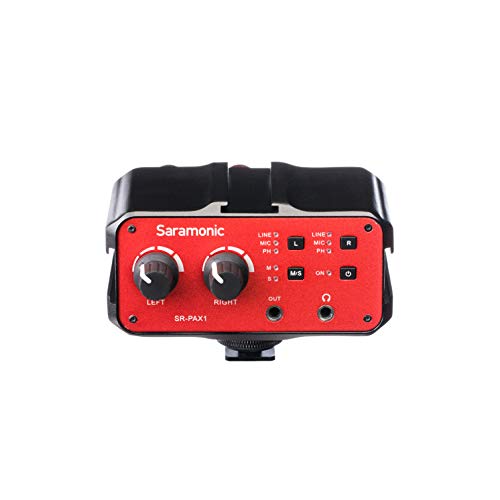
The SR-PAX1 provides two XLR/1/4″ combo preamp inputs with phantom power and three 1/8” inputs for additional mics or line devices. It’s designed to connect, adapt, and mix multiple sound sources to a camera’s 1/8″ mini inputs, with a dedicated headphone output so you can monitor sound in real time. This option is ideal when you need flexible routing and on-camera control without a separate field mixer, keeping the setup compact for DSLR videography.
TASCAM DR-70D — 4-Channel Portable Recorder

Designed for filmmakers and documentarians, the DR-70D combines multi-track recording with DSLR-friendly form factor. It offers four balanced XLR mic inputs with phantom power, enabling high-quality capture when using professional mics. A compact design supports mounting above or below a camera, and the unit includes built-in microphones for on-set ambient capture. This makes it a strong choice for productions requiring reliable audio channels alongside a DSLR rig.
BOYA Dual-Channel XLR On-Camera Mixer

The BOYA mixer is a compact, passive device with two XLR-1/4″ combo inputs. It’s designed for DSLR and mirrorless cameras, delivering straightforward audio routing without requiring external power. This makes it a practical plug-and-play solution when you want better mic control without adding heavy gear to your camera rig. It’s particularly appealing for creators who rely on external mics but need minimal setup complexity.
Disino XLR to 3.5mm 15ft Cable
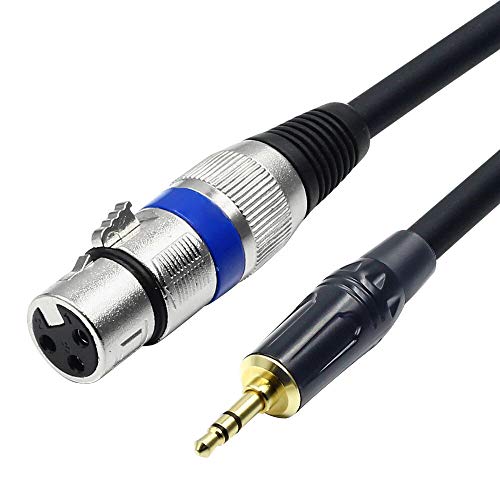
This 15-foot unbalanced 3-pin XLR to 3.5mm TRS stereo mic cable is ideal for feeding mono microphone signals to camcorders or DSLR mic inputs. It’s designed to distribute the mono signal evenly to both camera input channels. Be mindful of phantom power requirements; ensure your device provides power if you’re using a condenser mic. Note that it may not be compatible with iPhone/Android devices using TRRS ports without adapters.
Tisino XLR to 3.5mm — 3.3 Feet

Tisino’s 3.5mm to XLR cable is designed to feed mono mic signals to camcorders or computers. It uses 20 AWG oxygen-free copper and heavy-duty gold-plated connectors to minimize signal loss and interference. The copper shielding helps reduce hum and noise, while the PVC jacket supports high-frequency response. This cable is a robust option when you need a short, reliable pathway from XLR mics to DSLR audio inputs.
Buying Guide: Key Purchase Considerations
- Input plurality: If you rely on multiple mics, prioritize devices with multiple XLR inputs and phantom power, such as DR-60DmkII or DR-70D. For simpler setups, on-camera mixers like SR-PAX1 or BOYA can streamline routing.
- Power management: Decide between passive devices (no battery) and active units requiring power. Field reliability often favors options with phantom power or strong battery support for condenser mics.
- Form factor and mounting: If you shoot with a DSLR, choose gear that fits under or above the camera body without adding bulk. Compact recorders can mount on rigs, while mixers should be camera-friendly for quick access.
- Cable quality and length: Longer cables can introduce noise or signal loss. High-quality XLR to 3.5mm cables (15 ft, 10 ft, or shorter) provide flexibility for camcorders and DSLRs while controlling impedance and shielding.
- Monitoring capabilities: Headphone output and level controls on the mixer/recorder help you monitor audio in real time, preventing post-production headaches.
- Compatibility notes: Some cables are designed specifically for camcorders or DSLRs and may not work with mobile devices or TRRS ports without adapters. Verify device inputs before purchase.
- Audio fidelity: Look for 96kHz/24-bit capabilities when possible for higher dynamic range and clarity, especially in professional scenes with multiple sound sources.
- Cost-to-performance: Align the gear with your production needs. For occasional shoots, a simpler mixer or cable may suffice; for documentary or narrative work, a multi-channel recorder provides greater flexibility and safety.
These considerations help you balance portability, sound quality, and workflow efficiency. When selecting, think about your typical production environment, the microphones you use, and how you want to monitor and route audio during shoots.