Best Digital Eyepieces for Telescopes: A Guide to the Top 5
Choosing a digital eyepiece can transform any telescope into a versatile astrophotography and observation tool. The right eyepiece blends easy installation, reliable connectivity, and clear image capture for both casual observers and budding astrophotographers. Below are five leading options geared toward American readers, each offering WiFi or USB connectivity, live viewing, and practical compatibility with a range of scopes. This guide compares installation, power, and performance to help you pick the best digital eyepiece for your setup.
Product Overview
- 64GB Digital Eyepiece Telescope Camera with 2K HD Video & WiFi — Unalace
- AOMEKIE Digital Eyepiece — 1080P FHD
- SVBONY SC002 Wireless Electronic Eyepiece — 1080P
- SVBONY SV105 Telescope Camera — IMX307 color sensor
- Monocular Telescope High Power — 4K Full Color Screen — Bansainong
Summary table of chosen products:
| Product | Key Benefit | Connectivity | Video Resolution |
|---|---|---|---|
| Unalace 64GB Digital Eyepiece | High-capacity storage and 2K video | Built-in WiFi | 2K |
| AOMEKIE Digital Eyepiece | Multiple adapters for scope compatibility | WiFi | 1080P |
| SVBONY SC002 | Universal 37–56mm fit, 10m live view | WiFi | 1080P |
| SVBONY SV105 | Beginner-friendly imaging | USB/PC | 1080P |
| Bansainong 4K Eyepiece | 3-inch color LCD, 4K footage | Microscope/Scope compatibility | 4K |
Unalace 64GB Digital Eyepiece: 2K HD Video & WiFi

The Unalace eyepiece attaches to telescopes or microscopes with 25–50mm eyepieces, offering simple rotation to secure without tools. It features a built-in WiFi hotspot for direct smartphone connection, enabling live HD streaming and remote control via the accompanying app. Capture 2K ultra HD video and 16MP still photos, with time-lapse and timed recording for hands-free sessions. This model suits observers who want a compact, integrated solution with offline control when internet access is limited.
Key considerations: ease of installation, reliable wireless performance, and the balance between video resolution and device compatibility. The 25–50mm range covers a broad spectrum of common eyepieces, while the time-lapse function is useful for monitoring variable phenomena or long-night observations. Battery life is modest, so plan for shorter sessions if you’re going mobile or observing away from power sources.
AOMEKIE Digital Eyepiece: 1080P FHD
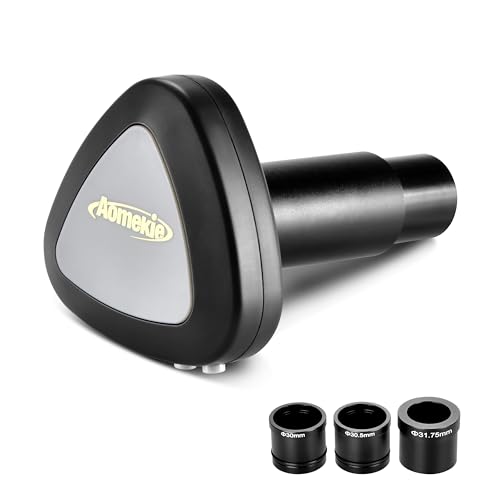
The AOMEKIE eyepiece comes with three adapter rings to fit astronomical telescopes and microscopes, a wide range of compatibility for iOS, Android, and PC, and WiFi for real-time view transfer to laptops or tablets. Its 800 mAh battery supports 60–90 minutes of continuous use after a full charge. This option is appealing for those who want flexible device support and a straightforward way to push telescope imagery to a larger screen, whether for field observations or classroom demonstrations.
Considerations include battery endurance, the availability of compatible apps across devices, and whether you prefer a standalone battery or a continuous power option. The built-in battery adds portability, but users should be mindful of charging intervals during longer observing sessions.
SVBONY SC002 Wireless Eyepiece: 1080P

The SVBONY SC002 offers universal compatibility with 37–56mm eyepiece diameters and 1080P HD recording with 3x digital zoom. It supports 10-meter wireless live view and is controlled via SvbonyCam APP on Android, iOS, or HarmonyOS. Features include scheduled shooting and multi-device connectivity, making it suitable for birdwatching, digiscoping, and field work. The 25–30fps video ensures smooth motion during point-and-shoot captures.
Key points for buyers: range of compatible scopes, wireless reliability, and app usability across platforms. The 3x digital zoom helps frame subjects at a distance, but image quality will still depend on the telescope’s optics. The ability to connect two devices simultaneously is a practical bonus for sharing the view with a companion.
SVBONY SV105 Telescope Camera
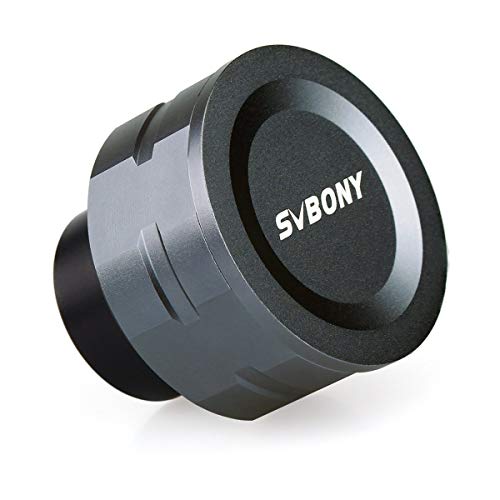
The SV105 is positioned as a beginner-friendly electronic eyepiece for lunar and planetary imaging. It’s a 1.25″ CMOS color camera designed to interface with standard telescope setups and allows real-time viewing on a connected PC. With plug-and-play operation and driver-free use, it supports basic astrophotography workflows by enabling quick video capture and image transfer to a laptop. It’s particularly suited for newcomers aiming to learn imaging fundamentals without complex configurations.
Considerations focus on ease of use, software requirements for Windows or Linux, and whether the user plans to grow into more advanced imaging. While ideal for starters, the SV105 may require additional accessories for higher-end imaging projects or longer exposure studies.
Monocular Telescope High Power: 4K Eyepiece

This Bansainong eyepiece features a 3-inch full-color LCD and records in 4K, designed for compatibility with 22–46mm eyepieces on telescopes or microscopes. The 4K resolution supports crisp, vibrant video and stills, even in low-light conditions common to astronomical observing. The interface allows real-time monitoring with intuitive focus and framing control, enabling users to keep their eye on the target while capturing content. It’s a strong choice for those who want a larger display and high-resolution footage.
Purchase considerations include the display size, battery or power needs during mobile use, and the stability of the eyepiece’s mounting on diverse optical devices. The 4K capability is appealing, but real-world results depend on the telescope optics and the user’s steadiness during recording.
Gugxiom USB Eyepiece Camera: USB Connection

This USB eyepiece enables real-time viewing on a laptop or PC, making it a straightforward way to produce digital movies and images from telescope sessions. It is presented as a versatile solution for lunar and planetary shots, with a focus on sharing the view with friends and family through digital media. The plug-and-play capability reduces setup complexity, appealing to students, clubs, and casual observers who want a reliable, easy-to-use option without extensive software configuration.
Key decision factors include software compatibility, the expected video and image quality at your target resolutions, and the convenience of USB connectivity for immediate capture and transfer. It’s well suited for educational demonstrations and quick documentation of celestial events.
YWYLL WiFi Eyepiece: 24mm–50mm Compatibility

The YWYLL eyepiece supports 24–50mm eyepieces and provides a 4MP sensor with 2304×1728 video at 30fps and up to 24MP photos. Wireless transmission to smartphones, tablets, or computers simplifies sharing and back-and-forth control. This broad compatibility makes it a flexible option for a variety of optical setups, including spotting scopes and some microscopes, extending its usefulness beyond traditional telescopes.
Key considerations include wireless range, image quality under different lighting conditions, and the ease of pairing with multiple devices. The 4MP sensor is adequate for many general observations, though more advanced users may crave higher base resolutions for astrophotography projects.
APEXEL WiFi Telescope Camera: 32GB

The APEXEL electronic eyepiece converts optical devices into wireless cameras with up to 10 meters of transmission range. It uses low-light compensation to enhance visibility in darker skies and includes the free app “APVision” for control, interval shooting, and time-lapse video. The build emphasizes a sturdy metal frame and secure eyepiece clamps to minimize movement during shots. This model suits users who want robust performance and app-based control for astrophotography or DIGISCOPING projects.
Considerations include the reliability of wireless transmission, the availability of the control app across devices, and the stability of mounting hardware. The design prioritizes durability for field use and consistent results during longer sessions.
Buying Guide: Key Purchase Considerations
- Scope compatibility: Check eyepiece diameter ranges (e.g., 25–50mm, 37–56mm, 22–46mm) to ensure a secure fit with your telescope or microscope.
- Resolution and image quality: Higher video resolutions (2K, 4K) deliver crisper planetary and lunar footage, but field results depend on your optics and sensor quality.
- Connectivity: Decide between WiFi and USB-based models based on how you plan to view content (mobile devices vs. PC/laptop) and whether you need offline operation.
- Power and endurance: Battery-powered units offer portability but may require more frequent recharging. Consider whether a power adapter is available for longer sessions.
- App experience: Look for user-friendly apps with interval shooting, time-lapse, and multi-device support. Cross-platform compatibility can be a major time-saver.
- Ease of installation: Models that attach with simple rotations and require no tools are ideal for quick swaps and on-the-field setups.
- Learning curve: Beginners may prefer plug-and-play options with clear software requirements, while advanced users might prioritize higher-end sensors and more granular controls.
- Durability and mounting: Solid clamps and robust housing help resist movement during handling and windy observing conditions.