Best CMOS Cameras for Astrophotography You Can Buy Online
Astrophotography enthusiasts leverage CMOS cameras to capture celestial details with clarity, color, and depth. This guide highlights top CMOS-based cameras that suit beginners through advanced stargazers, focusing on user-friendly interfaces, sensor performance, and practical features. Whether you’re chasing planetary detail, lunar craters, or deep-sky targets, these cameras pair well with common telescope setups and guiding equipment to elevate your night-sky imagery.
Summary Of Selected Products
- SVBONY SV205 Astrophotography Camera — IMX415 CMOS, 7.05MP, USB 3.0, 1.25″ eyepiece
- SVBONY SV305C Pro — IMX662, 2MP, high-speed USB 3.0, 1.25″ eyepiece
- Telonixium 4K Telescope Camera — 8MP CMOS, 2.8″ LCD, 4K video
- SVBONY SV305C Astrophotography Camera — IMX662 color, 2.1MP, 1.25″
- SVBONY SC311 WiFi Eyepiece Camera — IMX662, 1080P, removable UVIR cut
The following selections represent a mix of planetary imaging, EAA (eyepiece astrophotography), and deep-sky potential. The list includes both monochrome and color options, cooled and non-cooled designs, and models with built-in screens or wireless capabilities to fit different observing styles and budgets.
SVBONY SV205 Astrophotography Camera

- Brand: SVBONY
- Sensor: IMX415, 7.05MP
- Interface: USB 3.0
- Optical Size: 1.25″ eyepiece
- Compatibility: Works with Apple laptops using Astroamx Capture; not for iOS devices
The SV205 is positioned for beginners who want a straightforward entry into astrophotography with a capable sensor and a familiar USB connection. Its IMX415 sensor provides a solid balance of sensitivity and noise performance, making it suitable for entry-level planetary and lunar captures. The 1.25″ eyepiece interface allows easy use with existing telescope accessories, while the included USB 3.0 connection supports smooth data transfer for longer exposures. Users planning to work with Macs should download compatible capture software to maximize its potential.
SVBONY SV305C Pro Telescope Camera

- Brand: SVBONY
- Sensor: IMX662, 2MP
- Interface: USB 3.0
- Pixel/Readout: Ultra-high sensitivity; 0.7e readout noise
- Resolution: 1920×1080 at 107 FPS
The SV305C Pro emphasizes fast planetary imaging with high frame rates and low readout noise. Its IMX662 sensor delivers good sensitivity with reduced noise, helping to reveal details in brighter targets like Jupiter and Saturn even in modest skies. The high FPS capability enables sharper footage of moving planetary atmospheres. This model is well-suited for those who want a capable planetary camera that can also support general astrophotography tasks when paired with an appropriate telescope and mounting system.
Telonixium 4K Telescope Camera For Astrophotography

- Brand: Telonixium
- Sensor: 8MP CMOS
- Display: 2.8″ LCD
- Resolution: 4K video, up to 64MP stills
- Connectivity: 2.5-inch universal eyepiece adapter; WiFi with remote viewing
This camera targets observers who value a built-in screen and wireless capabilities. The 8MP CMOS sensor supports 4K video and high-resolution stills, making it feasible for moon and planetary footage as well as general observation. The rotatable 2.8-inch IPS display and remote viewing broaden convenience during setup and sessions where direct viewing is preferred. Its universal locking groove accommodates a wide range of eyepiece diameters, increasing compatibility with various telescopes.
SVBONY SV305C Astrophotography Camera

- Brand: SVBONY
- Sensor: IMX662, 2.1MP
- Interface: 1.25″ electronic eyepiece
- Color camera for EAA and planetary work
- Back-illuminated sensor with improved low-light performance
The SV305C offers color imaging with a compact form factor suited for real-time observing and exploration. Its IMX662 sensor benefits from low readout noise and enhanced sensitivity, helping to compensate for shorter exposure times during EAA sessions and planetary imaging. The camera’s color output makes it attractive for users who want immediate, visually engaging results without post-processing heavy-lifting.
SVBONY SC311 WiFi Telescope Camera Eyepiece

- Brand: SVBONY
- Sensor: IMX662
- Interface: USB 2.0, WiFi
- Resolution: 1080P, 2D capabilities
- Compatibility: Requires telescope pairing for imaging targets
The SC311 focuses on wireless convenience for quick Moon imaging and casual planetary captures. Its IMX662 sensor provides solid performance in a compact package, with the added benefit of WiFi for remote viewing. While it excels for Moon photography and educational demonstrations, it typically requires pairing with a telescope to reach distant celestial targets effectively. It’s a suitable option for users prioritizing wireless operation and portability.
ZWO ASI120MM-Mini Monochrome Astronomy Camera
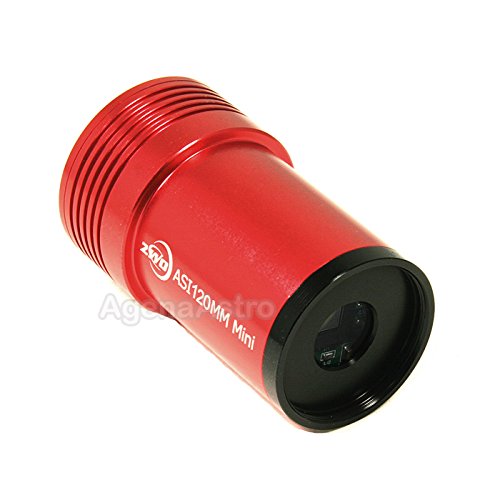
- Brand: ZWO
- Sensor: 1.2MP monochrome, 1/3” CMOS
- Interface: USB 2.0 Type-C
- Autoguiding: ST4 port included
- Pixel size: 3.75 microns; high QE
The ASI120MM-Mini is a compact monochrome camera favored for autoguiding and planetary imaging. Its small pixel size supports precise guiding, and the USB 2.0 Type-C connection ensures reliable data transfer. The ST4 port enables direct autoguiding integration with many telescope mounts, making it a practical choice for users building or upgrading an autoguiding setup. The monochrome sensor is particularly well-suited for narrowband imaging and high-contrast planetary work when paired with appropriate filters and exposure strategies.
SVBONY SV405CC Cooled Astrophotography Camera

- Brand: SVBONY
- Sensor: IMX294, 11.7 MP
- Interface: USB 3.0
- Cooling: Cooled color sensor
- Output: High-resolution deep-sky imaging
The SV405CC is a high-end cooled camera, designed for deep-sky imaging and fast performance. With the IMX294 sensor in a 4/3 format and high pixel count, it enables true 4K-like output at high frame rates for bright targets and long integrations. USB 3.0 bandwidth supports heavy data flow, while cooling minimizes thermal noise for longer exposures. This camera is aimed at dedicated amateurs and those pursuing detailed nebulae and galaxy imaging with a robust data pipeline.
SVBONY SV905C Guide Camera

- Brand: SVBONY
- Sensor: 1.23MP, 1/3” CMOS
- Interface: USB 2.0
- Autoguiding: ST4 interface; CS-compatible front
- Applications: Autoguiding, planetary imaging
The SV905C is a dedicated guide camera designed to support precise autoguiding and steady long-exposure imaging. Its compact sensor and USB 2.0 interface pair well with many telescope mounts that require accurate guide stars. The front CS interface compatibility broadens its use with a range of guiding optics and accessories, making it a sensible addition for users building a reliable imaging rig that requires reliable guiding hardware.
Buying Guide: What To Consider When Choosing A CMOS Camera For Astrophotography
When selecting a CMOS camera for astrophotography, consider sensor performance, noise, color vs. monochrome options, cooling capabilities, data interfaces, and compatibility with your telescope and guiding setup. Monochrome sensors generally offer higher sensitivity and flexibility for narrowband imaging, while color sensors deliver immediate, visually appealing results. Cooled cameras reduce thermal noise during long exposures, which is essential for deep-sky work. USB 3.0 and USB Type-C interfaces ensure rapid data transfer, enabling higher frame rates and longer sequences without bottlenecks. Autoguiding compatibility (ST4, guiding software) is crucial for stability during long sessions. Finally, verify software compatibility with your PC or Mac, including drivers and capture software, to maximize performance and ease of use.
- Sensor size and type: Larger sensors usually yield more detail and dynamic range; monochrome versus color affects exposure strategy and post-processing needs.
- Cooling: Active cooling reduces thermal noise for long exposures, improving faint-object visibility.
- Frame rate and data bandwidth: Higher frame rates help with lucky imaging and planetary captures; USB 3.0/Type-C supports large data transfers.
- Guiding support: ST4 compatibility and autoguider integration are important for precision tracking during long sessions.
- Compatibility: Ensure the camera fits your telescope’s eyepiece size (1.25″ vs. 2″), and that it works with your operating system and chosen software.
- Ease of use: For beginners, consider cameras with straightforward setup, bundled software, and good documentation to reduce initial friction.