Best Cameras for Photographing Artwork: Capturing Color, Detail, and Texture
Photographing artwork requires gear that preserves color accuracy, sharpness, and texture while being easy to use in studios or galleries. This guide reviews five cameras that balance image quality, control, and value for artists, curators, and photographers dedicated to faithfully representing paintings, sculpture, prints, and mixed media.
Summary of chosen products:
| Product | Key Benefit | Zoom/ flexibility | Notes |
|---|---|---|---|
| Canon EOS 4000D / Rebel T100 Bundle | Versatile bundle with multiple lenses and accessories | Wide, telephoto, macro options with 128GB memory | Best value for a complete setup |
| Canon PowerShot ELPH 360 | Portable with strong stabilized zoom | 12x optical zoom | Great for on-the-go artwork shoots |
| Canon SX40 HS | Very long optical zoom for studio flexibility | 35x zoom | Excellent for distant subjects or large pieces |
| Canon Rebel XTi | Classic DSLR with solid manual controls | Interchangeable lenses | Reliable baseline DSLR for detailed work |
| Creative Photography Lab (Book) | Offers exercises for expressive shooting | N/A | Useful for expanding a photographer’s approach |
Canon EOS 4000D / Rebel T100 Bundle

The Canon EOS 4000D bundle offers a ready-to-shoot configuration with an 18-55mm kit lens along with additional lenses and accessories. For artwork photography, the 18-megapixel APS-C sensor delivers solid detail, while the bundled wide and telephoto options give flexibility for capturing large canvases or tight detail without moving the camera. The 2.7-inch LCD is modest by today’s standards, but the DIGIC 4+ processor helps produce decent color and contrast in controlled lighting. When paired with a neutral lighting setup, it can reproduce color and texture in paintings, prints, and mixed media pieces.
Key features that support artwork work: full HD video for documented creation, a 9-point autofocus system for reliable focus across different subjects, and an extended ISO range that helps in varied lighting. The included memory card and travel-friendly kit make it suitable for studio shoots, gallery checks, and on-location shoots where space and gear variety matter. For best results, shoot in RAW and calibrate to a color target to preserve artwork fidelity.
Canon PowerShot ELPH 360
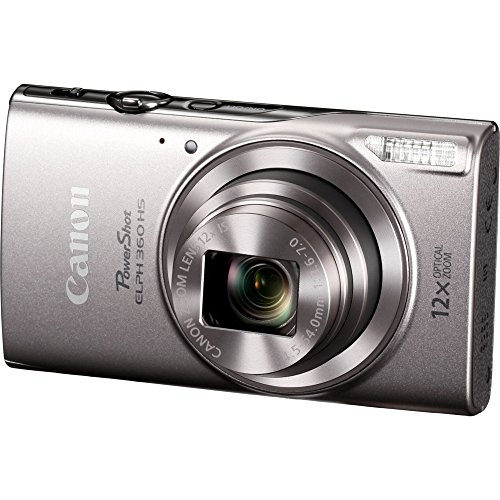
The Canon PowerShot ELPH 360 is a compact option with a 12x optical zoom and image stabilization to help stabilize handheld shots of artwork in varied spaces. Its 20.2-megapixel sensor and DIGIC 4+ processing deliver sharp imagery with good color handling, especially when you’re not near a controlled studio. Built-in Wi-Fi and NFC simplify transferring high-quality images for review or gallery submission, making it practical for artists who need quick sharing of work prints or digital proofs.
For artwork photography, the ELPH 360 excels in convenience and consistency. The long zoom helps capture larger pieces from a distance, while stabilization supports sharp detail in macro-like close-ups. While it lacks the extensive manual controls of a DSLR, it remains a strong option for documenting art quickly, sharing proofs, and creating a compact workflow for artists who travel between studios and exhibitions.
Canon SX40 HS

The SX40 HS combines a powerful 35x wide-angle optical zoom with a versatile Vari-angle LCD, making it suitable for photographing large artworks or paintings from unusual angles. The 12.1MP sensor and 1080p video support expand creative options for documenting texture and brushwork. A wide zoom range helps when you want to capture gallery-scale canvases without moving the camera far away, while the tilt screen facilitates comfortable shooting from low or high positions—useful for studio setups and install shots.
Features to note for artwork work include a bright zoom lens for color fidelity across the frame, macro capabilities in some modes, and a basic set of scene modes that can help standardize shots of different media. The camera’s built-in logic is friendly for beginners but remains capable enough for controlled lighting routines with a tripod and color targets.
Canon Rebel XTi

The Canon Rebel XTi is a classic DSLR option with interchangeable lenses that provide flexibility for art photography. With an EF-S 18-55mm kit lens, you get solid everyday performance and reliable manual controls, which are essential for consistent color, exposure, and focus when documenting artwork. The camera’s DIGIC II image processor supports responsive operation, and the larger, bright viewfinder helps with precise framing in studio setups.
For photographers aiming to capture images of paintings, drawings, or prints, the ability to swap lenses—along with options to use color targets and RAW capture—enables more accurate color reproduction and detail. While older, the Rebel XTi remains a dependable workhorse for those who want a budget-friendly, DSLR-based solution with room to grow through additional lenses and lighting accessories.
Creative Photography Lab: 52 Fun Exercises

This book offers 52 creative exercises designed to help photographers develop self-expression with their cameras. While not a camera, it complements practical gear by expanding techniques you can apply when photographing artwork. The project-based approach encourages exploration of lighting, composition, texture, and narrative—skills that translate into more compelling documentation of visual art.
For artists who want to refine their approach beyond gear, pairing a solid camera with structured practice can yield more consistent image sets for portfolios, galleries, or cataloging artworks for submission or sale. The exercises may help you experiment with angles, reflections, and color balance in ways that improve overall documentation quality.
Buying Guide: Key Considerations For Artwork Photography
- Resolution And Sensor Type: Higher resolution helps capture fine texture and brushwork, but color accuracy is equally crucial. APS-C sensors balance detail with manageable file sizes for most artworks.
- Color Accuracy And White Balance: Use a gray card or color target to calibrate white balance. Consistent lighting (neutral, daylight-balanced LEDs or strobes) reduces color shifts between pieces and shots.
- lenses And Focal Lengths: A standard zoom (around 24-70mm equivalent) is versatile for most paintings and prints. A macro option helps capture texture, and a wide-angle can be useful for large canvases without moving the camera far away.
- Lighting Setup: Soft, even lighting minimizes glare and shadows on glossy surfaces. A two-light setup with diffusers or light tents can improve texture capture, especially for canvases and framed works.
- Tripod And Stability: A sturdy tripod ensures consistent framing and exposure across multiple shots, which is essential for cataloging artwork or submitting images for exhibitions.
- Color Calibration Tools: Consider color targets and software for white balance and color correction. Consistency across shoots improves portfolio quality.
- Storage And Workflow: Shoot in RAW when possible for maximum post-processing latitude. Plan a workflow to catalog and back up high-resolution files for galleries, archives, and client review.
- Portability vs. Control: Compact cameras provide mobility for on-site shoots, while DSLRs offer extensive control and lens options. Choose based on typical work environments and the need for flexibility.
- Budget And Future Upgrades: Start with reliable core gear (body + lens) and add accessories (lighting, targets, tripod) as needed. Older models can still deliver strong results with the right technique and workflow.
In summary, the selected cameras provide a spectrum from compact, easy-to-use options to more flexible DSLRs. For art photography, prioritize color fidelity, reliable focus, and good lens choices. A well-planned lighting setup and color calibration routine will maximize the impact of captured artwork across formats, from gallery prints to online catalogs.