Best Camera Rail Track Systems for Smooth Motion and Easy Setups
If you need stable, glide-like motion for video and photography, a camera rail track system is essential. This guide highlights five top options that balance portability, stability, and versatility for DSLR, mirrorless, and smartphone rigs. Best for traveling shooters, studio setup pros, and hobbyists seeking professional-looking motion shots.
Summary of selected products:
| Product | Best For | Why It Stands Out |
|---|---|---|
| Zecti Camera Slider 24″/60 cm | Travelers and compact setups | Carbon fiber rails, quiet movement, lightweight with carrying bag |
| GVM Great Video Maker Motorized Slider | Timed time-lapse and panoramic shooting | Electric slider with multiple shooting modes and panoramic options |
| DATOUBOSS 2M Double Track Ceiling Rail | Studio lighting on tracks | Extendable, double pulley safety, easy expansion |
| DATOUBOSS 2.5M Double Track | Longer ceiling rail needs | Long extendable rail with safety features and expansion options |
| Fotodiox Pro SlideCam 800 | Heavy-duty DSLR/Video rigs | Professional ball-bearing slide with legs and carrying case |
Zecti Camera Slider 24″/60 cm

Best for: traveling videographers and compact shoots. The Zecti 24″/60 cm slider offers four precision bearings and a double interior carbon fiber rail system for stability and quiet, smooth movement. It ships with a scratch-resistant carrying bag for easy transport and is light enough to pack in a backpack. Note: some users report noise if screws are overtightened; loosening slightly can improve glide.
Why selected: lightweight carbon fiber construction, portable size, and compatibility with standard ballheads make it a versatile option for on-the-go shoots and smaller setups.
Caution: ensure screws are tightened to an appropriate level to avoid binding that causes noise or rough movement.
GVM Great Video Maker Motorized Slider
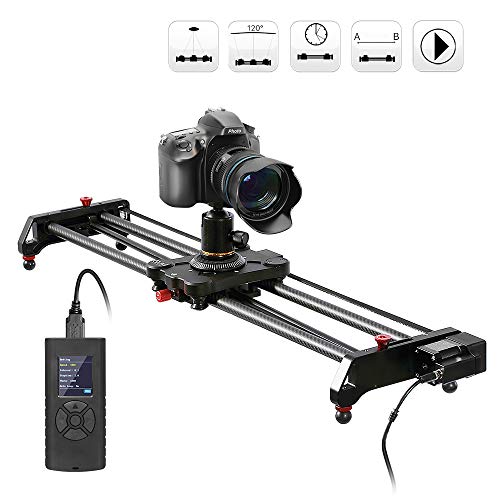
Best for: users needing automated motion and complex shooting routines. This 31″/80 cm motorized slider supports tracking, panoramas, and time-lapse functions, with adjustable endpoints for fixed-point shooting. It’s suitable for mid-size rigs and staged product or interview setups. Caution: check the setup area for enough clearance to accommodate full travel range.
Why selected: the integrated motor and time-lapse capabilities expand creative options beyond manual slides, especially for cinematic sequences.
2M Double Track Ceiling Rail (H-Shape)

Best for: permanent studio lighting installations and overhead support. This 2-meter ceiling rail extends pantograph systems to hold professional lighting, with double pulleys enabling smooth track movement. Safety features include end screws to prevent items from slipping. Caution: installation may require extra hardware for full integration with existing rigs.
Why selected: crucial for ceiling-mounted lighting setups where motion is needed across a defined space without trip hazards or tripod clutter.
DATOUBOSS 2.5M Double Track Ceiling Rail

Best for: larger studio ceilings and long-span lighting or camera movement. The 2.5-meter track provides extended reach for broad shots and high-angle work, with double pulleys and end-screw safety. Caution: longer rails require sturdier mounting points and ample ceiling support.
Why selected: longer length increases versatility for wide sponsor shoots, interviews, and event backdrops where extended motion paths are beneficial.
Zecti Camera Slider 16″/40 cm

Best for: compact setups and quick movement shots. The 16″/40 cm version mirrors the 24″ model with carbon fiber rails and similar quiet, smooth movement. It is lighter and easier to carry, making it ideal for weekend shoots or candid footage. Caution: shorter travel means less motion range for longer tracking shots.
Why selected: it complements the 24″ model, offering a smaller footprint while preserving stability and portability for remote shoots.
Fotodiox Pro SlideCam 800

Best for: professional DSLR or cinema rigs requiring a robust slide with a stable, straight tracking path. The SlideCam 800 uses a ball-bearing slide and includes adjustable legs with non-skid feet and multiple mounting holes for flexible setups. Caution: heavier rigs require solid tripod or support to maximize stability.
Why selected: established brand in motion gear, plus a carrying case and versatile mounting options enable reliable, shake-free slides in studio or field environments.
Buying Guide
What should I consider when choosing a camera rail track system?
- Travel and portability: If you shoot on the go, prioritize lightweight models with protective carrying bags and compact length.
- Weight capacity and stability: Match the rail and slider to your camera body and lenses; carbon fiber tracks tend to be lighter with robust stability.
- Length and expansion: Longer ceilings or longer horizontal rails support broader shots; check if the system is expandable with connectors or additional track.
- Motorized versus manual: Motorized options enable automatic pans and time-lapse, but manual sliders are simpler, quieter, and lighter.
- Mounting compatibility: Ensure compatibility with standard ball heads, tripods, and pan/tilt heads you already own.
- Noise and smoothness: Some sliders require loosening screws for quiet operation; test for glide consistency and noise.
Frequently Asked Questions
- What is a camera rail track system used for?
It provides smooth, linear motion for cameras, enabling stable pans and dolly shots for video and photography.
- Do I need a motorized track?
Not always. Manual tracks work well for simple moves, while motorized tracks help automate time-lapse and complex pans.
- Can these tracks support professional cinema rigs?
Some tracks are designed for heavier gear; always verify weight capacity and mounting compatibility with your rig.
- Are ceiling-mounted rails safe for lighting or cameras?
Yes, when installed with proper anchors and pulleys; ensure ceiling structure can support the load.
- What maintenance is needed for slider tracks?
Keep rails clean, tighten loose screws as needed, and lubricate moving bearings if required by the manufacturer.
- Which rail length should I buy first?
Start with a length that fits your typical shooting space, with consideration for potential expansion if you anticipate longer moves.