Best Cameras for Planetary Imaging: Clear Views of Moon and Planets
Planetary imaging requires compact, sensitive cameras that pair well with telescopes and software. This guide highlights five popular options that are approachable for beginners and capable for experienced observers. Each entry includes a quick feature snapshot and how it fits into lunar and planetary work, from quick video captures to high-resolution stills.
| Product | Brand | Key Strength | Sensor/Tech |
|---|---|---|---|
| SVBONY SV105 Telescope Camera | SVBONY | Beginner-friendly lunar and planetary videos | 1.25″ IMX307 CMOS |
| SVBONY SV305C Astrophotography Camera | SVBONY | Low-noise imaging with strong red sensitivity | IMX662, 1.25″ |
| SVBONY SV205 Astrophotography Camera | SVBONY | Easy entry-level color imaging | 7.05 MP, IMX414 |
| SVBONY SC432M Monochrome Cooled Planetary Camera | SVBONY | High frame rate monochrome for detail | IMX432, global shutter |
| ZWO ASI183MC Pro | ZWO | High-resolution color planetary and deep-sky imaging | 20.1 MP, IMX462/CMOS |
Each product section below presents practical use cases, setup tips, and how the camera integrates with common planetary imaging workflows. The emphasis is on objective specs, compatibility, and typical results rather than price or promotion.
SVBONY SV105: Quick Start for Lunar and Planetary Imaging
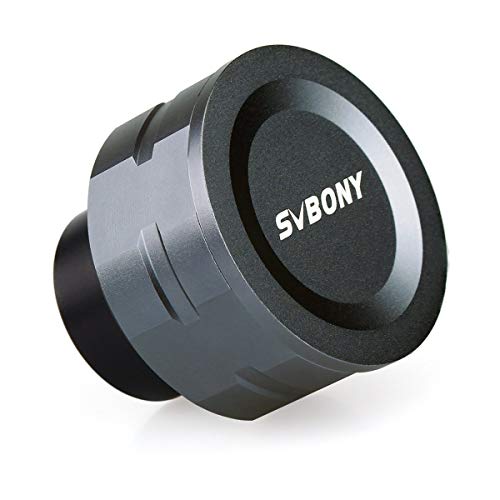
The SV105 is positioned as a beginner-friendly telescope camera designed for immediate entry into planetary imaging. It uses a 1.25″ interface and an IMX307 CMOS sensor to deliver real-time video and stills that can be streamed to a laptop. Plug-and-play operation is a key feature, with no mandatory driver installation for basic use. The camera is compatible with Windows via SharpCap, Linux via AstroDMx, and Android for USB camera functionality. This makes it suitable for quick lunar and planetary captures, where bright targets are recorded as quick videos and later saved for review.
With the SV105, users often start by framing the Moon or a bright planet through their telescope, then recording short videos to stack later. The device’s simplicity helps beginners practice focusing, exposure control, and frame rate management. For more advanced processing, software such as Sharpcap provides real-time capture and stacking capabilities, enabling improved detail from multiple frames. The emphasis on rapid transfer to a PC supports a straightforward workflow for traffic-free practice and data collection.
SVBONY SV305C: Balance of Color and Light

The SV305C is described as an entry-level color camera optimized for planetary and lunar work, with an IMX662 sensor (1/2.8″ back-illuminated). The sensor’s red spectral sensitivity is highlighted as a strength, improving performance in dimmer light and during red-spectrum events. This camera aims to reduce overexposure and readout noise, which helps reveal finer planetary features when paired with modest exposure settings. This balance makes the SV305C a practical step up from basic models for users who want clearer color detail without jumping to high-end gear.
Setup typically involves selecting a capture package that supports planetary astronomy, choosing exposure and gain to prevent overexposure on bright targets, and using a software suite that facilitates quick stacking or live viewing. The UV/IR considerations are addressed by the removable IR-cut glass, which helps in daylight-like color accuracy for daytime terrestrial use or bright night-side imaging. In practice, this camera serves as a reliable bridge between beginner kits and more advanced planetary imaging rigs.
SVBONY SV205: Color Entry-Level Imaging

The SV205 is a straightforward color camera aimed at newcomers. It offers a compact 1.25″ interface and USB 3.0 connectivity, with a 7.05 MP sensor setup designed for general astrophotography tasks. The product package includes essential accessories like a dust cover and cleaning cloth, making it convenient to start imaging with minimal extra purchases. While it targets beginners, the camera remains flexible enough to participate in lunar and planetary sessions, particularly when used for quick captures and subsequent stacking to enhance detail without requiring high-end equipment.
Working with the SV205 in a typical planetary workflow involves familiarizing oneself with live-view capture, frame rates, and basic post-processing. This camera is well-suited for learners who want to experiment with color imaging on the Moon and planets, gradually introducing stacking and calibration into their routine as confidence grows. Its Mac compatibility note, alongside the need for Astroamx Capture on macOS, helps clarify platform-specific workflow considerations for prospective buyers.
SVBONY SC432M: Monochrome for High-Contrast Detail

The SC432M is a monochrome, cooled camera designed for high-contrast planetary imaging. Its global shutter and 1.1″ frame size deliver a wide field for precise lunar and planetary detail, and its high frame rate supports capturing rapid events or stacking hundreds of frames for improved signal-to-noise ratios. The 9 μm pixel size and high sensitivity help produce finer color and detail in monochrome mode, with cooling reducing thermal noise during longer sessions. This camera is well-suited for more serious planetary work, including fast-moving targets or scenarios where post-processing is a key step in achieving peak clarity.
In practice, the SC432M shines when paired with a robust acquisition workflow that includes frame alignment, stacking, and potential autofocus routines. The global shutter minimizes rolling shutter artifacts during high-speed captures, which is beneficial for scenes with quick planetary rotation or passing satellites. While more demanding in terms of processing, this camera provides a path toward professional-level planetary imaging results for persistent observers.
ZWO ASI183MC Pro: High-Resolution Color Imaging

The ASI183MC Pro is a high-resolution color astronomy camera designed for both planetary and deep-sky work. It uses a 20.1-megapixel sensor with 2.4-micron pixels, delivering detailed color images of faint celestial objects while supporting fast USB 3.0 transfers. The integrated TEC cooling dramatically lowers sensor temperature, reducing noise during longer exposures, and a 256MB DDR3 buffer helps stabilize data flow during busy sessions. This camera is a strong option for users who want crisp moon and planet imagery alongside opportunities for high-detail deep-sky captures, all within a single, versatile unit.
Typical use involves careful exposure planning to balance color accuracy with dynamic range, followed by stacking and debayering workflows to maximize detail. The ASI183MC Pro also benefits from external accessories such as autoguiders or focusers, which can enhance consistency during long imaging runs. For observers aiming to transition from entry-level setups to more capable systems, this camera offers a scalable step up with substantial imaging potential across multiple targets and sessions.
Buying Guide: Key Purchase Considerations for Planetary Cameras
When choosing a planetary imaging camera, consider sensor type, readout noise, frame rate, cooling, software compatibility, and ecosystem support. Monochrome cameras with cooling and high frame rates excel at high-contrast lunar and planetary work, especially when paired with stacking software to extract fine details. Color cameras are often easier to use and provide immediate color results, which is appealing for beginners or for quick-look sessions.
Sensor size and pixel pitch influence sensitivity and diffraction limits with a given telescope. Smaller pixels can resolve finer details on bright targets, but may saturate quickly; larger pixels gather more light but require careful sampling to avoid under-sampling planetary features. Cooling reduces thermal noise, enabling longer exposures for faint targets or extended sequences used in stacking. USB 3.0 offers faster data transfer, reducing the chance of dropped frames during continuous capture.
Software compatibility matters: ensure the camera works with widely used tools like SharpCap, AstroDMx, or dedicated planetarium software. Mac users should review any vendor notes about macOS compatibility and required capture software. Finally, consider the telescope’s focal ratio, filter options, and the ability to attach standard 1.25″ filters for higher contrast on planets and the Moon. Matching a camera to your telescope and workflow will yield the most consistent, repeatable results.