Best Camera Film Scanner and Digital Photo Converter for Preserving Memories
Answering buyers looking to digitize old film and photos with an all-in-one device—these camera film scanners convert 35mm, 126, 110, Slide, and even Super 8 film into high-quality digital JPEGs. The best options suit different needs: compact, all-in-one units for quick digitization; larger displays for easy viewing; standalone operation without a computer; and compatibility with various film formats. This guide highlights five strong choices, each with a clear use case to help you pick the right fit for your archive project.
Summary of selected products
- KODAK Slide N SCAN Film & Slide Scanner — 5” LCD, 22MP JPEGs, SD card save
- IOKGVEDD Document Camera, Film Scanner — 35mm/135mm negatives and slides
- DigitPro Photo Scanner and Film Digitizer — 5” screen, 22MP, all-in-one
- KODAK Mini Digital Film & Slide Scanner — 2.4” LCD, multi-film adapters
- DigitPro Film and Slide Scanner — 5” LCD, 22MP, quick-loading feeder
KODAK Slide N SCAN Film & Slide Scanner

The KODAK Slide N SCAN is designed for fast conversion of negatives and slides into digital JPEGs with a built-in 5” LCD for instant preview. It supports 135, 126, and 110 film formats, plus 50mm slides. It is best for users who want a self-contained device with direct viewing and editing on the unit, and who plan to save files to an SD card (card not included).
Best for: scrapbookers and family historians who want an all-in-one unit with immediate on-device viewing and a straightforward workflow. This model suits users who value a larger display for quick checks and sharing without a computer.
Limitation: SD card not included, so storage must be sourced separately. Some users may prefer a model with built-in memory for portability.
Document Camera, Film Scanner for 35mm/135mm Negatives

The IOKGVEDD document camera focuses on 35mm and 135mm negatives and slides, delivering high-resolution digitization that’s easy to view and share. It’s well-suited for hobbyists who want a simple, intuitive interface and a good balance between price and output clarity.
Best for: users who primarily need a straightforward transfer from 35mm/135 film to digital without extra features or accessories. Choose this if you want a compact scanner with a clean, easy workflow.
Caution: It may lack some advanced editing features of larger, multi-format units; consider whether you need extensive post-processing options before buying.
DigitPro Photo Scanner And Film Digitizer
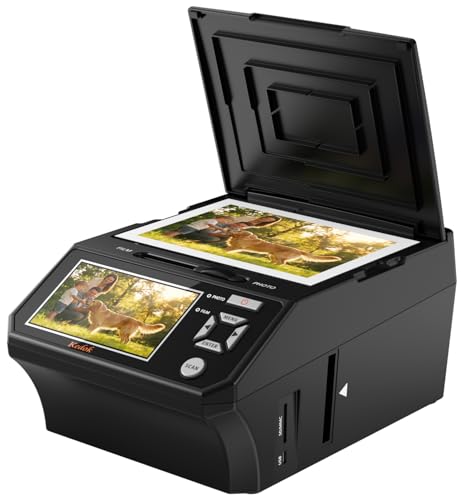
The DigitPro model combines a 5” display with the ability to convert 35mm, 110, and 135 negatives, slides, and printed photos. It supports SD cards and is designed for easy, stand-alone operation with a one-touch scanning workflow. The product emphasizes a family-friendly approach to digitizing mixed media.
Best for: households building a digital archive of mixed media, including slides and printed photos, who want a single device that handles multiple formats and provides instant on-device viewing.
Limitation: Memory capacity and software depth may be limited compared with more professional-grade scanners; plan for external storage if necessary.
KODAK Mini Digital Film & Slide Scanner

The Kodak Mini offers a compact, all-in-one solution for scanning 35mm, 126, 110 film, Super 8, and monochrome negatives or slides. It provides a 2.4” LCD and multiple adapters for fast loading, with updates to brightness and color. It’s designed for users who value portability and quick conversion, with internal storage and external memory options.
Best for: light-to-moderate collectors who want a small, dedicated device that can handle a broad range of film formats with a clear, simple interface.
Limitation: The small LCD can be less comfortable for viewing fine detail during edits; consider a larger-display model if you frequently perform detailed color work.
DigitPro 35mm Film & Slide Scanner With 2.4″ LCD

This DigitPro unit is described as an all-in-one scanner for 35mm negatives, slides, and related media. It features a 2.4” LCD screen for previewing scans and supports a quick slide feeder for faster processing. It is positioned as a practical choice for archiving 35mm collections with easy-to-use controls.
Best for: users who want a straightforward 35mm-focused scanner with a feeder that can handle quick-loading of multiple frames, plus on-device preview.
Limitation: Limited detail about software capabilities; if you need advanced editing, verify post-processing options before purchase.
Mobile Film Scanner For 35mm Slides & Negatives

This mobile-focused option digitizes 35mm slides and 135 negatives via a smartphone app. It’s best for on-the-go digitization and quick sharing, especially for travelers or casual collectors who want to convert without a desktop setup.
Best for: users who want mobile-friendly digitization with a companion app and the ability to share images instantly from a phone. Choose this if you need portability and no computer requirement.
Limitation: App-dependent workflow may limit features compared to standalone scanners; ensure your phone compatibility and app updates meet your needs.
Magnasonic All-in-One 24MP Film Scanner

The Magnasonic unit offers 24MP digital JPEGs from 35mm, 110, 126, and Super 8 film, plus 135/126/110 slides. It includes built-in memory and an HDMI output option for larger displays, providing multiple viewing methods. It emphasizes high resolution and flexible output options.
Best for: serious hobbyists who want high-resolution scans with multiple viewing options, including a direct HDMI path to a TV or monitor for demonstrations or archiving on a larger screen.
Caution: HDMI cable is not included, and internal memory has limited capacity; plan for SD card storage if your archive is large.
Buying Guide: Key Considerations For Selecting A Camera Film Scanner
- Format compatibility: Confirm which film formats you own (35mm, 126, 110, Super 8, slides) and ensure the device handles all of them.
- Display size and usability: A larger built-in screen streamlines previewing and editing without a computer, but consider portability if you need a compact setup.
- Storage options: Look for SD card support and internal memory capacity. External storage is often essential for large libraries.
- One-touch vs. manual controls: One-touch scanning is convenient for quick digitization; more advanced devices offer color, brightness, and flip adjustments for higher precision.
- Stand-alone vs. computer-based: Stand-alone scanners are ideal for quick archiving, while computer-connected models may offer richer post-processing software.
- Output quality: Check the maximum effective resolution (in MP) and the color accuracy and dynamic range described by the manufacturer.
- Ease of loading: Quick or continuous feeders save time when processing large collections; verify compatibility with your slide and film sizes.
- Connectivity: HDMI, USB, and TV-out options expand how you view or share scans; ensure your existing devices are compatible.
- Price vs. features: More features often come with higher cost. Balance your needs with budget and expected archive size.
Frequently Asked Questions
- What is the best scanner for a mixed collection of slides and negatives?
– A model with multi-format support and a large display, such as those offering 5” LCDs and varying adapters, typically provides the most flexible workflow. - Do I need a computer to use these scanners?
– Some units are standalone and do not require a computer, making them convenient for quick digitization; others may require a PC or app for advanced editing. - Can these scanners handle Super 8 film?
– Several options explicitly support Super 8 and other formats; verify each model’s format list to ensure compatibility with your film collection. - Is external memory necessary?
– Many devices include internal memory but rely on SD cards for large libraries; plan for a card with ample capacity to avoid running out of space. - Will the scans be ready to share immediately?
– Yes, most models output JPEGs directly. Some offer on-device editing or viewing, while others require a computer for post-processing. - Are there any caveats when using a 5” LCD display?
– A larger screen improves viewing comfort, but ensure the device remains portable and that the display resolution meets your needs for detail.