Best 7 Inch Camera Monitor: Top 5 Field Monitors for Pro Video Onset
Choosing a 7 inch camera monitor combines portability with professional-grade features. The right model can enhance focus, exposure, and framing in daylight or studio settings. Below are five highly capable 7″ monitors from trusted brands, each offering bright displays, HDMI passthrough, LUT support, and useful monitoring tools to fit different production workflows. The selections emphasize brightness, durability, and user-friendly interfaces for both freelance shooters and small crews.
| Product | Brand | Key Strengths | Sample Features |
|---|---|---|---|
| NEEWER F700 | NEEWER | Ultra-bright 2000 nits; LUT support; 4K HDMI loop | HD 1920×1080 IPS touchscreen, HDR waveform, 3D LUTs, dual NP-F750 power |
| NEEWER F100 | NEEWER | High brightness; strong battery option; wide input/output | 7″ IPS 1280×800, 2000 nits, 4K HDMI loop, F750 battery compatible |
| FEELWORLD FW759 | FEELWORLD | Slim, portable; solid 4K HDMI support; easy to deploy on multipurpose rigs | 1280×800, 400 cd/m2, 4K HDMI input, lightweight design |
| VILTROX DC-A1 | VILTROX | High brightness; robust LUT support; HDR waveform | 7″ 1920×1080, 2800 nits, 4K pass-through, 3D LUTs |
| Other Consideration | N/A | Balance of features and price | Additional LUTs, waveform scopes, and battery options |
NEEWER F700 7″ Field Monitor

The NEEWER F700 is designed for demanding on-set monitoring with a 7 inch IPS touchscreen and a bright 2000 nit panel. The 1920×1080 resolution plus a wide 160° viewing angle supports clear visibility in varied lighting. A 180° adjustable bracket helps with precise framing in many shooting configurations. It offers 4K HDMI loop in/out, which enables simultaneous monitoring and recording setups, and it supports a wide range of formats, making it suitable for cameras shooting in 4K and below. Built-in tools include False Color, Zebras, Histogram, and Full Waveform, plus HDR and Peak Focus to assist with exposure and focus accuracy.
The monitor ships with two NP-F750 batteries suggesting extended, portable operation, ideal for run-and-gun style productions. It also provides a 3.5mm headphone jack for audio monitoring. The control surface includes customizable F1-F3 shortcut buttons, enabling quick access to essential tools on set. Firmware upgrades via SD card offer future-proofing for evolving production needs.
NEEWER F700 Variant With Battery Not Included

This variant mirrors the core F700 performance but excludes batteries, which can be advantageous for teams already using a shared power setup. The feature set remains robust: 2000 nit brightness, a high-resolution IPS display, and 4K HDMI loop in/out for versatile shooting environments. The device supports a comprehensive monitoring suite—3D LUTs, HDR waveform, peak focus, and a suite of professional scopes—allowing operators to tailor the monitor to their preferred workflow. The improved UI and broad format support help integrate the monitor with multiple camera ecosystems on set.
FEELWORLD FW759 7 Inch Monitor
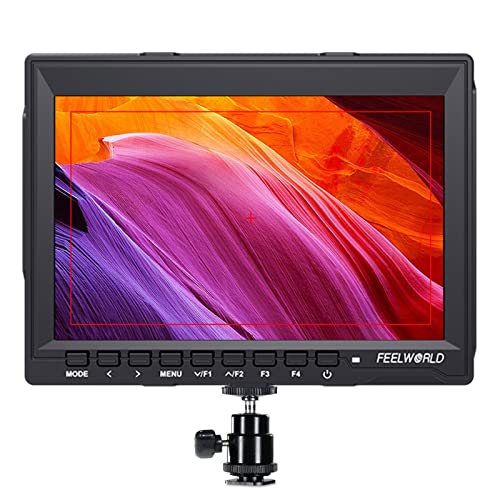
The FEELWORLD FW759 focuses on portability without sacrificing essential monitoring tools. With a 1280×800 display and a slim profile, it’s well-suited for gimbals, sliders, and handheld rigs. The 4K HDMI input ensures compatibility with most DSLRs and camcorders, and the monitor provides a reliable set of features like peaking, zoom, and image flip to help operators frame precisely. While brightness sits at a practical level for many indoor and shaded outdoor shoots, the FW759’s light weight makes it a popular choice for travel shoots and documentary work where every gram counts.
VILTROX DC-A1 2800 Nits Camera Monitor

The Viltrox DC-A1 emphasizes extreme brightness with up to 2800 nits, making it particularly effective for outdoor use in bright sun. The 7 inch IPS panel delivers 1920×1080 resolution and a wide 170° viewing angle, which helps crews monitor from challenging shooting angles. It supports 4K HDMI 2.0 in/out for passthrough and enables professional monitoring tools such as False Color, Zebras, Histogram, and Full Waveform. With 20 preloaded LUTs and support for up to 60 custom LUTs, it offers flexibility for color-managed productions. HDR and peak focus features aid in maintaining sharp, well-exposed footage across varying lighting conditions.
Other 7″ Monitor Options for Reference

Other 7″ monitors can complement the selections listed here, offering varied battery configurations, menu designs, and color tools. When evaluating, consider peak brightness, LUT capability, and compatibility with your camera ecosystem. Additional features like built-in sun hoods, remote control via mobile devices, and firmware upgrade options can influence long-term usability on different budgets and production scales.
Buying Guide: Key Purchase Considerations
- Brightness and visibility: Outdoor shoots benefit from higher nit brightness (2000–2800 nits) and wide viewing angles. Pair brightness with anti-glare coatings where possible.
- Resolution and screen type: A 1920×1080 IPS panel provides sharp images with accurate color. Consider 4K passthrough if you routinely monitor 4K feeds.
- Color tools and scopes: LUT support, False Color, Zebras, Histogram, and Waveform help with exposure and color consistency. Ensure the LUT library matches your camera’s color space (e.g., Rec.709).
- HDMI loop through: Loop-in/loop-out is valuable for feeding multiple displays or recording devices without duplicating cables.
- Power options: Battery compatibility (NP-F750 or similar) affects on-location runtime. Check advertised battery life and charging options, including USB-C compatibility for charging on the move.
- Form factor and mounting: Lightweight, compact designs suit gimbals and run-and-gun setups, while sturdier builds are better for studio work. Look for versatile brackets and cold shoe mounts.
- Ease of use: Quick-access shortcut buttons and intuitive menus save time on set. Firmware upgrade availability helps future-proof the monitor as cameras evolve.
- Compatibility: Confirm the monitor supports your camera’s output formats and frame rates, and whether it can handle HDR workflows if required.
In summary, the best 7 inch camera monitor choice depends on brightness needs, the level of professional monitoring tools required, and how you plan to power and mount the device on set. The five models highlighted here offer a balance of brightness, LUT support, and HDMI passthrough, enabling precise framing, exposure, and color control across a variety of shooting environments.