Best 4K Video Cameras for Filmmaking: Top Picks for 2026
Choosing a 4K video camera for filmmaking depends on sensor quality, stabilization, lens options, and workflow features. The following picks emphasize reliability, image fidelity, and practical features for independent creators and small production teams. Each product highlights its standout 4K capabilities and how they suit different shooting scenarios, from run-and-gun vlogs to controlled set productions.
| Product | Key 4K Capability | Ideal For |
|---|---|---|
| Canon VIXIA HF G70 | 4K UHD with DIGIC DV6, 20x optical zoom | Documentaries, events |
| Canon XA60 Pro Camcorder | 1/2.3″ CMOS, 4K UHD, 20x zoom | Independent productions, run-and-gun |
| BREGOO 5K/4K Vlogging Camera | 5K/4K, 64MP, 16x zoom | High-detail YouTube and travel |
| ZYDIIE 4K Video Camera Camcorder | 4K, 64MP, 18x zoom, IR night vision | Travel and interviews |
| Suttie 4K Video Camera | 4K, 80MP, 18x zoom, IR night vision | Vlogging and education |
Canon VIXIA HF G70 Camcorder

The Canon VIXIA HF G70 combines a 1/2.3-inch CMOS sensor with a DIGIC DV6 image processor to deliver crisp 4K UHD footage. Its cinema-style 8-blade aperture creates smooth, out-of-focus highlights, enriching cinematic depth. An on-screen Time Stamp option embeds vital date and time data directly into the video file, aiding post-production and archival workflows. The camera also offers UVC livestreaming, enabling direct HD streaming to a PC or Mac via USB, making it suitable for live events and remote shoots.
Canon XA60 Professional UHD 4K Camcorder

The Canon XA60 Pro Camcorder offers professional-quality 4K UHD recording with a compact footprint and a flexible 20x optical zoom. This model emphasizes robust image capture across varied lighting thanks to its CMOS sensor and DIGIC DV6 processing. Its connectivity supports easy integration into professional workflows (HDMI output and other ports for external monitoring and recording), making it a strong option for independent filmmakers and documentary crews who need reliable performance in dynamic environments.
BREGOO 5K/4K Vlogging Camera

This BREGOO model delivers 5K cinematic clarity while also supporting 4K at 60fps, pairing a high-sensitivity 64MP sensor with a versatile 3-inch rotatable touchscreen. The kit includes a complete creator bundle: memory card, extra batteries, a microphone, and a lens hood. The 270-degree hinge facilitates flexible framing for selfies and run-and-gun interviews, and the built-in stabilization helps maintain smooth footage during on-the-go shoots. This camera is well-suited for YouTube creators and travel filmmakers seeking cinema-grade detail without a high-cost rig.
ZYDIIE 4K Video Camera Camcorder
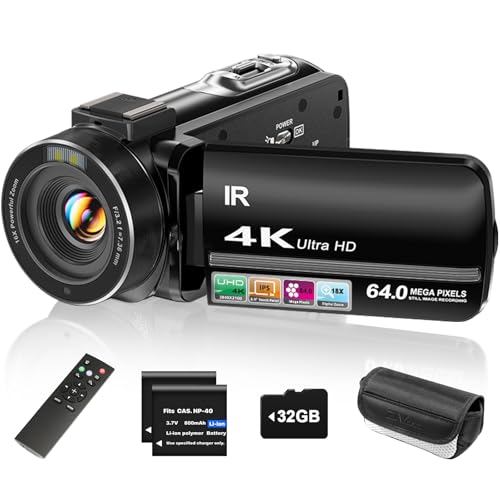
The ZYDIIE camcorder records in 4K with a 64MP capture mode and offers an 18x digital zoom. Its 3.0-inch IPS touchscreen rotates 270 degrees, easing vlogging and self-shooting. An infrared night-vision mode extends low-light capabilities for subtle interviews or creative night scenes. The camera also supports webcam functionality via USB, enabling use as a live streaming or conferencing device, expanding its utility beyond traditional shooting into remote collaboration and content creation.
Suttie 4K Video Camera

The Suttie camcorder delivers 4K video at 60fps with 18x digital zoom and a 3.0-inch IPS screen that rotates 270 degrees for flexible shooting. It supports IR night vision, which helps capture footage in dim environments without additional lighting. The kit typically includes essential accessories such as a memory card and batteries, enabling immediate shooting for YouTube, education projects, or family events while maintaining a compact form factor for handheld use.
Buying Guide: Key Purchase Considerations
- Resolution and frame rate: For filmmaking, 4K at 24–60fps covers most creative needs. Some cameras also offer 5K or 8K modes; these can be beneficial for future-proofing but require more storage and processing power.
- Sensor size and image quality: Larger sensors generally deliver better low-light performance and depth of field control. Look for cameras that balance sensor size with practical form factors for your shooting style.
- Lens options and stabilization: Zoom range and stabilization (optical or in-body) influence how versatile a camera is on run-and-gun shoots versus controlled studio setups.
- Audio integration: Built-in mics are rarely studio-grade; favor models that support external microphones and have dedicated audio inputs for cleaner sound.
- Connectivity and workflow: HDMI/SDI outputs, USB streaming, and compatible software for editing and streaming can streamline production pipelines and post-production.
- Ease of use and ergonomics: Lightweight bodies with usable menus and quick-access controls reduce fatigue during long shoots.
- Accessories and bundles: Some cameras ship with essential extras (batteries, memory cards, mics, lenses, tripods). A bundled kit can save time and money for new filmmakers.
Comparative Perspectives
- Portability vs. professional features: Canon XA60 and VIXIA HF G70 strike a balance between compact form and advanced capture capabilities, suitable for fieldwork. Higher-end bundles like BREGOO or Suttie emphasize learn-while-shoot versatility with included accessories.
- Low-light performance: Cameras with infrared night vision or strong low-light processing help when lighting is constrained. The included night-vision modes in several models support documentary-style shooting in challenging environments.
- Live streaming and remote work: Models with UVC/USB streaming or webcam functionality enable real-time broadcasting and virtual interviews, expanding use cases beyond traditional filming.
- Future-proofing: Higher-resolution options (5K/8K) offer more creative flexibility in post-production, but require more storage, faster computers, and more powerful editors. For most independent productions, 4K at high frame rates provides an optimal balance.