Best 400mm Prime Lens Options for Wildlife and Sports Photography
Choosing the right 400mm lens can significantly impact your photography, especially for wildlife and sports where distance and clarity matter. Below is a selection of top 400mm prime and zoom lenses that balance sharpness, autofocus precision, and portability. This guide features powerful options from Sony, Canon, and Panasonic, highlighting their key strengths.
| Lens Model | Brand | Key Feature |
|---|---|---|
| Sony SEL400F28GM 400mm F/2.8 Fixed Prime | Sony | World’s lightest 400mm F2.8 super-telephoto with fast AF |
| Canon EF 100-400mm f/4.5-5.6L IS II USM | Canon | Compact, high-performance telephoto zoom with rotation-type zoom ring |
| Panasonic Leica DG Vario-Elmar 100-400mm F4.0-6.3 | Panasonic | Ultra-telephoto zoom with Leica optics and Power O.I.S. |
| Canon RF 100-400mm F5.6-8 IS USM Lens | Canon | Lightweight telephoto zoom with advanced optical stabilization |
| Canon EF 100-400mm f/4.5-5.6L IS II USM (Renewed) | Canon | Fluorite and Super UD elements with 4-stop image stabilization |
Sony SEL400F28GM 400mm F/2.8 Fixed Prime Lens

The Sony SEL400F28GM stands out as the world’s lightest 400mm F2.8 super-telephoto lens, ideal for professionals who require fast and precise autofocus. Equipped with extreme dynamic linear motors, it delivers quiet, high-speed AF, capable of focusing up to 20 frames per second. Part of Sony’s G Master series, this lens merges superior bokeh and edge-to-edge sharpness, making it a top choice for wildlife and sports photography where lighting is challenging and timing is crucial.
Canon EF 100-400mm f/4.5-5.6L IS II USM Lens
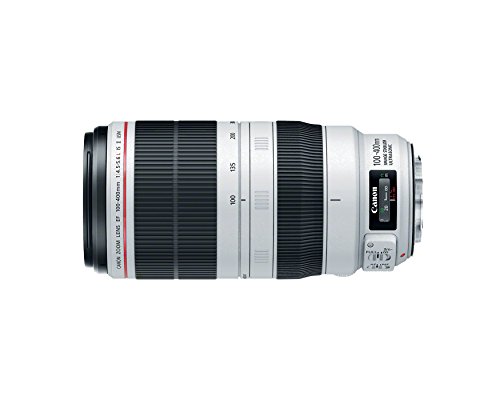
The Canon EF 100-400mm f/4.5-5.6L IS II USM is a compact and high-performance telephoto zoom lens favored for sports and wildlife use. Its rotation-type zoom ring allows for precise zooming and better balance during handheld shooting. The lens incorporates a rounded 9-blade diaphragm for attractive bokeh and benefits from an adjustable zoom tension for smooth operation. This lens offers excellent reach and versatility with a close focusing distance of 3.2 feet, making it useful for detailed shots of distant subjects.
Panasonic Leica DG Vario-Elmar 100-400mm F4.0-6.3 II ASPH. Lens

This Panasonic Leica DG 100-400mm lens offers brilliant edge-to-edge clarity thanks to Leica’s strict quality controls. Its ultra-telephoto zoom gives a 35mm equivalent focal length of 200-800mm, providing exceptional reach in a compact, lightweight form. The lens features Power Optical Image Stabilizer (O.I.S.) to counteract shake, vital for handheld shooting at long focal lengths. A minimum focusing distance of 1.3 meters with 0.5x magnification supports detailed nature photography of small, sensitive subjects like birds.
Canon RF 100-400mm F5.6-8 IS USM Lens for Canon R

Designed specifically for Canon’s mirrorless R system cameras, the Canon RF 100-400mm F5.6-8 IS USM is a lightweight telephoto zoom lens featuring advanced optical image stabilization. Its versatile 100-400mm range makes it suitable for wildlife, sports, and aviation photography. The lens balances portability with power, incorporating fast, quiet autofocus and providing stability even in handheld scenarios thanks to its advanced image stabilization technology.
Canon EF 100-400mm f/4.5-5.6L IS II USM (Renewed)
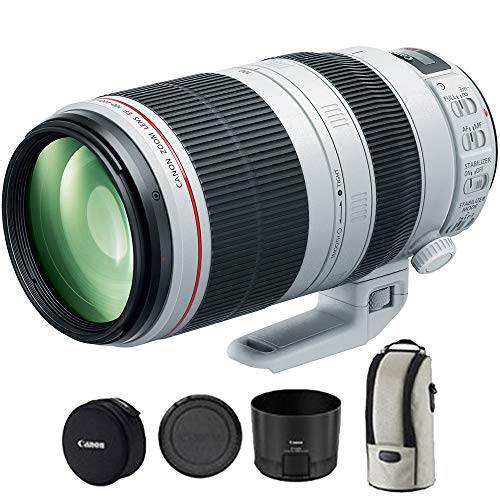
This renewed Canon EF 100-400mm II lens offers premium L-series telephoto zoom capabilities with notable chromatic aberration reduction due to its fluorite and Super UD lens elements. It benefits from an Optical Image Stabilizer providing up to four shutter speed stops of compensation, in line with CIPA standards. The lens is ideal for sports and wildlife photographers seeking sharpness, color fidelity, and smoother handheld performance with quick internal focusing and responsive zoom action.
Buying Guide for 400mm Lenses
When selecting a 400mm lens, whether prime or zoom, several key factors should influence your decision.
1. Lens Type: Prime vs Zoom
Prime lenses offer superior sharpness and wider apertures, ideal for low-light and shallow depth-of-field effects. However, they limit framing flexibility. Zoom lenses provide adjustable focal lengths (e.g., 100-400mm), giving greater versatility for dynamic situations but may sacrifice some image quality and maximum aperture size.
2. Aperture Size
Lenses with a wide maximum aperture (e.g., F2.8) allow more light and faster shutter speeds, enabling better action freeze and background blur. Narrower apertures (e.g., F5.6-8) can be lighter and cheaper but may require more light or higher ISO.
3. Autofocus Performance
Fast and silent autofocus motors are essential for capturing moving subjects, particularly in wildlife and sports photography. Look for lenses with advanced AF technologies such as ultrasonic or linear motors.
4. Image Stabilization
At 400mm and beyond, even slight shakes can blur images. Optical Image Stabilization (IS) or Optical Image Stabilizer (O.I.S.) systems help reduce camera shake, enabling handheld shooting with slower shutter speeds.
5. Build Quality and Portability
Professional lenses often feature weather sealing and durable construction but tend to be heavier. Consider the weight and size if you frequently travel or hike. Lightweight options like Sony’s SEL400F28GM can ease mobility without compromising optical performance.
6. Compatibility
Ensure lens mount compatibility with your camera body (Canon EF, Canon RF, Sony E, Micro Four Thirds). Adapted lenses may work but might limit autofocus features or stabilization.
7. Price vs Features
High-end lenses come with premium optics and features but are costly. Renewed or older versions often provide excellent value with near-new performance. Bundle kits including filters and cleaning tools add convenience.